ocean data
ocean data on World Data Ocean: a running collection of 315 stories we have gathered and hand-picked because they are worth your time. Every post here touches on ocean data in some way — the news, the analysis, the deep dives, and the occasional surprise find. A Global Hub for Ocean Intelligence 4 World Data Ocean is a centralized digital platform where researchers, scientists, and ocean enthusiasts converge to explore, analyze, and… New stories are added to this page as we find them, so check back if you want to keep up with what is happening around ocean data, or subscribe to the RSS feed to get them as soon as they are published. Browse the collection below, or head back to the homepage to see everything World Data Ocean is covering right now.

Glacial meltwater is the primary source of subsurface freshening off the Western Antarctic Peninsula
Glacial meltwater is increasingly recognized as a primary source of subsurface freshening off the Western Antarctic Peninsula (WAP), a region experiencing rapid warming. While surface-layer freshening is well documented, the impact of glacial meltwater on subsurface waters remains less understood. This study investigates freshwater anomalies at three key locations—Cierva Cove, Petermann Island, and Paradise Bay—using hydrographic and isotopic data. Findings reveal significant freshening below 50 meters, highlighting the importance of glacial meltwater in local stratification and underscoring the need for accurate representation of freshwater input
Anthropogenic, climate, and meso and submesoscale influences on diatom productivity in the Southern California Bight, with implications for domoic acid producing harmful algal blooms
This study explores the interplay of anthropogenic influences, climate factors, and meso- and submesoscale dynamics on diatom productivity in the Southern California Bight (SCB). It particularly focuses on the neurotoxin-producing diatom genus Pseudo-nitzschia, which contributes to harmful algal blooms (HABs) impacting local fisheries and wildlife. Utilizing a validated coupled physical-biogeochemical model, the research identifies key environmental drivers of diatom productivity and quantifies the effects of natural and anthropogenic nutrient sources. The findings underscore the necessity for adaptive management strategies to mitigate the
Wintertime upper-layer circulation in the yellow sea: SOM-based pattern analysis and synoptic event modulation
This study investigates the wintertime upper-layer circulation in the Yellow Sea, focusing on the influence of southern compensatory inflow and the shelf-break jet. Utilizing high-resolution ocean reanalysis data from 2020 to 2025, the research employs the Self-Organizing Map (SOM) technique to identify dominant circulation states and their variability during synoptic-scale atmospheric events. The findings reveal significant fluctuations in circulation intensity and structure, particularly highlighting the shelf-break jet's behavior across different winters.
Why do ocean temps vary so much?
Ocean temperatures can vary significantly due to a combination of geographical, meteorological, and oceanographic factors. The differences between coastal regions, such as the central coast of California and areas further north or south, are influenced by currents, upwelling, and local climate conditions. For instance, the California Current brings cooler waters southward, affecting temperatures along the coast. Additionally, coastal topography and surrounding landmasses can impact wind patterns and sunlight exposure, further contributing to these temperature discrepancies.

How Ocean Protocol will Change the World’s Data Economy | Review - DataDrivenInvestor
Ocean Protocol is poised to revolutionize the world’s data economy by enabling secure and transparent data sharing through decentralized technology. By facilitating access to valuable data assets while preserving privacy, Ocean Protocol empowers businesses, researchers, and individuals to harness data for innovation and decision-making. This review by DataDrivenInvestor explores the transformative potential of Ocean Protocol, highlighting its role in creating an integrated data ecosystem that fosters collaboration, enhances data sovereignty, and ultimately drives impactful solutions to global challenges.
World Ocean Database 2023: A Foundational Data Resource for and by the Global Ocean and Coastal Communities - Nature
The World Ocean Database 2023 serves as a crucial resource for global ocean and coastal communities, offering validated and integrated data essential for effective ocean stewardship. This foundational database is built on a collaborative framework that emphasizes empirical research and real-time insights. By providing access to calibrated climate indicators and longitudinal studies, the World Ocean Database empowers researchers, policymakers, and ocean enthusiasts alike to make informed decisions.

Video: U.S. Military Kills 3 In Fresh Strike On Drug-Smuggling Vessel In Eastern Pacific
In a recent operation, the U.S. military targeted a drug-smuggling vessel in the Eastern Pacific, resulting in the death of three individuals on board. This action has sparked a significant debate regarding the appropriate response to illegal maritime activities. Critics argue that, regardless of the vessel's involvement in drug trafficking, those aboard should face arrest and prosecution rather than lethal force. This incident raises critical questions about the balance between law enforcement and human rights in combating drug-related crime at sea.
Evidence of increased hydrodynamic retention in the spawning grounds of large pelagic fishes in the western Mediterranean
This study investigates the critical role of hydrodynamic retention in the spawning grounds of large pelagic fishes in the western Mediterranean, specifically focusing on Atlantic bluefin tuna, albacore tuna, and swordfish. Traditionally, spawning grounds have been associated with temperature and surface mixing; however, this research posits that oceanographic processes are equally vital for sustaining early life stages.

Iran Might Allow Ships To Pass Through The Omani Side Of Hormuz Strait
The International Maritime Organization (IMO) has expressed support for Iran's potential decision to permit ships to navigate through the Omani side of the Strait of Hormuz. This move aims to enhance safety and efficiency within the established traffic separation scheme, crucial for global maritime trade. The IMO emphasized the importance of ensuring safe navigation in this vital waterway, acknowledging that collaborative measures can significantly contribute to maritime security.
Plastics entering the ocean from rivers - Our World in Data
Plastics entering the ocean from rivers represent a significant environmental challenge, impacting marine ecosystems and human health. Our World in Data provides a comprehensive analysis of this issue, highlighting the pathways through which plastics travel from land to sea. By examining empirical data and longitudinal studies, we can better understand the sources and quantities of plastic pollution. This knowledge is essential for developing effective strategies to mitigate plastic waste, enhance ocean stewardship, and promote global collaboration in addressing this urgent crisis.
Artificial intelligence, capability transformation, and marine green development: empirical evidence from Coastal China
This study explores the transformative role of artificial intelligence (AI) in advancing marine green development in Coastal China, addressing significant challenges in global ocean sustainability. Utilizing a robust integrated technology-capability-context framework, it analyzes panel data from 11 coastal provinces (2011–2023) to reveal a positive correlation between AI advancements and the Marine Green Development Index (MGDI).

Watch: U.S. Conducts Series Of Strikes On Drug Vessels In Pacific Within A Week, Death Toll Reaches 175
Between April 11 and April 14, the U.S. military executed a series of targeted strikes on drug vessels in the Pacific, resulting in a significant death toll of 175 individuals. These operations were conducted under the auspices of Joint Task Force Southern Spear, led by General Francis L. Donovan. This initiative reflects a concerted effort to combat drug trafficking in the region, highlighting the ongoing challenges associated with organized crime and the strategic importance of maintaining maritime security.

MSC Becomes World’s First Container Line To Operate A 1,000-Ship Fleet
Mediterranean Shipping Company (MSC) has achieved a significant milestone by becoming the world's first container line to operate a fleet of 1,000 ships. This landmark achievement was marked by the delivery of the MSC Migsan, a state-of-the-art vessel with a capacity of 11,480 twenty-foot equivalent units (TEU), from the Zhoushan Changhong shipyard in China. This expansion not only highlights MSC's commitment to innovation and operational efficiency but also underscores the growing importance of sustainable practices in global shipping and logistics.

U.S. Navy To Expand Production Of Advanced Sonobuoys To Track Silent Submarines
The U.S. Navy has announced a significant expansion in the production of advanced sonobuoys, awarding a contract to Ultra Maritime for the AN/SSQ-125B model. These innovative sonobuoys are designed to enhance the Navy's capabilities in tracking silent submarines, a critical aspect of maritime security. By integrating cutting-edge technology, the Navy aims to strengthen its operational readiness and response to underwater threats. This initiative underscores the importance of developing advanced tools for effective ocean surveillance and defense in an increasingly complex global landscape.
The global push to share ocean data - Dialogue Earth
The global initiative "Dialogue Earth" emphasizes the critical need for sharing ocean data to enhance our understanding and stewardship of marine ecosystems. By fostering collaboration among scientists, policymakers, and communities, this initiative aims to create an integrated data ecosystem that supports evidence-based decision-making. The urgency of addressing climate change and its impacts on ocean health underscores the importance of real-time information and validated research. Through open dialogue and shared knowledge, we can work towards sustainable solutions that benefit both the ocean and humanity.
Southern-latitude wind forcing as a predictor of swell energy and coastal wave power in Peru
The Peruvian coast is significantly shaped by swells originating from the Southern Ocean, making the relationship between southern-latitude wind stress and wave power variability crucial for effective coastal management and renewable energy initiatives. This study analyzes wind stress anomalies at latitudes of 30°S, 40°S, 50°S, and 60°S, utilizing ERA5 reanalysis data from 1979 to 2023. Findings reveal that anomalies at 50°S and 60°S account for 45–55% of wave power variance, with implications for predicting extreme events and
Data On Global Fishing Activity And Ocean Ecosystems Now Available On Bloomberg Terminal | Press | Bloomberg LP - Bloomberg.com
World Data Ocean is pleased to announce the availability of comprehensive data on global fishing activity and ocean ecosystems on the Bloomberg Terminal. This vital information integrates empirical research and real-time analytics, empowering users to make informed decisions regarding ocean stewardship. By providing access to validated, longitudinal data, we aim to foster collaboration among researchers, policymakers, and ocean enthusiasts. This initiative underscores the urgency of understanding our oceans and highlights our commitment to innovation and shared responsibility in preserving marine environments for future generations.
Toward a Better Understanding of the Global Ocean Copper Distribution and Speciation Through a Data-Constrained Model - AGU Publications
The study "Toward a Better Understanding of the Global Ocean Copper Distribution and Speciation Through a Data-Constrained Model," published by AGU, presents a comprehensive analysis of copper dynamics in oceanic environments. Utilizing a data-constrained modeling approach, this research enhances our understanding of copper distribution and its chemical forms across global oceans. By integrating empirical data and advanced modeling techniques, the findings underscore the importance of copper as a vital micronutrient while addressing its ecological implications.

Indonesia Recovers Suspected Chinese Underwater Drone In Lombok Strait
Indonesian authorities have successfully recovered a suspected Chinese underwater drone from the Lombok Strait. Police and naval personnel secured the device from the beach and transported it to the Indonesian Navy's base in Mataram for thorough examination. This incident underscores the complexities of maritime security in the region and raises questions about the implications of such technology on national sovereignty and ocean governance. As investigations proceed, the findings may shed light on the operational capabilities and intentions behind the drone’s deployment.
Expanding an Ocean of Data - National Centers for Environmental Information (NCEI) (.gov)
The National Centers for Environmental Information (NCEI) is dedicated to expanding access to vital ocean data, fostering a comprehensive understanding of our planet's marine environments. By integrating advanced technologies and collaborative approaches, NCEI enhances the availability of validated and empirical data crucial for informed decision-making. This initiative not only supports researchers and policymakers but also engages the public in ocean stewardship. Through real-time insights and longitudinal studies, NCEI empowers stakeholders to address pressing challenges related to climate change and ocean health effectively.
Geomatics engineering to oceanography
Hello everyone, I'm currently pursuing a five-year degree in Geoinformatics Engineering, which offers a comprehensive curriculum spanning GIS, programming, and more without confining me to a specific domain. This flexibility enables the application of geomatics technologies across various fields. My passion for the ocean drives my intention to pursue a master's in Ocean Data Acquisition and Processing. I'm particularly interested in the intersection of geomatics and marine sciences, such as remote sensing and hydrography.
Perspectives on Undergraduate paths?
Choosing the right undergraduate path is crucial for aspiring physical oceanographers, especially when balancing interests in programming, mathematics, physics, and hands-on research. As you consider majors in Physics or Ocean Engineering, it's important to evaluate each program's strengths and opportunities for real-world oceanography work, particularly at UNH, URI, and UMass Dartmouth. While URI offers specialized options and research vessels, UNH has strong engineering programs, and UMassD provides a compelling Computational Physics degree.
Upper ocean mixing, surface heat fluxes, and heat content variability in the upper 150 m during Hurricane Laura (2020)
This study investigates the upper ocean mixing, surface heat fluxes, and heat content variability in the upper 150 meters during Hurricane Laura (2020). By integrating thermistor observations, hurricane glider measurements, and model-derived temperatures, the research reveals how oceanic processes influenced the storm’s rapid intensification. Prior to the hurricane, the warm mixed layer at Stone Mooring (StM) reached 31°C, significantly affecting cooling dynamics.
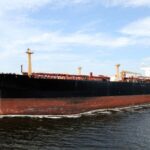
Iraq-Linked Tanker Carrying 1 Million Barrels Of Oil Transits Strait Of Hormuz After Iran Grants Rare Exemption
A tanker linked to Iraq, carrying one million barrels of oil, has successfully navigated the Strait of Hormuz following a rare exemption granted by Iran. As it sailed near the Iranian coast, the vessel is on course to reach Malaysia by mid-April for cargo discharge. This transit highlights the complex dynamics of the region's oil trade and the geopolitical implications of maritime navigation in crucial waterways.