hydrothermal vents
hydrothermal vents on World Data Ocean: a running collection of 2 stories we have gathered and hand-picked because they are worth your time. Every post here touches on hydrothermal vents in some way — the news, the analysis, the deep dives, and the occasional surprise find. A Global Hub for Ocean Intelligence 4 World Data Ocean is a centralized digital platform where researchers, scientists, and ocean enthusiasts converge to explore, analyze, and… New stories are added to this page as we find them, so check back if you want to keep up with what is happening around hydrothermal vents, or subscribe to the RSS feed to get them as soon as they are published. Browse the collection below, or head back to the homepage to see everything World Data Ocean is covering right now.
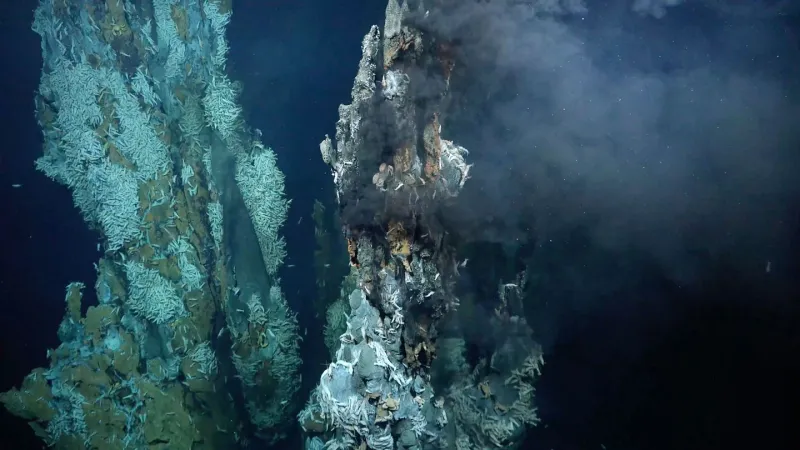
Deep-sea snails ride surface currents to reach distant hydrothermal vents
Newly validated research reveals a surprising dispersal mechanism for deep-sea life: surface currents transport deep-sea snails to distant hydrothermal vents. This empirical finding demonstrates a closer-than-previously-understood connection between isolated deep-sea ecosystems and the sunlit ocean. Longitudinal data suggests that vent communities are not as isolated as once believed, highlighting the interconnectedness of our planet’s oceans. For further exploration of related challenges, see our editorial, "The threat of invasive alien species and the challenge of climate change."
Camera 1: 2026 Cook Islands ROV Exploration (EX26045)
World Data Ocean is pleased to announce Camera 1 data from the 2026 Cook Islands ROV Exploration (EX26045), a critical component of our ongoing ocean intelligence initiative. This expedition leverages cutting-edge remotely operated vehicle technology to generate high-resolution, validated imagery of deep-sea habitats. Preliminary analysis indicates significant biodiversity and unique geological formations. Further data and findings from Camera 2 (EX2605) will be released shortly. For broader context on the importance of marine science, see our recent article, "Women in marine sciences in India."