citizen science
citizen science on World Data Ocean: a running collection of 12 stories we have gathered and hand-picked because they are worth your time. Every post here touches on citizen science in some way — the news, the analysis, the deep dives, and the occasional surprise find. A Global Hub for Ocean Intelligence 4 World Data Ocean is a centralized digital platform where researchers, scientists, and ocean enthusiasts converge to explore, analyze, and… New stories are added to this page as we find them, so check back if you want to keep up with what is happening around citizen science, or subscribe to the RSS feed to get them as soon as they are published. Browse the collection below, or head back to the homepage to see everything World Data Ocean is covering right now.
Help needed- Marine Biology Themed High School Club looking for event ideas related to citizen science research/conservation biology
The inaugural Marine Biology Club seeks impactful engagement despite geographical limitations. Leveraging citizen science offers a validated pathway to contribute to real-world conservation. Consider participation in established platforms—analyzing data, identifying species, or contributing to long-term monitoring projects—to generate measurable results. Initiatives like recycling drives can be framed as supporting ocean health through resource reduction. For further exploration of academic pathways, see our article, "Looking for useful courses or certificates," which details relevant training opportunities.

Development and deployment of a pilot multilingual citizen- science mobile application for georeferenced marine catch observations in India
To enhance marine fishery advisory services in India, the Indian National Centre for Ocean Information Services (INCOIS) has launched ‘Fisheries Information Source Hub (FISH)’, a pilot multilingual citizen-science mobile application. This innovative approach empowers fishers to contribute georeferenced marine catch observations, generating high-frequency data crucial for species-specific fishery predictions. Initial deployment demonstrates significant success, with a 20-fold increase in data submissions.
Lessons learned from the “spot the alien” citizen science campaign (2022–2025) in Maltese waters and the second record of Cephalopholis hemistiktos in the Mediterranean
Citizen science offers a validated and increasingly crucial approach to monitoring marine ecosystems. This study evaluates the “Spot the Alien” campaign (2022–2025) conducted in Maltese waters, yielding 441 expert-validated records of non-indigenous, range-expanding, and cryptogenic species. Results demonstrate increased reporting effort and species richness, with notable seasonal and habitat-specific patterns. Significantly, the campaign documented the second Mediterranean record of *Cephalopholis hemistiktos*.
Machine learning, eDNA and citizen science in monitoring and assessing biodiversity and invasive alien species at sea
Emerging technologies are revolutionizing marine biodiversity and invasive alien species monitoring. This research, presented at a recent summer school, details the integration of machine learning, citizen science, and environmental DNA (eDNA) alongside remote sensing and drones. Machine learning, utilizing frameworks like Essential Biodiversity Variables (EBVs), enables efficient species identification and global data synthesis. Initiatives like iNaturalist exemplify the power of citizen science combined with AI validation.
Climate-driven phenological shifts and biogeographical constraints of the hydrozoan Velella velella in Mediterranean coastal waters
Recent research highlights the critical role of citizen science in understanding ocean responses to climate change. A comprehensive, long-term study of *Velella velella*, a free-floating hydrozoan, in the Mediterranean Sea reveals a 32-day advance in bloom timing since 2009, linked to warming winter sea surface temperatures. Analyzing over 12,000 records—primarily gathered through citizen observations—researchers documented a west-to-east distribution pattern and established *V. velella* as a valuable indicator of surface-ocean variability.
High-accuracy fish species identification using transfer learning on vision foundation models
Citizen science initiatives are vital for large-scale monitoring of marine biodiversity, particularly in the Mediterranean Sea, a region facing significant ecological challenges. To improve the reliability of species observations from non-expert contributors, this study introduces MEDFISH101, a dataset of approximately 70,000 validated images of 101 fish species. Utilizing advanced transfer learning techniques, we developed a deep learning model, DINOv2-G, achieving a Top-1 accuracy of 94.12% in species identification.
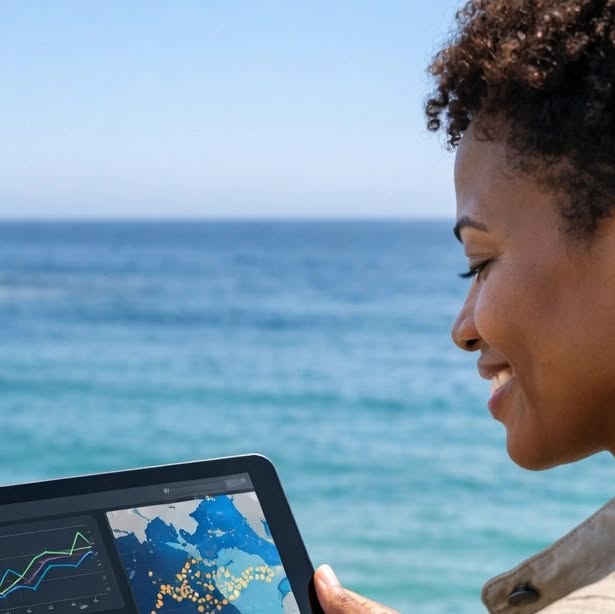
Turning Passion into Professional-Grade Science 🌊📈 High-quality ocean data isn't just for the ivory tower anymore. The...
High-quality ocean data is no longer confined to academic institutions. With the recent release of new guidelines for citizen science data sharing by the UN Ocean Decade, World Data Ocean is empowering communities to transform their enthusiasm into professional-grade scientific contributions. Our innovative tools facilitate the collection of valuable data that researchers and policymakers can utilize for informed decision-making. By tracking marine debris or monitoring local sea temperatures, your observations can drive meaningful change. Together, we can foster a healthier ocean for future generations.
Two decades of citizen science reveal spatial biases and conservation gaps for elasmobranchs along the Mozambican coast
This study evaluates two decades of citizen science contributions to elasmobranch records along the Mozambican coast, highlighting the role of platforms like iNaturalist in addressing knowledge gaps in the Western Indian Ocean. By analyzing 408 records from 2007 to 2025, we documented 44 species, revealing significant increases in data collection, particularly since 2019. While a high percentage of species are classified as threatened, spatial biases in data reflect inconsistencies in sampling across regions.
Cm-scale marine habitat mapping of entire Tumon Bay, Guam Coral Reef using NASA airborne fluid lensing and NeMO-Net pre (2022) and post (2024) Typhoon Mawar
This study presents cm-scale marine habitat maps of Tumon Bay, Guam's coral reefs, utilizing NASA's airborne fluid lensing and the NeMO-Net platform to assess ecological changes before and after Typhoon Mawar. High-resolution imaging is essential for understanding coral ecosystem dynamics, yet monitoring at relevant spatial and temporal scales poses challenges.

Advice for REUs to apply to as a non-US, non-EU citizen? (Marine Biology, Oceanography, Ecology general)
Securing a Research Experiences for Undergraduates (REU) opportunity as a non-US, non-EU citizen in Marine Biology, Oceanography, or Ecology can be challenging, especially given the competitive landscape. As you navigate your search, it’s crucial to identify programs that accept international applicants and offer stipends. Despite recent rejections, remember that persistence is key in scientific careers. Focus on enhancing your CV with your extensive volunteer work and local NGO involvement, which demonstrate your commitment and passion.
Volunteer Work in Maldives
Greetings, fellow ocean enthusiasts! I’m a scuba diver planning a liveaboard vacation in the stunning Maldives this May. As a passionate advocate for citizen science, I’m eager to contribute to any ongoing research projects during my trip. While I may not be able to assist with sample gathering due to logistical constraints, I am more than willing to help with surveys or any other activities that could benefit researchers in the area.
Ocean Data Factory Webinar - Combining citizen science and AI to predict Harmful Algal Blooms (HABs)
Join us for the Ocean Data Factory Webinar, where we explore the innovative intersection of citizen science and artificial intelligence in predicting Harmful Algal Blooms (HABs). This session will highlight empirical approaches and integrated data ecosystems that empower communities to contribute to ocean health. By leveraging real-time data and collective knowledge, we aim to enhance our understanding of HAB dynamics and foster proactive stewardship of marine environments. Engage with experts and discover how collaborative efforts can drive impactful solutions for our oceans.