World’s Largest Aircraft Carrier, USS Gerald R.Ford To Power US Navy’s Norfolk Base
Our take
The reported plan to utilize the USS Gerald R. Ford, the United States Navy’s newest and largest aircraft carrier, to generate electricity at the Norfolk naval base presents a fascinating, if somewhat unconventional, intersection of naval power and energy resilience. This initiative, if confirmed, aligns with broader trends within the Department of Defense towards exploring alternative and decentralized power sources, particularly in light of increasing concerns about grid vulnerability and operational energy security. Recent developments, such as the US Navy’s plans to install an off-grid nuclear microreactor at an Indiana weapons base by 2028 [US Navy Plans To Install Off-Grid Nuclear Microreactor At Indiana Weapons Base By 2028], highlight a concerted effort to reduce reliance on traditional power grids. Similarly, the response to sophisticated cyber threats, as evidenced by Anthropic’s recent banning of Iranian accounts leveraging AI to target US naval assets [Anthropic Bans Iranian Accounts That Used Claude To Target US Navy], underscores the need for robust, self-sufficient operational capabilities.
The rationale behind repurposing a massive, technologically advanced asset like the Gerald R. Ford for electricity generation is multifaceted. Firstly, it speaks to the inherent energy demands of a large naval base. Norfolk is a critical hub for naval operations, requiring substantial power to support ship maintenance, personnel housing, and various logistical functions. Secondly, the carrier’s advanced nuclear propulsion system, while primarily designed for propulsion, possesses significant power generation capacity that could be harnessed to supplement or even replace traditional grid-supplied electricity. This shift would not only enhance energy independence but also potentially reduce operational costs and environmental impact. The carrier’s deployment, as highlighted in preparations for the USS Theodore Roosevelt’s Middle East deployment [U.S Navy Prepares Aircraft Carrier USS Theodore Roosevelt For Middle East Deployment To Relieve USS George Washington], also necessitates resilient power infrastructure to ensure operational readiness.
However, the proposal raises several practical and logistical considerations. The integration of a carrier's nuclear reactor into a land-based power grid presents significant engineering challenges, requiring careful calibration and safety protocols to prevent any unforeseen consequences. Moreover, the opportunity cost of utilizing such a valuable asset for power generation needs to be rigorously evaluated against alternative solutions, such as renewable energy sources or smaller-scale distributed generation systems. The environmental impact of long-term stationary operation of the reactor, even with stringent safety measures, also warrants careful assessment. While the Navy has demonstrated a commitment to innovative energy solutions, ensuring that this particular initiative is both technically feasible and economically justifiable is paramount. The long-term implications for ship availability and readiness, should this become a standard practice, would also need thorough investigation.
Ultimately, the potential repurposing of the USS Gerald R. Ford represents a compelling case study in adapting existing assets to address emerging operational needs. It reflects a broader trend toward integrated data ecosystems and real-time climate indicators driving decision-making within the Department of Defense. The success of this venture hinges on meticulous planning, rigorous testing, and a commitment to empirical validation of its long-term viability. A key question moving forward is whether this approach—leveraging existing naval assets for dual-purpose functionality—will become a more widespread strategy for enhancing energy resilience and operational flexibility across the US military.
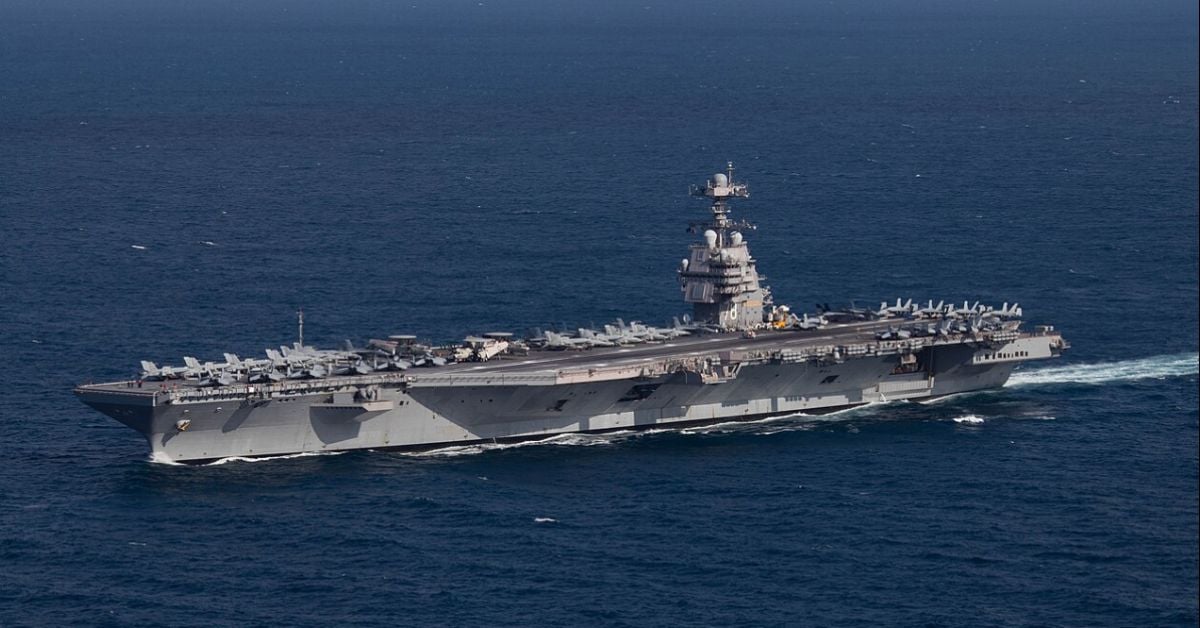
The largest aircraft carrier in the world, the USS Gerald R. Ford, would be used to generate electricity at a naval base in Norfolk, according to sources.
The proposition was discussed in a meeting of the Armed Services Committee in May while the naval budget for 2027 was being discussed.
The Navy Secretary Hung Cao stated that the Norfolk naval station in Virginia would be powered by an aircraft carrier when the topic of nuclear power generation came up. The trials for this capability would be carried out by the end of 2026, a Navy official said.
The official said in a statement to a local media outlet that U.S Navy is planning a strategy to make sure that stable electrical power can be transferred from the aircraft carrier to the naval base.
This is important to meet critical requirements during a mission when other sources of supply fall short.
Though the Secretary did not name Ford, it is the only carrier of its class in active service since the second one; the USS John F. Kennedy will be delivered next year.
The benefits of this project are many, Cao said in the meeting, highlighting both civilian and military uses, especially during emrgencies due to natural disaster or conflicts.
In such cases, it could help fix military bases or provide fresh water to places suffering from drought.
Chief of Naval Operations Daryl Caudle suggested launching a nuclear reactor pilot program modelled after Army and Air Force initiatives.
He emphasised that while the Army might take the lead, the Navy’s deep background in reactor physics, operational safety, and naval reactors makes its involvement important.
Caudle also said that a target date should be decided to get the project underway as soon as possible.
The Ford-class aircraft carriers are replacing the old Nimitz class. Even the reactors onboard the vessels are being changed from A1B to A4W to meet future requirements.
This is being done to increase the efficiency and output. Fewer personnel will be needed to maintain and operate the aircraft carrier.
Read on the original site
Open the publisher's page for the full experience