World’s First Naval Drone Battle Unfolds Between Russia & Ukraine In Black Sea
Our take
The recent reports of a naval drone battle between Russia and Ukraine in the Black Sea mark a significant escalation in maritime warfare and represent a tangible demonstration of the accelerating integration of unmanned systems into active conflict. This isn't simply a matter of technological novelty; it signals a fundamental shift in how naval engagements are conceived and executed. The deployment of a drone equipped with a 12.7 mm machine gun highlights the increasing lethality and autonomy being incorporated into these platforms. This development builds upon existing trends – as evidenced by [Anthropic Bans Iranian Accounts That Used Claude To Target US Navy] – where AI and autonomous systems are already being leveraged for intelligence gathering and, increasingly, for direct targeting. Furthermore, the incident underscores the growing complexities surrounding maritime security in volatile regions, particularly when considering the recent proposal for [India Proposes Emergency Support Network For Seafarers After 15 Indian Crew Killed In Conflict Zones], which speaks to the very real human cost of these escalating conflicts.
The implications of this drone-versus-drone engagement are far-reaching. Traditionally, naval power has been defined by the size and firepower of manned warships. This new dynamic suggests a potential future where smaller, more agile, and significantly cheaper unmanned platforms can play a decisive role, potentially leveling the playing field between nations with vastly different naval capabilities. Russia’s demonstrated use of these systems, particularly in a contested environment like the Black Sea, will undoubtedly prompt other nations to accelerate their own development and deployment of similar technologies. The reported capture of a U.S. Navy submarine by Iran [Iran Claims It Captured U.S. Navy Submarine Near Hormuz That Can Autonomously Conduct Missions For 10 Days], and the subsequent identification of the device as a Dive-D autonomous system, further illuminates the broadening scope of unmanned naval assets and the vulnerabilities they present. The incident in the Black Sea necessitates a recalibration of naval strategy and doctrine to account for the unpredictable and rapidly evolving nature of this new battlefield.
Beyond the immediate tactical implications, this development raises crucial questions regarding international law and the rules of engagement for autonomous weapons systems. The increasing autonomy of these platforms blurs the lines of accountability and raises concerns about the potential for unintended consequences or escalation. While these drones may be programmed with specific rules of engagement, the complexities of real-world combat scenarios can introduce unforeseen variables. The integration of machine guns and other offensive capabilities further complicates the legal landscape, demanding a more rigorous examination of the ethical and legal frameworks governing their use. The need for clear international agreements and protocols to regulate the deployment of autonomous naval systems is becoming increasingly urgent.
Ultimately, the Black Sea drone battle serves as a potent indicator of a future defined by increasingly sophisticated and autonomous maritime technologies. The convergence of AI, advanced robotics, and readily available weaponry is reshaping the landscape of naval warfare, demanding a proactive and globally collaborative approach to ensure stability and mitigate risks. The question now becomes: How quickly will international governance and regulatory bodies adapt to this paradigm shift, and will they be able to establish effective safeguards before these technologies further proliferate and fundamentally alter the balance of power at sea?
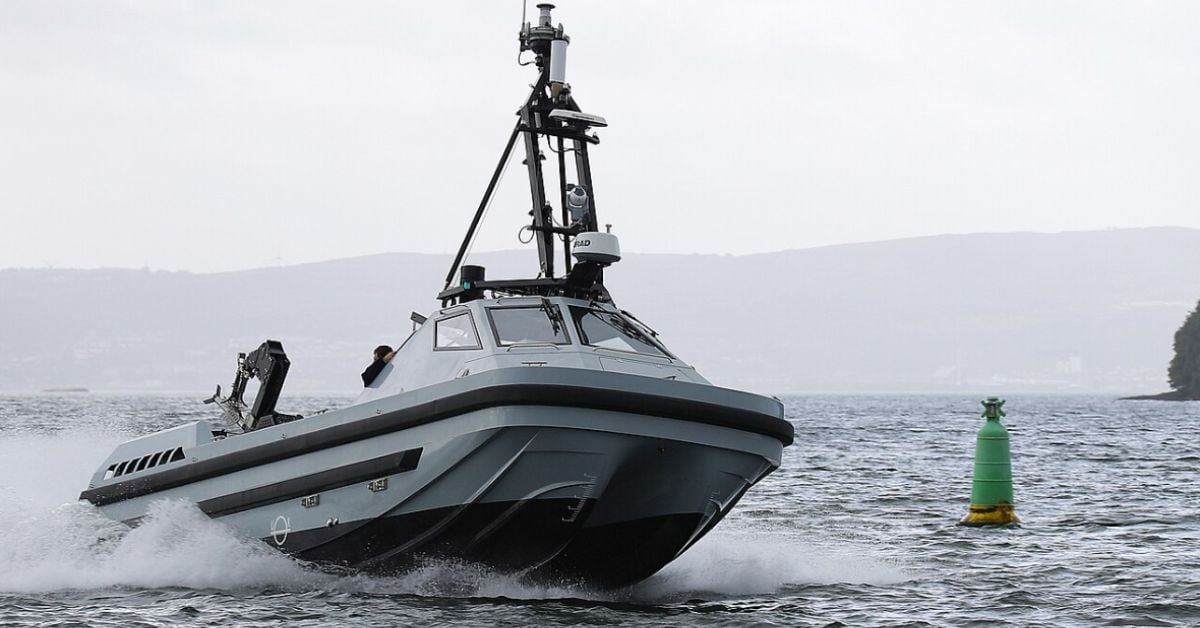
Ukraine and Russia’s unmanned vessels engaged in combat on the high seas for the first time, when Kyiv’s Sargan-3000 drone boat destroyed Moscow’s Orca-type naval drone in the Black Sea.
The drone was equipped with a 12.7 mm machine gun and a protected remote weapon station, which it used to engage the Russian unmanned vessel while avoiding direct collision.
It has variants which can accommodate different payloads, including air-defence weapons or electronic warfare systems, enabling them to fit in various roles.
The video of the mission was released by Ukraine on its Telegram account and showed the unmanned surface ship targeting the Russian naval drone.
The incident, which occurred on September 12, 2026, has changed the nature of warfare between the two countries that have been at war since 2022, when Russia invaded Ukraine.
The Russian unmanned boat, also called Zefir or Zephyr in some sources, is built to carry explosives. It rams into the target, causing a blast which destroys it.
The USV is small and resembles Magura V3 and V5 drones of Ukrainian forces. It has a motor which is linked to a water jet, giving it the ability to attain high speeds.
Russia and Ukraine have increasingly begun using the cheap and highly effective drones to target each other’s ports, ships and other infrastructure.
Multiple attacks have been carried out using drones near Ukraine’s Odesa and at the Russian Port of Novorossiysk.
The Ukrainian drone used in this mission is also called SeaWolf, made by a company called Nordex. It completed its trials in April and is quite precise when it comes to strike operations, the Ukrainian Navy said.
The exact location of the showdown has not been revealed, but it is most likely the northwestern Black Sea, since the military activities of both countries have risen in these waters.
Russia has launched drones from bases in Chornormorske and Lake Donzulav in northwestern Crimea and has also built facilities to manufacture drones that can be integrated with aerial systems such as the Geran, which can boost communications, surveillance and control.
Ukraine has increased its drones’ range of operations across the Black Sea and Azov Sea, where it struck atleast 105 ships.
Read on the original site
Open the publisher's page for the full experience