World’s First Battery-Powered Self-Unloading Bulk Carrier Starts Commercial Operations In Australia
Our take
The arrival of the *MV Yampu*, the world’s first battery-powered self-unloading bulk carrier, marks a significant, albeit incremental, step toward decarbonizing the maritime shipping sector. Adbri’s decision to replace the *MV Accolade II* with a vessel boasting a 35% increase in limestone carrying capacity while simultaneously reducing its environmental footprint underscores a growing industry trend. This development arrives at a crucial juncture, as highlighted by recent analysis from Inmarsat, which revealed that weather remains a leading factor in urgent maritime warnings [Maritime Safety Data Hub To Analyse Over 100,000 Safety Broadcasts To Predict & Prevent Emergencies At Sea], further emphasizing the need for resilient and environmentally responsible operations. While the *Yampu*’s battery-powered propulsion represents a tangible advancement, it’s vital to recognize this as part of a larger, multifaceted transition, and not a singular solution. The complexities of global shipping, as demonstrated by incidents such as the seizure of a bulk carrier in the Strait of Hormuz following alleged pollution [Iran Seizes Bulk Carrier After Alleged Oil And Sludge Discharge In Strait Of Hormuz], underscore the ongoing challenges related to operational safety and environmental compliance.
The self-unloading capability, combined with battery power, offers operational efficiencies beyond just emissions reduction. The ability to discharge cargo independently, without reliance on shore-based equipment, provides greater flexibility in port operations and reduces turnaround times. This aligns with broader industry efforts to optimize logistics and improve supply chain resilience, a critical consideration in a world increasingly susceptible to geopolitical and environmental disruptions. Furthermore, the *Yampu*’s deployment in Australia highlights the increasing focus on regional decarbonization efforts. While the initial impact may be localized to Adbri's operations, it establishes a precedent and demonstrates the feasibility of battery-powered vessels in real-world conditions. The empirical data generated from the *Yampu*'s operation will be invaluable in calibrating future designs and optimizing battery performance for bulk carriers operating in diverse maritime environments. It’s a valuable longitudinal study, the results of which will inform future vessel designs and operational strategies.
However, the transition to fully decarbonized bulk shipping remains a complex undertaking. Battery technology currently faces limitations in range and energy density, making it more suitable for shorter routes and specific operational profiles. Hybrid solutions, incorporating battery power alongside conventional fuels, are likely to remain prevalent for the foreseeable future. The broader maritime ecosystem, including port infrastructure and fuel supply chains, requires substantial investment and adaptation to support the widespread adoption of alternative propulsion systems. The recent grounding of a cargo ship damaged by Ukrainian drones, drifting across the Black Sea and running aground in Turkiye [Ghost Ship Damaged By Ukrainian Drones Drifts Across Black Sea & Runs Aground In Turkiye], serves as a stark reminder of the operational vulnerabilities that persist, even with advanced technology. Integrating resilience and safety considerations into decarbonization strategies is paramount.
Ultimately, the *MV Yampu* represents a crucial, though early, validation of a pathway towards more sustainable bulk shipping. Its operational performance will provide critical, measurable data to refine battery technology, optimize vessel design, and inform policy decisions. The integrated data ecosystem required to manage and analyze the performance of vessels like the *Yampu* will become increasingly important as the maritime industry continues its transition. The question now becomes: how quickly can we scale this innovation, and what further technological breakthroughs are needed to fully realize a zero-emission bulk shipping future, while simultaneously addressing the ongoing challenges of maritime safety and security?
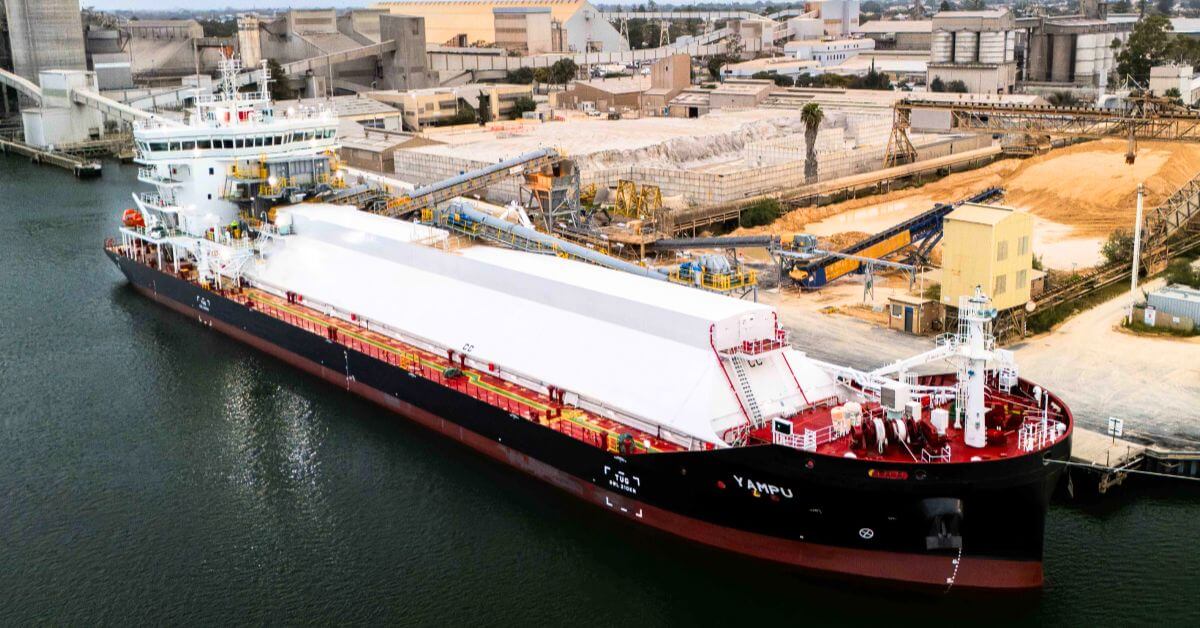
The world’s first battery-powered self-unloading bulk carrier has started commercial operations in Australia.
The vessel, MV Yampu, has a 6,758-kilowatt-hour battery system and is expected to cut diesel use by more than 500,000 litres a year.
The 125-metre vessel began operations on Aug. 26. It will carry limestone from Adbri’s Klein Point quarry on South Australia’s Yorke Peninsula to the company’s Birkenhead cement manufacturing facility in Adelaide.
MV Yampu can run on battery power for about 40% of the time. The vessel has also been designed to run on 100% battery power in the future.
It can carry 11,900 deadweight tonnes and is expected to transport around 2.7 million tonnes of limestone every year.
Replacing MV Accolade II
CSL built MV Yampu specifically for Adbri’s route between Klein Point and Birkenhead.
The new vessel replaces MV Accolade II and is expected to increase Adbri’s annual limestone carrying capacity by 35%.
Its batteries are charged while the vessel is docked at Adbri’s Birkenhead facility. This allows the ship to use battery power for part of the journey and its operations.
Adbri and CSL said MV Yampu is expected to use more than 500,000 litres less diesel each year than MV Accolade II. It is also expected to cut Scope 1 emissions by 40%.
The limestone carried by the vessel will be used to make cement for homes, schools, hospitals, roads and other major infrastructure projects in South Australia and Victoria.
Limestone from Klein Point has been used to support cement manufacturing in South Australia for more than a century.
Battery System Cuts Diesel Use
CSL Chief Executive Officer Louis Martel said the vessel was part of the company’s efforts to reduce emissions.
He said changes to cargo handling, onboard systems and vessel operations were made to help crews work safely, efficiently and sustainably.
Adbri Chief Executive Officer Paul Headd said the new vessel would support the company’s supply chain, local jobs and manufacturing in South Australia.
He said the limestone carried by MV Yampu would be used to produce cement for homes, hospitals, schools, roads and major infrastructure projects across South Australia and Victoria.
Designed for Full Battery Power in Future
MV Yampu currently runs on battery power for around 40% of the time.
However, the vessel has been designed so that it can eventually operate on 100% battery power.
The vessel will continue to carry limestone between Klein Point and Birkenhead as part of Adbri’s cement supply chain.
Why It Is Called Yampu
The vessel was named through an Adbri naming process.
“Yampu” means “dolphin” in the Narungga and Kaurna languages of South Australia.
The name was chosen to reflect the vessel’s connection with South Australia and its marine environment.
CSL said it is the world’s largest owner and operator of self-unloading ships.
References: CSL Group
Read on the original site
Open the publisher's page for the full experience