Winter work shows it really pays to be a smart mountain chickadee
Our take
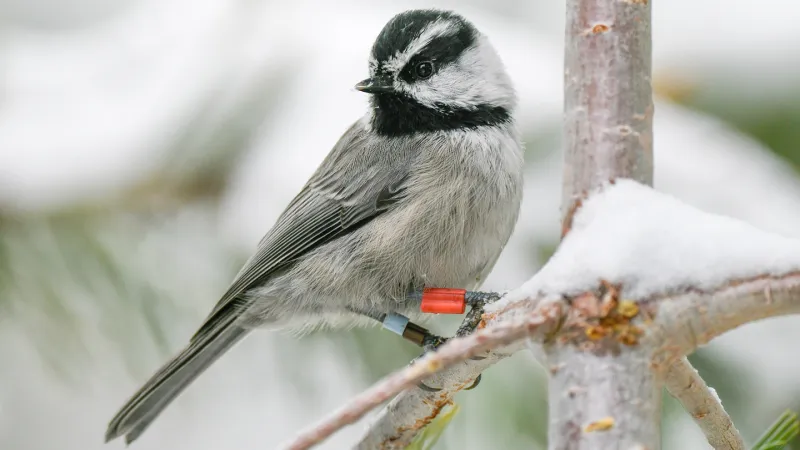
The recent findings regarding mountain chickadee cognition offer a compelling glimpse into the interconnectedness of neurological function, reproductive success, and even gut microbiome health – a connection increasingly relevant across diverse species, including our own. Researchers, through longitudinal studies in the wild, have demonstrated that smarter chickadees not only maintain their cognitive abilities into old age but also produce more offspring and exhibit a more beneficial gut bacterial composition. This isn’t merely an interesting avian observation; it speaks to fundamental principles of aging and resilience, potentially informing broader understandings of how environmental factors and internal biology interact to shape lifespan and health. The observation highlights the value of studying animal behavior in its natural context, a methodology increasingly championed within ecological research. We recently saw a similar spirit of citizen science exemplified by a curious discovery in Istria, Croatia Found this little worm in Istria, Croatia. ID?, showcasing the power of observational data collected outside of controlled laboratory settings.
The link between cognitive function and reproductive success, while not entirely novel, gains added significance when coupled with the gut microbiome data. The gut microbiome is now recognized as a critical regulator of numerous physiological processes, influencing everything from immune function to nutrient absorption and even neurological health. The chickadee study suggests a possible feedback loop: enhanced cognitive abilities might lead to better foraging strategies, which in turn support a healthier gut microbiome, further bolstering cognitive function and reproductive output. This echoes findings in other animal models and is increasingly implicated in human health as well. Consider, for instance, the meticulous observations shared regarding a decorator crab in Friday Harbor, WA Spotted in Friday Harbor, WA. Is this a decorator crab? – while seemingly disparate, such detailed observations of animal behavior and adaptation contribute to our understanding of complex ecological relationships and the diverse strategies organisms employ to thrive. Similarly, the discovery of an unidentified critter in Pensacola, Florida Found this while snorkeling in Pensacola, Florida - any suggestions as to what critter it came from? underscores the constant stream of data emerging from our oceans, requiring increasingly sophisticated analytical tools to interpret.
What’s particularly noteworthy is the methodological rigor of this chickadee research. Studying cognition in wild animals presents unique challenges – controlling for environmental variables, accurately assessing cognitive performance, and tracking individuals over extended periods requires considerable ingenuity and technological advancement. The use of longitudinal data, meticulously collected and calibrated, allows researchers to draw robust conclusions about the long-term consequences of cognitive ability. This approach aligns with the World Data Ocean’s commitment to generating validated, measurable data, essential for informed decision-making regarding environmental stewardship. The study’s findings reinforce the importance of empirical research in understanding the complex interplay of factors influencing species resilience in a changing world. The implications extend beyond ornithology; it provides a framework for investigating similar relationships in other species, potentially revealing universal principles governing aging and health.
Looking forward, a critical question arises: can we leverage this understanding to develop targeted interventions that promote cognitive health and resilience, not just in animals, but also in humans? The emerging field of “nutritional neuroscience” already explores the impact of diet and the gut microbiome on brain function. This chickadee study provides further impetus for investigating the potential of ecological interventions – preserving and restoring natural habitats – to support cognitive health across diverse species. The convergence of ecological research, neuroscience, and microbiome science promises a deeper understanding of the interconnectedness of life and offers the potential for innovative solutions to address the challenges of a rapidly changing world.
Read on the original site
Open the publisher's page for the full experience