Wärtsilä Signs New Deal To Support World’s Largest Purpose-Built Civilian Hospital Ship
Our take
The recent agreement between Wärtsilä and Mercy Ships to enhance the reliability and maintenance of the latter’s hospital ships underscores a critical, often overlooked, intersection: humanitarian aid and robust maritime engineering. Mercy Ships' vessels provide essential medical services in underserved coastal communities worldwide, operating far from established infrastructure. This partnership highlights the vital role of dependable technology in enabling global humanitarian efforts. The complex logistical challenges of operating such vessels, particularly in remote regions, demand a level of engineering precision and proactive maintenance often exceeding that of standard commercial shipping. It’s a development that resonates with the broader challenges of ensuring resilience in critical global systems, a theme explored in a related article detailing how Chinese AI System Cuts Simulated Coastguard Weapons-Use Risk From 0.3% To Zero In Disputed Waters, demonstrating the potential of technology to mitigate risk and improve operational safety. The need for reliable systems extends beyond defense; it’s foundational to humanitarian response.
The agreement’s focus on multi-year service agreements speaks to a forward-thinking approach, emphasizing preventative maintenance and long-term operational stability. This contrasts with reactive maintenance strategies, which are inherently less efficient and potentially jeopardize service delivery. Furthermore, the sheer scale of Mercy Ships’ operations, with two of the world’s largest purpose-built civilian hospital ships, necessitates a highly calibrated and integrated maintenance program. This focus on data-driven optimization aligns with World Data Ocean’s core principles of leveraging integrated data ecosystems to improve efficiency and predictability. The challenges faced by Mercy Ships are echoed in other areas of global infrastructure, from the geological instability impacting East Africa, as detailed in A massive plume deep beneath Africa is pulling the continent apart, to the geopolitical pressures driving innovations like US Plans Nuclear-Powered Merchant Fleet In Bid To Challenge China’s Shipbuilding Dominance, all of which require resilient and adaptable engineering solutions. The reliability of these ships isn't just a matter of technical efficiency; it’s a matter of lives saved and communities served.
Beyond the immediate benefits to Mercy Ships, this partnership offers valuable insights for the broader maritime industry and the application of advanced engineering solutions in challenging environments. The data generated through Wärtsilä’s service agreements—including real-time performance metrics and predictive maintenance analytics—can contribute to a deeper understanding of vessel operation under demanding conditions. This data, properly validated and analyzed, could inform best practices for maritime logistics, particularly in regions characterized by unpredictable weather patterns, limited access to spare parts, and a lack of specialized repair facilities. The emphasis on integrated data ecosystem further reinforces the necessity of interconnected systems for optimal performance and resource allocation. Such integrated approaches are increasingly vital as global systems become more complex and inter-dependent.
Ultimately, the Wärtsilä-Mercy Ships agreement represents more than just a service contract; it's a tangible demonstration of how technological innovation and global collaboration can amplify humanitarian impact. The long-term implications of this partnership, particularly regarding the development of data-driven maintenance strategies for vessels operating in challenging environments, are significant. A key question moving forward is whether the lessons learned from this collaboration can be scaled and applied to other critical infrastructure sectors operating in similarly challenging contexts—and how can we ensure that the benefits of these advancements are accessible to all those who need them most?
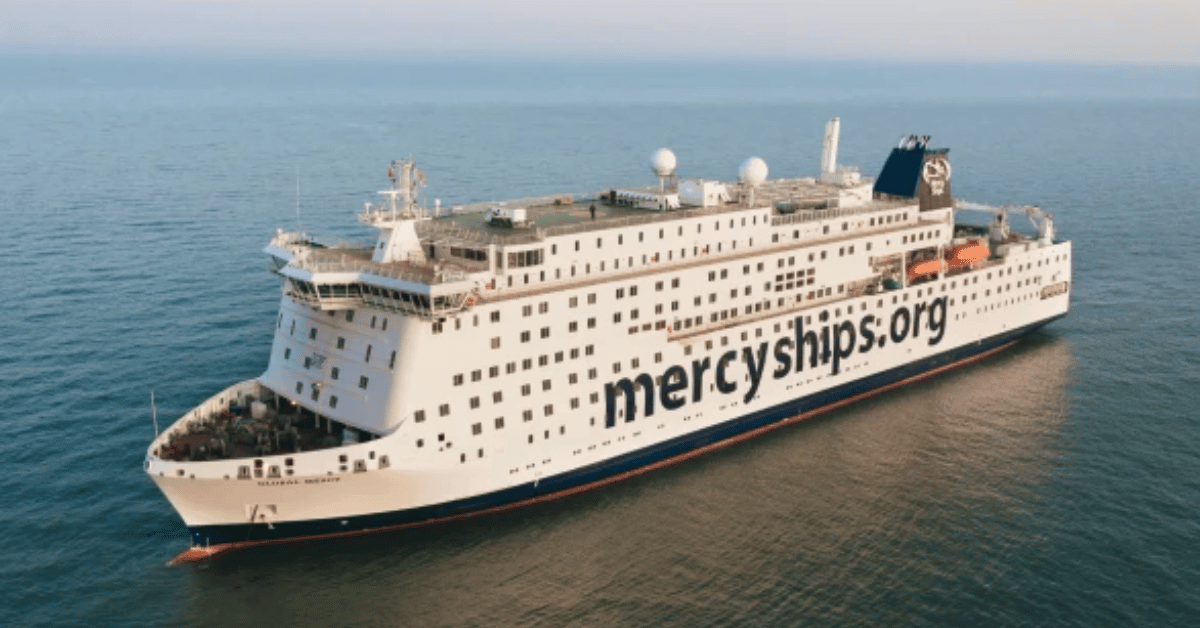
Technology group Wärtsilä has signed a Lifecycle Agreement with charity organisation Mercy Ships International. The contract covers a 5-year renewal of an existing service agreement for the world’s largest purpose-built civilian hospital ship, the Global Mercy , and a 3-year service agreement for the organisation’s latest newbuild vessel, the Africa Mercy II. Both ships are fitted with Wärtsilä engines. The order was booked by Wärtsilä in Q3 2026.
Mercy Ships provides free medical care, including surgeries and medical training, in regions with limited access to healthcare, primarily in underserved local communities across Africa. As these hospital ships deliver critical healthcare services, maintaining high levels of operational reliability and minimising unplanned downtime is essential.
“Our ability to provide medical care depends on the availability and reliability of our vessels. Wärtsilä’s support helps us plan maintenance more effectively and reduce the risk of unexpected disruptions, allowing us to focus on our mission. Based on the positive results of our existing agreement for Global Mercy, we are pleased to continue this collaboration and extend similar support to Africa Mercy II,” says Ciarán Holden, Director of Technical Operations – Mercy Ships International.
The scope of the agreements includes spare parts, field services, crew training, and Wärtsilä’s digital predictive maintenance service, Expert Insight. By combining advanced analytics, artificial intelligence, and Wärtsilä expertise, the service helps identify potential issues before they develop into operational disruptions, supporting high vessel availability and more predictable maintenance planning.
“Mercy Ships performs extraordinary work in delivering healthcare where it is needed most. These agreements are designed to provide the operational reliability, maintenance predictability and technical support required to keep their vessels available for service,” explains Henrik Wilhelms, Director, Agreement Sales – Wärtsilä Marine. “We are proud to support an organisation whose mission has such a meaningful impact on communities around the world.”
The Global Mercy serves as both a floating hospital and medical training centre. Equipped with six operating rooms and extensive training facilities, the vessel is powered by four Wärtsilä 32 engines, each delivering 3,360 kW of power for propulsion and critical onboard hospital operations. Its sister vessel, the ‘Africa Mercy II’, is currently under construction and scheduled for delivery in 2028, further expanding Mercy Ships’ capacity to support underserved communities and strengthen healthcare systems across Africa.
Read on the original site
Open the publisher's page for the full experience