Video: Crane Catches Fire During Cargo Unloading At India’s Mumbai Port; 2 Injured
Our take

The recent incident at Mumbai Port, where a crane caught fire during cargo unloading operations, highlights the inherent risks and complexities of maritime logistics, particularly within high-volume hubs. Two injuries were reported, thankfully not fatalities, but the event underscores the need for continuous assessment and improvement of safety protocols across port infrastructure globally. Such occurrences, while seemingly isolated, contribute to wider disruptions in supply chains and raise concerns about operational resilience. The incident echoes similar maritime safety challenges seen recently, such as the arrest of crew members following the sinking of the passenger ferry [Captain & 7 Crew Arrested After Cyprus-Turkey Passenger Ferry Sinking Which Killed 8], demonstrating that systemic vulnerabilities can manifest in various forms and scales within the maritime sector. Furthermore, the unpredictable nature of maritime incidents, as evidenced by the recent grounding of the damaged cargo ship [Ghost Ship Damaged By Ukrainian Drones Drifts Across Black Sea & Runs Aground In Turkiye], emphasizes the importance of proactive risk mitigation strategies.
The causes of crane fires are multifaceted, ranging from mechanical failures and electrical faults to potential fuel leaks and improper maintenance. While the immediate investigation will focus on determining the specific trigger in this case, it’s vital to examine broader systemic factors. Port authorities and crane operators must prioritize rigorous inspection schedules, adherence to international safety standards (such as those outlined by the International Maritime Organization), and comprehensive training programs for personnel. The recurring nature of incidents involving fires on vessels, as tragically illustrated by [2 Killed After Fire Breaks Out Aboard Oil Tanker Off South Korea], suggests that preventative measures require constant reinforcement and adaptation to evolving technological and operational landscapes. Data analytics, leveraging real-time sensor data from port equipment, could offer invaluable insights into potential failure points, allowing for proactive maintenance and preventing catastrophic events. An integrated data ecosystem, capable of correlating equipment performance with environmental conditions and operational patterns, is essential for enhancing safety.
Beyond the immediate response and investigation, this Mumbai incident should prompt a broader review of port safety management systems. The global interconnectedness of maritime trade means that vulnerabilities in one location can have cascading effects worldwide. The implementation of standardized safety protocols, facilitated by international collaboration and peer-reviewed best practices, is paramount. Moreover, the increasing automation of port operations, while offering efficiency gains, also introduces new safety considerations. Human-machine interaction, cybersecurity vulnerabilities, and the reliability of automated systems all require careful evaluation and mitigation strategies. Longitudinal data analysis of similar incidents worldwide could reveal common patterns and inform the development of more effective preventative measures. The integration of climate indicators into port risk assessments is also becoming increasingly critical, as extreme weather events can exacerbate existing vulnerabilities and trigger unforeseen hazards.
Looking ahead, the maritime industry must embrace a proactive, data-driven approach to safety. The shift from reactive incident management to predictive risk mitigation requires a commitment to continuous improvement and a willingness to invest in advanced technologies. The question becomes: how can we leverage the power of ocean intelligence, derived from validated, measurable data, to create truly resilient and safe port environments, minimizing the potential for future incidents and safeguarding the lives of those who work within this vital industry?
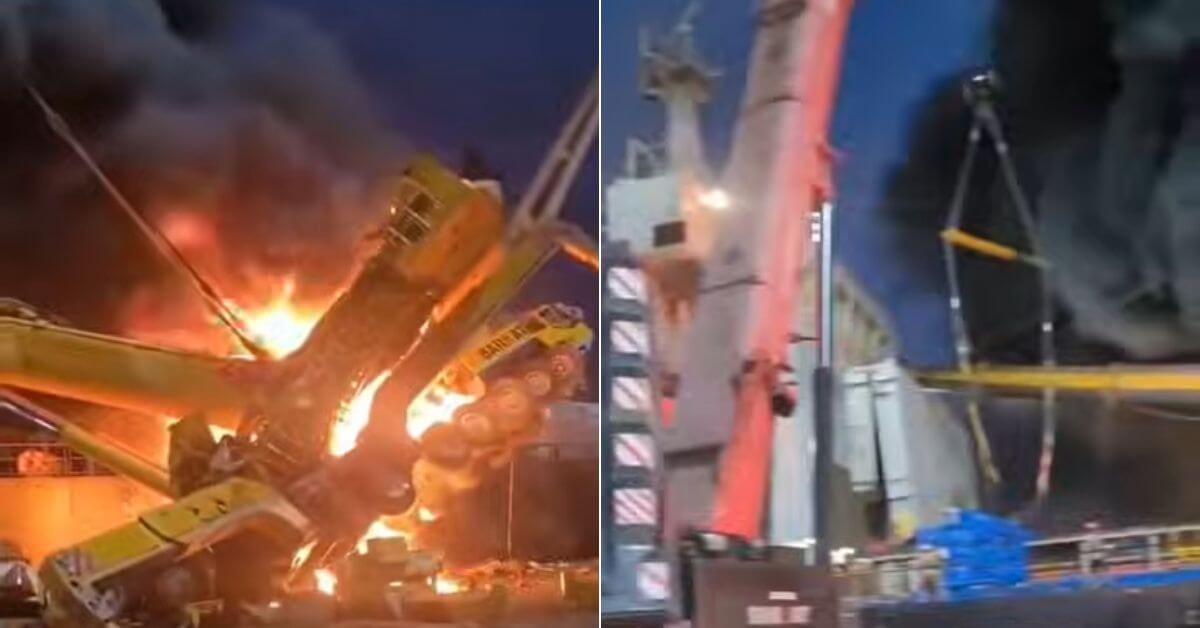
Two crane operators were injured after a crane caught fire during the unloading of a 140-metric-tonne cargo at BPS Port in Mumbai on August 30, 2026.
The incident occurred at around 7:30 p.m. while the Barbados-flagged ship Vienna was undergoing cargo unloading operations.
The cargo was being lifted with two cranes operated by private firm Barkat Company, police said.
According to police, the sling attached to the cargo on one of the cranes became imbalanced and came loose during the lifting operation.
The entire load then shifted onto the second crane.
The sudden change in load lifted the crane off the ground, causing its front telescopic boom to hit the vessel, police said. The impact caused the crane to catch fire.
The Mumbai Port fire brigade was alerted after the incident. Fire personnel were dispatched to the site and brought the blaze under control, with the fire extinguished at around 8:30 p.m., according to BPT Sub-Officer Shinde.
Video Credits: Unfiltered Indian News/YouTube
Two Operators Injured
Two Barkat Company workers were injured in the accident. They were identified as crane operator Ranjit Singh and his assistant Nishant Singh.
Both injured workers were taken to St George Hospital for medical treatment, police said.
The incident was reported by the BPT control room and took place at Green Gate, beside the Cruise Terminal in the Ballard Pier Estate area, according to the information provided by port officials.
An inquiry has been launched to find out the exact circumstances and cause of the accident.
References: hindustantimes, news18
Read on the original site
Open the publisher's page for the full experience