U.S. Navy Considers South Korean, Japanese And Turkish Frigates For New Warship Class
Our take
The U.S. Navy’s consideration of foreign-built frigates – specifically from South Korea, Japan, and Turkey – represents a significant shift in acquisition strategy, driven by the pressing need to bolster naval capacity while confronting persistent shipbuilding bottlenecks. This move isn't simply about acquiring vessels; it’s a calculated attempt to accelerate fleet modernization and address workforce limitations within the U.S. industrial base. The decision acknowledges a reality that has become increasingly apparent: relying solely on domestic production to meet current and future operational demands is unsustainable. The impetus for this approach is further underscored by recent developments in global shipbuilding, such as Maersk’s interest in Bangladesh’s shipbuilding capabilities [Maersk Eyes Investment In Bangladesh Shipbuilding, With Ship Recycling Also On Agenda] and the Indian Register of Shipping’s expansion into Europe to connect European suppliers with India’s shipbuilding boom [Indian Register of Shipping Expands To Hamburg To Connect European Suppliers With India’s Shipbuilding Boom]. These trends highlight a broader global reshaping of maritime industrial capacity, and the U.S. Navy’s actions signal a recognition of this evolving landscape.
The proposed strategy incorporates several crucial elements beyond simply purchasing foreign ships. Technology transfer is a core component, designed to enhance U.S. shipbuilding expertise and potentially create new capabilities within the domestic workforce. Simultaneously, the Navy aims to invest in U.S. shipyards, expanding their capacity and strengthening their infrastructure. This integrated approach—acquiring ships from international partners while simultaneously bolstering domestic capabilities—demonstrates a nuanced understanding of the challenges involved. The certification of Rolls-Royce engines for autonomous naval vessel operations [Rolls-Royce Wins U.S. Navy Certification For mtu Engines In Autonomous Naval Vessel Operations] further illustrates the ongoing technological advancements influencing naval procurement and operational readiness. This is not a retreat from domestic shipbuilding; rather, it’s an acknowledgment that a diversified approach is necessary to maintain a competitive edge. It allows the U.S. to focus its resources on more complex, technologically advanced platforms while leveraging the proven capabilities of allied nations for more readily available, less technologically demanding vessels like frigates.
The broader implications of this decision extend beyond immediate fleet expansion. It establishes a precedent for international collaboration in defense acquisition, potentially paving the way for similar partnerships in the future for other naval assets. This also reflects a growing recognition of the interconnectedness of global supply chains and the strategic importance of diversifying sourcing options. The move also subtly shifts the dynamic within the shipbuilding industry itself. It increases pressure on U.S. shipyards to improve efficiency and competitiveness, while simultaneously providing opportunities for them to collaborate with international partners on technology development and production processes. The successful integration of foreign-built ships into the U.S. Navy will require careful consideration of interoperability, maintenance logistics, and cybersecurity protocols, areas where rigorous validation and empirical data will be critical.
Looking ahead, the success of this initiative hinges on the Navy’s ability to effectively manage technology transfer, integrate foreign-built vessels into existing operational frameworks, and ensure the long-term health of the U.S. shipbuilding industrial base. A key question to watch is whether this approach can truly accelerate fleet modernization without inadvertently eroding the domestic shipbuilding sector’s capabilities or creating undue reliance on foreign suppliers. The longitudinal data collected from this pilot program—regarding cost, timelines, and performance—will be instrumental in shaping future acquisition strategies and determining the long-term viability of this collaborative model for naval procurement.
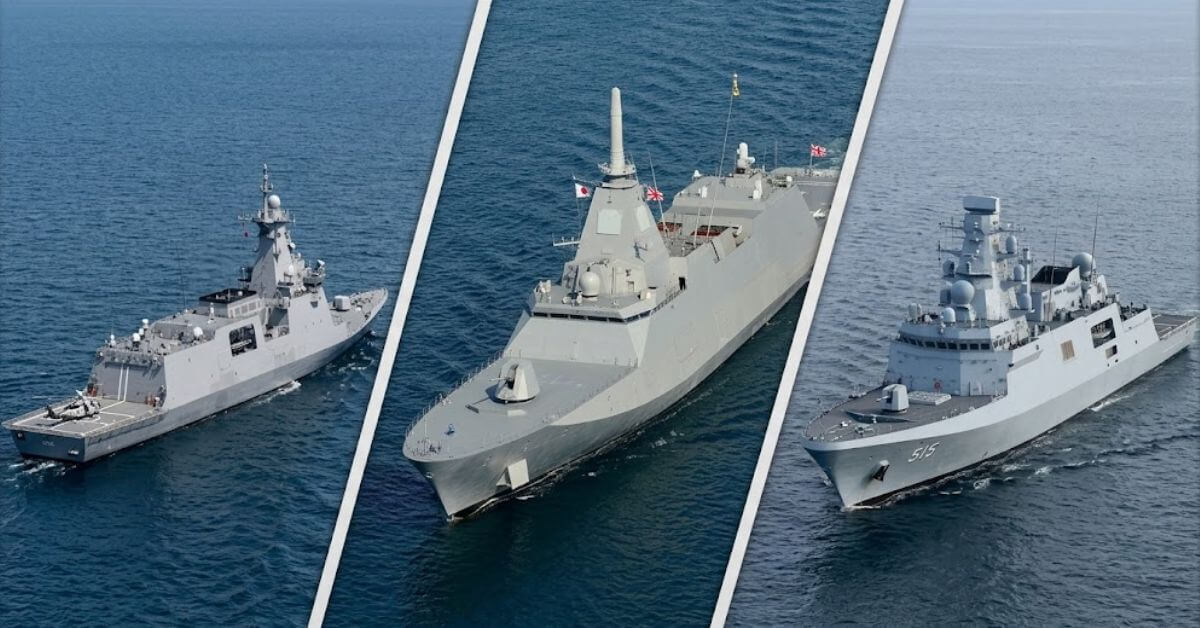
The U.S. Navy is considering frigate designs from South Korea, Japan and Türkiye for a new class of U.S. warships.
The designs being considered are South Korea’s Chungnam-class guided-missile frigate, Japan’s export version of Mitsubishi Heavy Industries’ FFM Mogami-class guided-missile frigate, and Türkiye’s Istanbul-class guided-missile frigate.
The Turkish design came under consideration after Turkish leaders spoke with President Donald Trump about it on the sidelines of the NATO summit in July, according to two sources.
In August, the White House issued a memorandum using a “national security interest” waiver. This allows the Pentagon to consider foreign designs despite U.S. laws that restrict foreign-built warships from entering U.S. naval service.
After the memorandum, Acting Secretary of the Navy Hung Cao directed the office of Assistant Secretary of the Navy for Research, Development and Acquisition William Mahan to oversee a study of international combatants, ro/ro cargo vessels and consolidated cargo replenishment at sea, tankers for the Military Sealift Command.
The study is due on Nov. 12, 2026.
The Navy is looking at ways to get ships built faster while also investing in U.S. shipyards, transferring technology and expanding the workforce, Flanders said.
First Ships May Be Built Abroad
One option is known as the “Finland model”.
Under this approach, the first one or two ships would be built at a foreign shipyard. Foreign companies would then invest in U.S. shipyards and shipbuilding facilities, with production later moving to the United States.
The U.S. Coast Guard is using a similar approach for its Arctic Security Cutter programme. Finnish shipyards are building the first hulls based on Canadian designs before construction moves to a U.S. shipyard.
South Korean Chungnam-Class Frigate
South Korea’s Chungnam-class is one of the designs being considered by the U.S.
South Korea is building six Chungnam-class frigates. HD Hyundai Heavy Industries is building the lead ship. SK Oceanplant is building three, while Hanwha Ocean is building the other two.
U.S.-South Korean shipbuilding ties have also grown.
South Korea committed $150 billion to the U.S. shipbuilding sector as part of a total $350 billion investment pledge under last year’s bilateral trade and investment deal.
U.S. officials from both the Biden and Trump administrations have visited South Korean shipyards.
Japan and Türkiye Designs
Japan’s export version of Mitsubishi Heavy Industries’ FFM Mogami-class guided-missile frigate is also being considered.
Türkiye’s Istanbul-class guided-missile frigate is the third design under review. Several Turkish shipyards are building the class.
The Navy looks for a frigate that can take on some missions now carried out by larger destroyers.
Why the US Navy Needs Frigates?
The Arleigh Burke-class guided-missile destroyers are built for high-end naval warfare.
But Navy leaders say these destroyers are often used for basic missions that could be handled by less sophisticated frigates.
The Navy has changed its frigate plans in recent years.
Late last year, then-Secretary of the Navy John Phelan cancelled the Constellation-class, or FFG-62, guided-missile frigate programme.
He instead pushed the FFX programme, which would create a patrol frigate based on the Coast Guard’s National Security Cutter.
HII Ingalls Shipbuilding has started pre-production work on the first FFX frigate but has not received a contract.
Congress Could Block Foreign Construction
Congress could still limit the administration’s use of the national-security waiver.
The Senate Armed Services Committee’s fiscal 2027 draft defence policy bill removed the waiver.
The House Armed Services Committee’s draft included an amendment that would stop authorised funds from being used for contracts to buy an American warship built at a foreign shipyard.
The final legislation has not been released.
The fiscal 2027 budget proposal also included an Office of Management and Budget-led effort to look at foreign warship designs.
The reconciliation portion included $1.85 billion for a foreign warship design study. The study focused on buying warships from Japan and South Korea.
The future of that reconciliation submission is uncertain.
The U.S. has already used a foreign frigate design for a domestic programme.
Fincantieri Marinette Marine in Wisconsin is building the Constellation-class frigate based on the FREMM multi-purpose frigate. The design is widely exported and is used by the Italian and French navies.
References: koreaherald, USNI
Read on the original site
Open the publisher's page for the full experience