This microbe turns into a cannibalistic ‘Hulk’
Our take
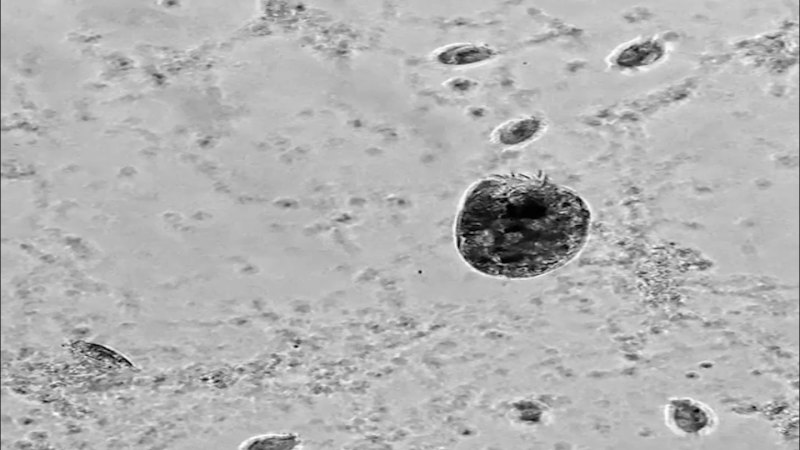
The recent discovery of *Euplotes gigatrox*'s startling predatory behavior—its ability to transform into a “cannibalistic Hulk”—offers a compelling glimpse into the potential complexity of early life forms and the evolutionary pathways that led to sophisticated strategies for survival. This single-celled protist, when threatened, undergoes a dramatic morphological shift, developing powerful appendages used to engulf and consume other organisms. While predatory behavior isn’t entirely novel in the microbial world, the scale and rapidity of *E. gigatrox*'s transformation, coupled with the underlying genetic mechanisms driving it, presents a fascinating case study. Understanding these dynamic adaptations could provide insights into how early life navigated resource scarcity and environmental pressures, potentially reshaping our understanding of the origins of multicellularity and complex behaviors. The research, as highlighted by the original article, suggests that the building blocks for complex organismal responses may have existed far earlier than previously believed, embedded within the seemingly simple world of microorganisms. This aligns with broader research seeking to understand the evolution of sophisticated biological systems, exemplified by our recent feasibility assessment of [Feasibility assessment of green methanol ship with integrated life cycle assessment and multi-criteria decision-making], which reflects the increasing complexity of engineered systems designed to address global challenges.
The implications of this discovery extend beyond a mere curiosity about a particularly aggressive microbe. The shape-shifting ability of *E. gigatrox* is likely controlled by a complex interplay of genes and signaling pathways, and deciphering these mechanisms could reveal fundamental principles of cellular plasticity and adaptation. It’s a reminder that evolution often operates through surprisingly rapid and dramatic changes, particularly in microorganisms with short generation times. The research also connects, albeit indirectly, to the ongoing advancements in ocean robotics and our ability to observe and understand these processes in their natural environment. For instance, the recently unveiled [URI Unveils Ocean Robotics Laboratory With An Underwater Ribbon Cutting Ceremony] underscores the increasing sophistication of our tools for exploring and documenting marine life, which will undoubtedly contribute to even more unexpected discoveries in the future. The ability to track and monitor microbial populations in real-time, coupled with advanced genomic analysis, will be crucial for uncovering the full extent of this kind of predatory behavior and its ecological impact. Spain's investment in advanced maritime technology, such as evidenced by the [Spain Unveils Indigenous 3,000-Ton Submarine Built for Silent Deterrence], highlights the ongoing commitment to understanding and managing the complexities of our oceans, an environment where such unexpected microbial interactions are likely to be far more common than we currently appreciate.
The realization that a single-celled organism can exhibit such a dramatic and purposeful morphological change challenges our preconceived notions about the limitations of microbial behavior. It forces us to reconsider the potential for complexity and adaptation within even the simplest life forms, and to acknowledge that the evolutionary trajectory leading to complex multicellular organisms may have been more gradual and building upon pre-existing cellular capabilities than previously thought. The involved cellular signaling, gene regulation, and physical re-organization will almost certainly offer new avenues of research into regenerative medicine, materials science, and bio-inspired engineering. Studying the molecular mechanisms governing *E. gigatrox*'s transformation could, for example, inspire the development of new materials that can dynamically adapt to environmental stimuli, or provide insights into how to stimulate tissue regeneration in complex organisms. The measured and empirical approach to scientific investigation, a cornerstone of our own mission at World Data Ocean, is essential to properly contextualize these findings.
Ultimately, the “cannibalistic Hulk” of the microbial world serves as a powerful reminder of the vast, largely unexplored biodiversity of our planet’s oceans. It’s a testament to the resilience and adaptability of life, even at its most fundamental level. The ongoing proliferation of integrated data ecosystems, allowing for longitudinal observation and calibrated analysis, is key to unlocking the secrets held within these microscopic communities. What other surprising adaptations are lurking within the ocean’s depths, waiting to be discovered? And how will these discoveries reshape our understanding of the intricate web of life that sustains our planet, particularly in the face of rapidly changing environmental conditions?
Read on the original site
Open the publisher's page for the full experience