Shipping Giants Come Together To Develop New LNG Carrier Designs Using Hybrid Electric Propulsion
Our take
The recent collaboration between Lloyd’s Register, HD Korea Shipbuilding & Offshore Engineering (KSOE), and HD Hyundai Heavy Industries to develop hybrid electric LNG carrier designs represents a significant step towards decarbonizing maritime transport, a sector facing increasing pressure to reduce its environmental impact. This initiative aligns with a broader trend of technological innovation aimed at mitigating the climate effects of global trade. We’ve seen similar efforts recently, such as the [World’s First LNG Carrier Equipped With Two Wind Challenger Systems Named Ahead Of Delivery], demonstrating the diverse approaches being explored to enhance fuel efficiency and reduce emissions. The integration of hybrid electric propulsion into LNG carriers—ships already designed to transport a relatively cleaner fuel compared to traditional heavy fuel oil—is a particularly compelling development, showcasing a layered approach to sustainability. It’s also worth noting the concurrent advancements in carbon capture technologies, as highlighted by [Europe’s Largest Industrial Carbon Capture Facility Begins Operations At Yara Plant], which further underscores the industry’s commitment to reducing its carbon footprint across the entire value chain.
The inherent efficiency gains of hybrid electric propulsion are substantial. By incorporating electric motors alongside traditional engines, these vessels can optimize energy consumption based on operational conditions. During periods of low load, such as navigating coastal waters, electric power can be utilized, significantly reducing fuel consumption and emissions. Furthermore, the integration of battery technology allows for energy storage and peak shaving, enhancing operational flexibility and further minimizing reliance on fossil fuels. This is not merely an incremental improvement; it's a fundamental shift in propulsion system design that addresses a core challenge in maritime decarbonization. The scale of the undertaking, involving major players like KSOE and HHI, indicates a serious commitment to transitioning towards more sustainable shipping practices. The recent [Indo-German Maritime Pact To Boost Construction Of Specialised Container, Passenger & Research Vessels] further exemplifies the global nature of this transition, with international partnerships driving innovation across various maritime sectors.
The adoption of these hybrid designs is likely to be accelerated by increasingly stringent environmental regulations and growing pressure from stakeholders—including investors, consumers, and governments—to reduce emissions. The LNG sector, while often viewed as a transitional fuel, is itself under scrutiny, and these technological advancements offer a pathway to mitigate the environmental impact of LNG transport. However, challenges remain. The initial capital investment required for hybrid electric systems is higher than for conventional designs, and the availability of shore-based charging infrastructure is currently limited. The long-term operational and maintenance costs also need careful consideration to ensure the economic viability of these vessels. Furthermore, the true environmental benefit hinges on the source of the electricity used to power the electric motors; renewable energy sources are essential to maximize the decarbonization potential.
Looking ahead, the success of this collaboration will likely influence the design and construction of other vessel types, driving a broader adoption of hybrid electric propulsion across the maritime industry. The integration of digital technologies and real-time data analytics will be crucial to optimizing the performance of these systems and maximizing their environmental benefits. A key question to watch is how quickly the supporting infrastructure—charging ports, grid capacity, and renewable energy supply—can be developed to fully realize the potential of these innovative vessel designs and ensure a truly sustainable maritime future.
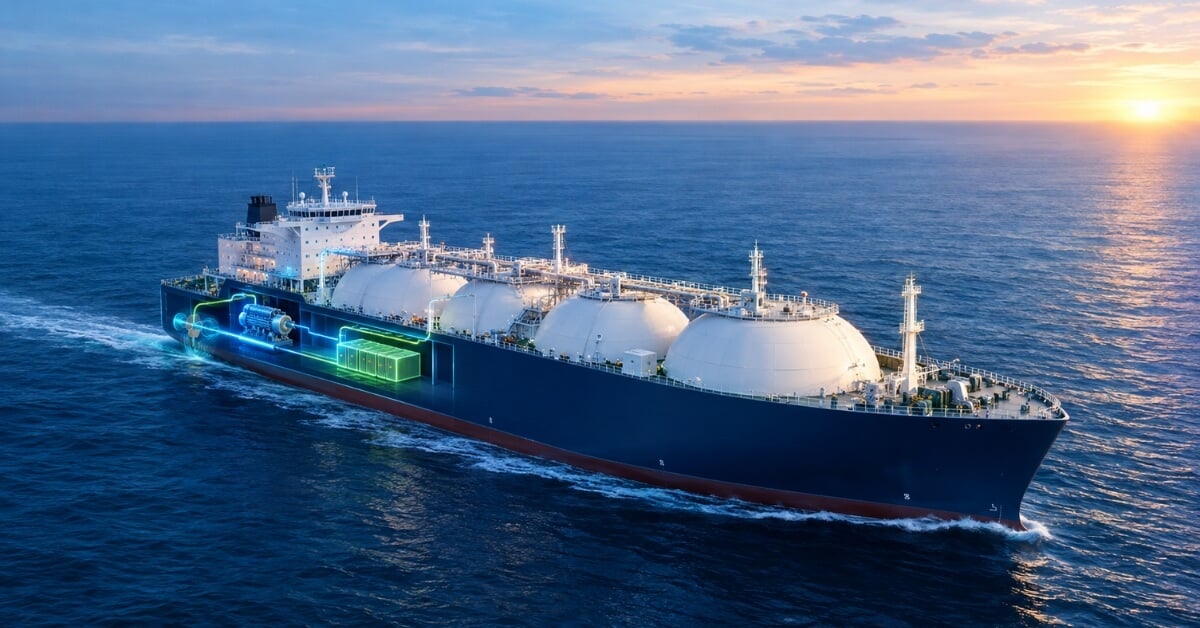
Hybrid electric propulsion is expected to play an increasingly important role in improving fuel efficiency and reducing emissions.
Lloyd’s Register (LR) has joined forces with HD Korea Shipbuilding & Offshore Engineering (KSOE) and HD Hyundai Heavy Industries (HHI) to develop a new generation of LNG carrier designs using hybrid electric propulsion.
The partners signed an Approval in Principle (AiP) at Gastech 2026 in Bangkok to advance the design of a 185,000 cbm LNG carrier featuring a hybrid electric propulsion system.
Under the AiP, the partners will work on the development and safety verification of the vessel’s hybrid electric propulsion system, with a focus on strengthening system architecture, redundancy philosophy and battery integration. The project also aims to develop guidance and technical requirements for this emerging technology, providing a framework to demonstrate support wider adoption across the LNG carrier market.
For LR, early involvement will support the development of technical guidance in an area where formalised standards are still evolving, strengthening its ability to support future projects involving electric propulsion systems and low-carbon vessel concepts.
The partners expect the project to generate insights that extend beyond LNG carriers, informing future developments in electric propulsion, fuel cell integration and other advanced vessel concepts.
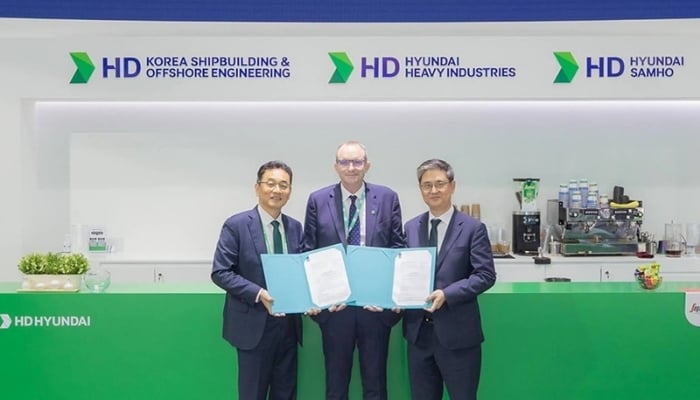
Andy McKeran, Chief Growth Officer, Lloyd’s Register, said: “Hybrid electric propulsion has clear potential to support efficiency gains and emissions reduction, but its application at this scale requires a robust approach to design and safety. By working in partnership from the earliest stages, we can help shape practical, reliable solutions that support wider deployment across the industry.”
Hongryeul Ryu, Executive Vice President & CTO, HD Hyundai Heavy Industries, said: “HD HHI has proactively adopted eco-friendly technologies to comply with environmental regulations. Through this recent project, we were able to identify the various advantages and disadvantages of applying an advanced electric propulsion system. Building upon these insights, we expect this experience to serve as a valuable foundation for developing and implementing more efficient propulsion systems in the future.”
Kwang-Pil Chang, Senior Executive Vice President – Advanced Research Center, HD KSOE, said: “Electric propulsion is at the heart of the maritime industry’s transition toward more sustainable and efficient vessels. We are continuously advancing our electric propulsion technologies and solutions to lead this transition and enable their application across a broader range of vessel types. Through close collaboration with our partners, we will continue to strengthen our technological leadership and shape the future of electric shipping.”
Press Release
Read on the original site
Open the publisher's page for the full experience