Shipping Company Pays Record $5.3 Million To Transit Panama Canal Amid Rising Demand
Our take
The recent news of SK Gas paying a record $5.3 million to secure a Panama Canal transit slot for its LPG carrier, G. Spirit, underscores a growing tension within global maritime logistics. This single transaction, while remarkable in its magnitude, is a symptom of a larger systemic challenge: escalating demand straining critical infrastructure. The situation is further complicated by factors such as [Global Port Congestion Reaches New High With 4.3 Million TEU Vessel Capacity Waiting To Berth], demonstrating the broader bottlenecks impacting the movement of goods worldwide. The increased cost of transit reflects both heightened demand and the ongoing limitations of the canal itself, particularly given the impact of prolonged drought conditions impacting water availability for canal operations. This event necessitates a closer examination of the long-term implications for trade routes, shipping costs, and the overall efficiency of the global supply chain, which is already facing considerable pressure. Furthermore, the incident highlights the need for more robust, integrated data systems to anticipate and mitigate these kinds of logistical crises, a need we at World Data Ocean are actively addressing.
The exorbitant fee paid by SK Gas is not an isolated incident but rather a predictable consequence of constrained capacity meeting surging demand. The Panama Canal, a vital artery of global trade, is operating near its maximum throughput, and the current drought conditions have only exacerbated the problem, limiting the number of transits per day. This situation creates a “bidding war” dynamic, where companies are willing to pay increasingly high premiums to ensure timely delivery of their goods. The ripple effects of this congestion extend far beyond the immediate cost of transit, impacting freight rates, inventory management, and ultimately, consumer prices. Related to this, the need for updated best practices for cargo handling and maintenance, such as those outlined in [ChemServe And Witherbys Launch New Tank Cleaning Handbook For Cargo Ships], becomes even more critical to minimize delays and ensure operational efficiency within a stressed system. The implications for smaller shipping companies, who lack the financial resources to compete in these auctions, are particularly concerning and could lead to further consolidation within the industry.
Looking beyond the immediate financial impact, the Panama Canal situation serves as a stark reminder of the vulnerability of critical infrastructure to climate change. The prolonged drought impacting the canal is a direct consequence of shifting weather patterns, a trend that is expected to intensify in the coming years. This underscores the need for proactive adaptation measures, including investments in water management technologies and potentially, alternative shipping routes. The historical context of maritime infrastructure is also relevant; the efforts involved in recreating ancient Roman vessels, as seen in [Croatian Army Rescues 18-Metre Ancient Roman Ship Replica Stranded by Low Water], while fascinating, also illustrate the enduring challenges of navigating waterways and the importance of understanding environmental factors impacting maritime operations. The long-term resilience of the global trade network depends on our ability to integrate climate data and predictive modeling into our infrastructure planning and operational strategies.
The record-breaking transit fee is a clear signal that the current system is approaching a breaking point. While temporary solutions like draft restrictions and increased efficiency measures may provide some relief, a more fundamental shift is required. The increasing reliance on single chokepoints for global trade creates unacceptable systemic risk. Moving forward, it will be critical to monitor the development of alternative routes, such as the Arctic shipping lanes (as ice conditions permit), and to invest in technologies that enhance the efficiency and resilience of existing infrastructure. A key question to watch is whether this event will spur significant investment in canal expansion or the development of entirely new maritime corridors, and how quickly these developments can be calibrated to meet the evolving demands of a rapidly changing global trade landscape.
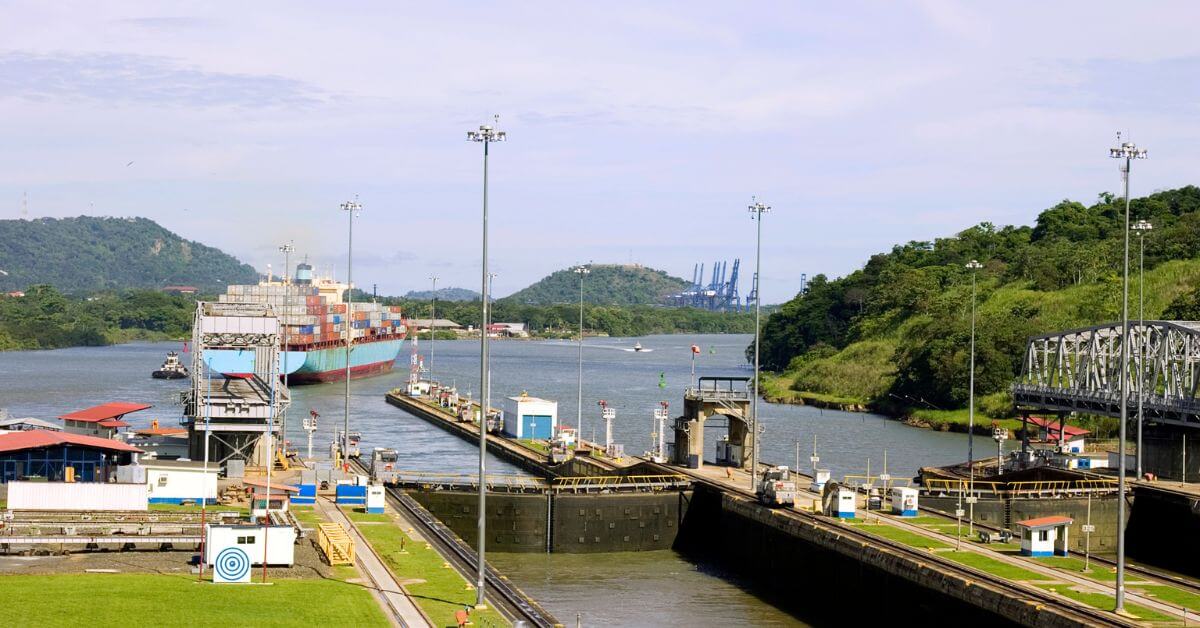
South Korea’s SK Gas has agreed to pay a record $5.3 million to secure a Panama Canal transit slot for its LPG carrier G. Spirit on Sept. 1, as demand rises and fewer slots are available.
The payment, worth about 7.3 billion won, is the highest amount paid in a Panama Canal transit auction, Bloomberg reported on Aug. 26.
It is also higher than the previous record of $4.6 million, or about 6.4 billion won, set earlier this month by SK Shipping. The auction gives G. Spirit the right to travel northbound through the canal.
The Panama-flagged LPG carrier has a deadweight capacity of 54,502 tonnes and is managed by SK Shipping.
The vessel was waiting on the Pacific side of the canal for its transit, according to Bloomberg data.
The auction price has risen sharply as shipping companies face longer waits and fewer canal slots.
Ships arriving without reservations have had to wait for as long as 11 days, according to Argus Media.
The Panama Canal Authority said recent auction results showed “significantly stronger demand” than before February, when the median auction price was about $55,000. The latest bid is nearly 100 times that amount.
Drought Limits Panama Canal Capacity
The canal is also facing lower water levels because of dry conditions in the region.
Rainfall in the canal area was 34% below average from May to August. Water flowing into the canal was also 44% below average, according to the Panama Canal Authority.
The authority will reduce transit slots from September and may also limit the amount of cargo ships can carry.
The authority will cut the number of transit slots from September and may also limit the cargo some ships can carry. From Sept. 4, the Neopanamax locks will have nine slots a day, including one slot offered through an auction.
Most ships use the canal’s reservation system, the authority said. Ships without a reservation or those in a hurry can bid for open slots. The auction fee is separate from the regular canal toll.
LNG and LPG Carriers Get Priority
LNG and LPG carriers get priority in some auctions. Under a rule announced on Aug. 25, LNG ships will get first preference for cancelled or newly available slots, followed by LPG carriers.
Demand for canal slots has also increased after the Iran war disrupted major trade routes, especially those to Asia.
At the same time, the canal is cutting capacity because water levels are falling. With fewer slots available, competition for them has increased.
About SK Gas and SK Shipping
SK Gas was founded in 1985 and is based in Seongnam, South Korea. It is an LPG distributor and international trader.
The company held a 30.9% share of South Korea’s domestic LPG market at the end of 2025. It also operates 480,000 tonnes of LPG storage capacity at terminals in Ulsan and Pyeongtaek.
SK Shipping is a South Korean shipping company with a fleet that includes very large gas carriers.
The previous $4.6 million record was linked to G. Arete, another LPG carrier operated by SK Shipping.
References: Bloomberg, BusinessKorea
Read on the original site
Open the publisher's page for the full experience