Russia Kills Captain Of Tanzanian-Flagged Ship & Injures 3 Crew In A Brutal Drone Attack In Black Sea
Our take
## Our Take: Escalating Risks to Maritime Commerce in the Black Sea

The reported attack on a Tanzanian-flagged cargo ship in the Black Sea, resulting in the death of the ship's captain and injuries to three crew members, represents a deeply concerning escalation of risks to maritime commerce and underscores the widening scope of the conflict in Ukraine. This incident, attributed to a Russian drone strike while the vessel was en route to a Ukrainian port, transcends the immediate tragedy and introduces a new layer of complexity to an already volatile geopolitical landscape. The targeting of a ship not directly affiliated with either combatant—Tanzania holds no direct stake in the conflict—signifies a potential shift in tactics, broadening the potential for collateral damage and raising serious questions about the safety of commercial shipping lanes vital to global supply chains. Relatedly, the recent increase in attacks on vessels in the Red Sea demonstrates a broader trend of maritime disruption Maritime Security in the Red Sea and the growing vulnerability of commercial transport routes. The Black Sea, once considered relatively safe compared to other conflict zones, is rapidly becoming a high-risk area, demanding a recalibrated understanding of maritime security threats.
The implications extend far beyond the immediate impact on the crew and the shipping company. The Black Sea is a crucial artery for grain exports, particularly from Ukraine, impacting global food security. Increased attacks and the resultant insurance premium hikes and rerouting of vessels will inevitably lead to higher food prices and exacerbate existing vulnerabilities in food supply chains, particularly for nations reliant on Ukrainian grain. The incident also highlights the potential for miscalculation and escalation. While Russia has previously targeted vessels suspected of supporting Ukraine, the attack on a ship with a neutral flag raises the specter of unintended consequences and the potential for broader international condemnation. Understanding the precise calibration of Russia’s actions, and the factors driving this apparent expansion of targeting, is critical. This event follows a period of heightened tensions surrounding naval activity and accusations of provocative maneuvers Black Sea Naval Dynamics, further demonstrating the precarious nature of the situation. The validated data surrounding maritime traffic patterns in the region, as tracked through integrated data ecosystems, will be essential for assessing future risks and developing mitigation strategies.
The incident compels a reassessment of existing maritime security protocols and the development of more robust risk mitigation strategies. Current reliance on international law and established maritime norms appears insufficient to guarantee the safety of commercial vessels operating in conflict zones. The need for improved real-time monitoring and predictive analysis – leveraging ocean intelligence derived from calibrated sensors and longitudinal data – is paramount. Furthermore, enhanced collaboration between nations is essential to establish clear rules of engagement and ensure the safe passage of commercial ships. Peer-reviewed research on the impact of conflict on maritime trade routes, coupled with empirical data on vessel movements and security incidents, will inform more effective policy decisions. The integrated data ecosystem underpinning maritime awareness must be strengthened to provide a comprehensive and accurate picture of the evolving threat landscape. The incident also underscores the importance of robust maritime domain awareness, allowing for early detection and response to potential threats.
Looking ahead, the critical question becomes: will this attack trigger a wider international response aimed at protecting commercial shipping in the Black Sea? Or will it become a normalized event, further destabilizing the region and disrupting global trade? The potential for retaliatory actions, either direct or indirect, remains a significant concern. The longitudinal impact of these disruptions on global food security and economic stability warrants close monitoring. A measured and data-driven approach, prioritizing the safety of seafarers and the integrity of maritime commerce, is urgently needed to prevent further escalation and safeguard the vital arteries of global trade.
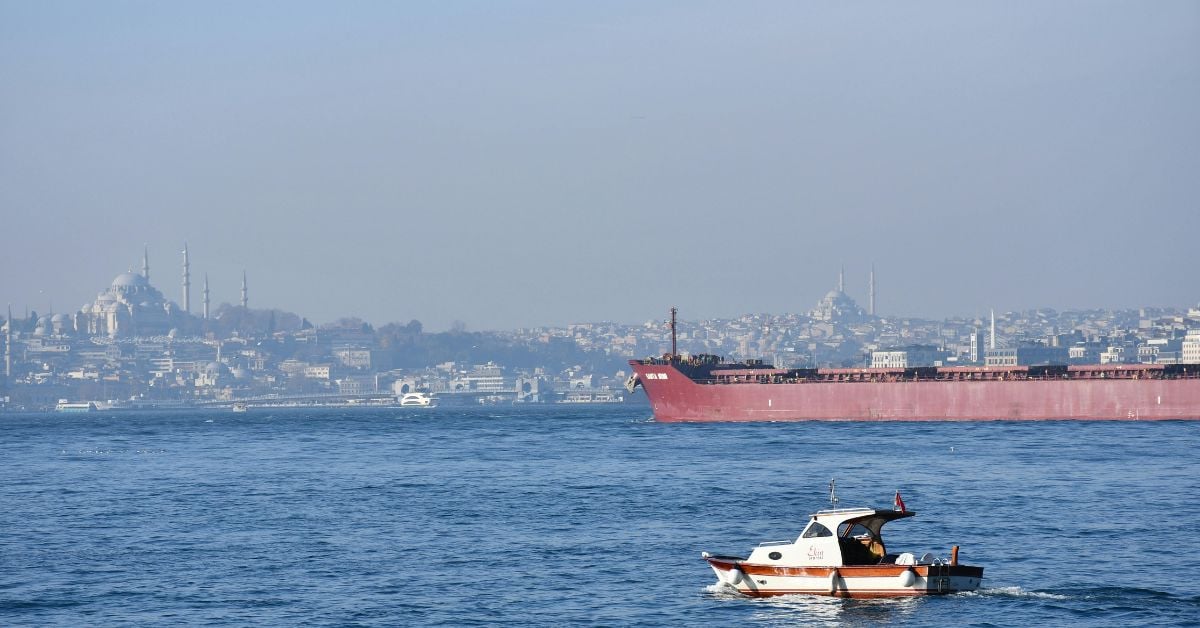
A cargo ship sailing under the flag of Tanzania was attacked by a Russian drone while it was heading to a port in Ukraine.
Due to the impact, the captain was killed, and three other crew members were severely injured, the Infrastructure Ministry of Ukraine said.
However, it did not reveal which Ukrainian facility the ship was sailing towards, and more details are awaited.
This is the latest Russian attack among several which have targeted Ukrainian ports, coastal cities, commercial vessels carrying grain, and other civilian infrastructure.
Ukraine has urged the international community to give a coordinated response to Moscow and protect shipping in the Black Sea, where Russia continues to attack ships.
However, Ukraine has also launched many attacks against Russian port infrastructure and energy plants.
Ukraine had begun Operation Molochka in July to track the shadow fleet of vessels used by Russia to carry its sanctioned oil and energy products.
The operation covered the Sea of Azov and the Black Sea, along with Crimea, which is illegally occupied by Moscow.
Turkiye has urged both Kyiv and Moscow to halt attacks on ships in the Black Sea after many Turkish-flagged vessels came under attack in the region.
Although Kyiv has expressed willingness to accept the request, Russia does not want to de-escalate the situation.
To safely export grain, Ukraine established its own maritime corridor in the Black Sea in 2023, after Moscow backed out of a grain agreement mediated by the U.N. and Turkiye.
Read on the original site
Open the publisher's page for the full experience