Russia Demands ‘Immediate Release’ Of Vessel Seized By Norway Over Naftogaz’s $4.2 Billion Claim
Our take
The recent seizure of the vessel *Professor Molchanov* by Norwegian authorities, at the behest of Ukraine’s Naftogaz, highlights a complex intersection of international law, energy disputes, and maritime operations. The underlying claim—a $4.2 billion compensation demand from Naftogaz regarding assets taken by Russia—adds another layer of geopolitical tension to an already fraught landscape. This action, while legally permissible under existing maritime lien laws, underscores the growing use of asset seizures as a tool for enforcing international judgments, particularly in cases involving state actors. The escalating reliance on such measures signals a shift in how commercial disputes with significant political implications are resolved, potentially impacting global trade and maritime security. We've observed similar shifts in Arctic resource management and infrastructure development, as evidenced in articles like [Paraglacial lagoons of Svalbard: emerging ecosystems at the Arctic Land-Sea interface], illustrating how rapidly changing environmental conditions and geopolitical maneuvering are reshaping the region's legal and operational frameworks. Further, the scale of the iceberg event described in [Giant Greenland iceberg slams into Joe Island and survives] underscores the dynamic and often unpredictable nature of Arctic environments, adding another variable to any maritime operation.
The immediate implications are clear: Russia is demanding the vessel’s immediate release, escalating the diplomatic pressure on Norway and potentially straining relations further. The *Professor Molchanov*, a research vessel, adds a layer of complexity, as its seizure could be perceived as targeting scientific endeavors, though the legal basis remains the underlying debt claim. This case also raises questions about the enforceability of international judgments against state-owned entities, particularly when those entities operate in jurisdictions with differing legal frameworks. While Norway is acting within its legal rights, the precedent set by this action could encourage other creditors to pursue similar measures, leading to a more litigious and unpredictable maritime environment. The broader context of Norway's investment in sustainable shipping, as detailed in [Norway Launches NOK 68 Million Project to Accelerate Wind-Powered Shipping], provides a stark contrast to the current dispute, underscoring the nation’s dual commitment to both legal processes and environmentally conscious practices. The focus on wind propulsion demonstrates a forward-looking approach to maritime operations, one that could be complicated by increased geopolitical instability.
Beyond the immediate legal and diplomatic fallout, this incident illuminates a larger trend: the weaponization of trade and maritime assets in international disputes. As states increasingly leverage economic levers to exert political pressure, the potential for disruptions to global supply chains and maritime commerce grows. The reliance on international courts and arbitration mechanisms to resolve such disputes is increasingly challenged by the willingness of creditors to pursue unilateral actions, such as asset seizures. The effectiveness of these actions, however, remains uncertain, as Russia could retaliate with measures targeting assets held in its jurisdiction, creating a cycle of reciprocal actions. The scientific community, often reliant on international collaborations and shared access to resources, is particularly vulnerable to the ripple effects of such geopolitical tensions. The integrity of oceanographic research, essential for understanding and mitigating climate change, could be compromised by disruptions to maritime operations and access to data.
Looking ahead, the resolution of this case will likely set a precedent for future disputes involving international judgments and maritime assets. The question remains: how can the international community establish clearer guidelines and mechanisms for enforcing judgments against state-owned entities, while safeguarding the principles of due process and minimizing disruptions to global trade and scientific endeavors? Will this incident lead to a re-evaluation of maritime lien laws and the potential for their misuse, or will it become a normalized tool in the arsenal of international dispute resolution? The evolving interplay of legal frameworks, geopolitical pressures, and the increasingly vital role of maritime data in understanding our planet demands careful observation and a commitment to fostering a more predictable and equitable maritime environment.
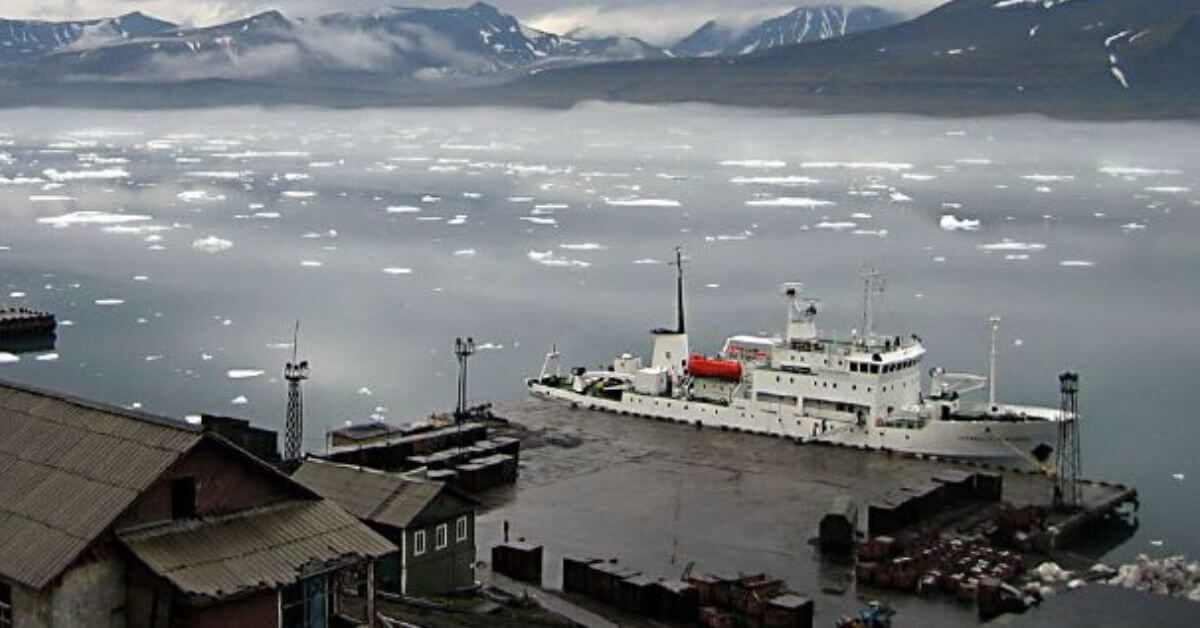
Russia has demanded the immediate release of a vessel seized by Norway in the Arctic.
The seizure is linked to a $4.2 billion compensation claim by Ukraine’s state energy company Naftogaz over assets taken by Russia after its 2014 annexation of Crimea.
The Professor Molchanov was seized on Wednesday in Svalbard, a Norwegian Arctic archipelago, under a court order dated Aug. 31, the governor of Svalbard said.
Naftogaz is trying to enforce a $4.2 billion arbitration award against Russia. A Hague-based arbitration tribunal ruled in favour of Naftogaz in 2023 over assets seized after Moscow annexed Crimea. Norway recognises the ruling.
The Professor Molchanov is a research vessel that is also used for expedition cruises. It is now being held at the quay in Barentsburg, a Russian-operated mining settlement in Svalbard.
The vessel will stay there until the governor or Norwegian courts make a decision.
Russia’s Foreign Ministry summoned Norwegian Ambassador Heidi Olufsen on Thursday and protested against the seizure.
The ministry said Russia rejected the seizure of the Professor Molchanov. It also accused Norway of taking actions to limit Russia’s presence in Svalbard.
The Russian Embassy in Norway said it would appeal the decision.
Norway said the seizure was not a political move against Russia. Norwegian authorities said they were enforcing a court ruling and were not a party to the dispute between Russia and Naftogaz.
Norwegian Justice Ministry spokesperson Frank Lynum said the governor of Svalbard was required to carry out the court order.
Lynum said the matter was being handled through the normal Norwegian court process.
Russia Says Vessel Is Its Only Supply Route
Russia says the Professor Molchanov is the only remaining supply route for its settlements in Svalbard. It says this is because of sanctions Norway imposed after Russia’s full-scale invasion of Ukraine.
Russia operates a coal mine in Barentsburg, where around 350 Russian and Russian-speaking Ukrainian residents live. It also operates a smaller settlement at Pyramiden.
Svalbard is governed by a 1920 treaty. The treaty recognises Norwegian sovereignty over the Arctic archipelago but gives nationals of countries that signed it equal rights to carry out certain economic activities and exploit natural resources there.
Norway says those rights do not mean Russian people or companies operating in Svalbard are free from Norwegian laws and regulations.
The seizure is part of Ukraine’s effort to recover money from Russian state and commercial assets held abroad. Kyiv is seeking compensation for losses caused by Moscow’s actions against Ukraine.
References: Channel NewsAsia, Kyiv Post
Read on the original site
Open the publisher's page for the full experience