Pompeii’s survivors shine in a new documentary series
Our take
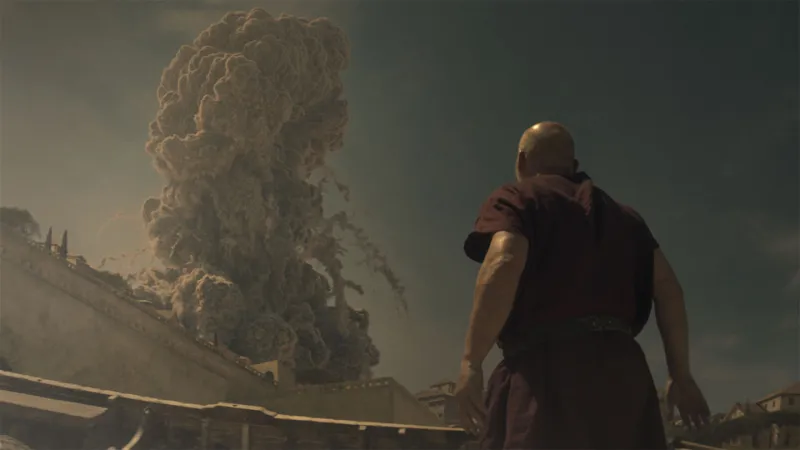
Pompeii: Out of the Ashes, and into a New Era of Historical Understanding
The recent documentary series, *Pompeii: Out of Time*, hosted by Tom Hiddleston, presents a compelling, if somewhat unconventional, approach to engaging with history. By interweaving factual accounts with dramatized narratives centered around three specific Pompeian residents – a gladiator, a merchant, and a slave – the series attempts to humanize a tragedy often viewed through the lens of archeological findings and geological disaster. While the blending of fact and fiction is a deliberate choice, sparking debate about historical accuracy, the underlying principle – to connect audiences with the lived experiences of those impacted – holds considerable merit. This approach builds upon a broader trend within historical documentation, moving away from purely academic analyses towards narratives that prioritize emotional resonance and accessibility. Consider, for example, the recent advancements in utilizing LiDAR technology to map and analyze Roman settlements, as detailed in Mapping the Roman Empire with LiDAR, demonstrating a parallel drive to unlock deeper understandings of the past through technological innovation. Furthermore, the series’ focus on individual stories echoes the methodology of microhistory, a field that examines large historical trends through the lens of specific, localized events and individuals, a concept explored further in Microhistory: Re-examining the Past. The effective application of this strategy is contingent on careful calibration – ensuring the dramatizations remain grounded in validated historical data and avoid perpetuating misleading narratives.
The significance of *Pompeii: Out of Time* extends beyond its entertainment value. It represents a shift in how we consume and engage with historical narratives, particularly within the context of a rapidly evolving media landscape. Traditional documentaries often struggle to reach wider audiences due to their perceived density or lack of narrative drive. By embracing a more cinematic approach, incorporating elements of storytelling typically found in fictional dramas, the series successfully broadens the appeal of historical content. This is not without its risks, of course. Over-reliance on dramatic license can compromise historical accuracy and diminish the value of the underlying research. However, when executed thoughtfully, this approach can spark greater public interest in historical inquiry, motivating viewers to seek out further information and engage with primary sources. The integration of archeological findings and expert commentary within the dramatized segments provides a valuable framework for contextualizing the personal stories, reinforcing the scientific basis of the reconstruction rather than simply presenting conjecture. The success of this approach, in part, hinges on the credibility of the source material and the transparency regarding the creative liberties taken – a factor that should be carefully considered in future historical productions.
The documentary’s real-time reconstruction of events, utilizing advanced CGI and archaeological data, highlights the ongoing advancements in historical analysis and digital representation. This is a field experiencing rapid innovation, moving beyond static exhibits and written accounts to immersive and interactive experiences. The ability to virtually "walk" through Pompeii, to witness the events of that fateful day through the eyes of its inhabitants, offers a level of engagement previously unattainable. This integrates seamlessly with the broader trend of data-driven historical research. Scientists are increasingly leveraging vast datasets, including climate records, geological surveys, and archeological inventories, to build increasingly accurate models of the past. Data-Driven Archaeology: Uncovering the Past with Modern Tools illustrates how integrated data ecosystems are transforming our understanding of ancient civilizations, and *Pompeii: Out of Time* exemplifies how these complex datasets can be distilled into compelling narratives. The challenge, as always, lies in ensuring that these technological advancements serve to enhance, rather than overshadow, the human stories at the heart of historical inquiry.
Looking ahead, the success of *Pompeii: Out of Time* raises a crucial question: will this approach become the new standard for historical documentaries? The demand for accessible and engaging content is undeniable, and the integration of narrative and technology offers a powerful combination. However, maintaining a balance between entertainment and accuracy remains paramount. Will future productions prioritize scientific rigor or prioritize audience appeal? The answer will shape the future of historical storytelling and determine how effectively we can communicate the complexities of the past to a global audience – a task that requires both innovative techniques and an unwavering commitment to empirical validation.
Read on the original site
Open the publisher's page for the full experience