Plants under attack leave behind a surprising call for backup
Our take
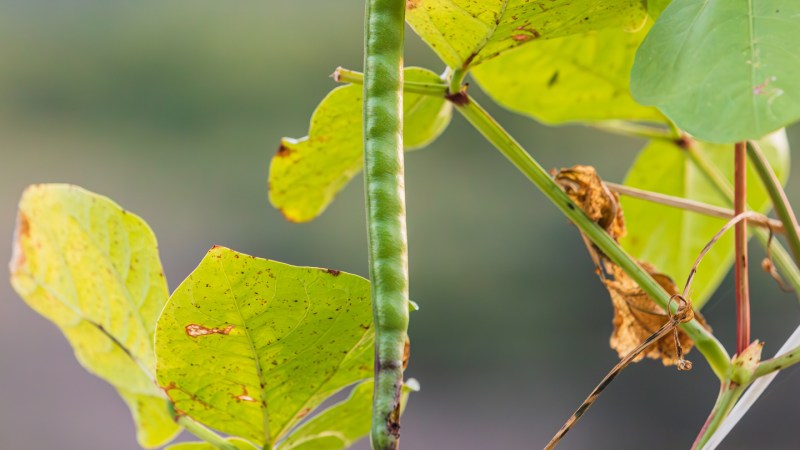
## Our Take: The Whispers Beneath Our Feet – Plant Communication and the Future of Pest Management The discovery that soil bacteria can retain a "memory" of plant herbivory and subsequently influence the defense mechanisms of subsequent generations of plants is a significant, and frankly, astonishing development. The research, demonstrating that these bacteria can essentially prime plants to attract parasitoid wasps – natural enemies of herbivores – represents a paradigm shift in our understanding of plant-soil interactions and offers potentially revolutionary avenues for sustainable pest management. This isn't simply about plants reacting to immediate threats; it’s about a complex, intergenerational communication network mediated by the often-overlooked microbial communities in the soil. We've long understood that plants communicate through volatile organic compounds (VOCs) to signal distress to predators, as highlighted in Plant SOS: How Plants Warn Each Other of Danger, but this research adds a crucial layer of complexity, suggesting a microbial facilitator in that process. Furthermore, recent findings exploring the role of fungal networks in plant communication, documented in The Wood Wide Web: How Trees Talk to Each Other, further underscore the intricate, subterranean dialogues that underpin terrestrial ecosystems. This bacterial memory effect provides empirical validation for the idea that soil isn't merely a substrate, but an active participant in plant defense strategies, a concept increasingly supported by longitudinal studies examining soil health and plant resilience. The implications of this research extend far beyond academic curiosity. Current agricultural practices heavily rely on synthetic pesticides, which have demonstrable negative impacts on biodiversity, human health, and the environment. This new understanding of plant-microbe interactions offers the potential to develop novel, ecologically sound pest control methods. Imagine a future where crops are pre-conditioned by beneficial soil bacteria to attract natural enemies of pests, significantly reducing or even eliminating the need for harmful chemicals. Calibrated manipulation of soil microbial communities, perhaps through targeted inoculation or the promotion of specific bacterial strains, could become a cornerstone of sustainable agriculture. The concept of “ocean intelligence” – the ability to gather, analyze, and interpret data from a complex environment – finds a parallel here; we’re beginning to unlock the “soil intelligence” that dictates plant health and resilience. Integrating this understanding into agricultural practices requires a deeper, more nuanced approach to soil management, moving away from the simplistic view of soil as merely a medium for nutrient delivery. It necessitates a focus on fostering biodiversity within the soil microbiome and understanding the complex interactions between plants, microbes, and the broader environment. However, significant challenges remain. The precise mechanisms by which these bacteria "remember" herbivore attacks and transmit this information to subsequent plants are still not fully understood. Empirical data is needed to determine the specificity of these bacterial memory effects – do certain bacterial strains respond to specific herbivores, or is the response more general? Peer-reviewed research needs to rigorously test the robustness of this phenomenon across different plant species, soil types, and environmental conditions. Furthermore, scaling up these findings from laboratory settings to real-world agricultural landscapes will require careful consideration of factors such as soil heterogeneity, microbial competition, and the potential for unintended consequences. The development of integrated data ecosystems, capable of tracking microbial populations and their influence on plant health in real-time, will be crucial for optimizing these strategies and ensuring their long-term sustainability. The initial validation of this bacterial memory effect presents a promising, yet preliminary, step towards a more ecologically-informed approach to pest management. Looking ahead, one critical question is whether similar memory effects exist within other microbial communities in the soil, such as fungi or archaea. Could these organisms also play a role in plant communication and defense? Moreover, how might climate change, with its associated shifts in temperature, precipitation, and soil chemistry, impact these complex microbial interactions and the ability of plants to defend themselves against increasingly prevalent pests? Longitudinal studies tracking the resilience of agricultural systems under changing environmental conditions, coupled with sophisticated molecular analyses of soil microbial communities, will be essential for answering these questions and harnessing the full potential of this remarkable discovery.
Read on the original site
Open the publisher's page for the full experience