Pickles glow when you plug them in. Science explains why
Our take
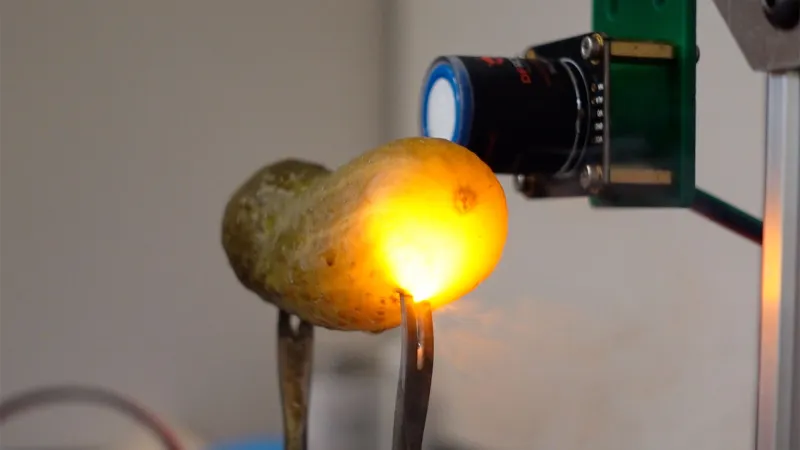
The internet, as it often does, has recently been captivated by a seemingly trivial phenomenon: glowing pickles. A viral video demonstrating the effect of plugging a jar of pickles into a power strip and observing their eerie luminescence has sparked widespread amusement. While the novelty is undeniable, the underlying physics – triboluminescence – offer a surprisingly relevant lens through which to consider the broader challenges of data integration and the unexpected insights that can emerge from seemingly disparate datasets. It’s a delightful reminder that even the most mundane observations can hold valuable scientific lessons. Our work at World Data Ocean focuses on building an integrated data ecosystem to reveal complex patterns from vast and varied sources, a task not dissimilar to understanding why pickles glow when exposed to electrical current. Furthermore, considering the scale of our data collection efforts, particularly concerning coastal environments, research such as How to make Western Indian Ocean’s small-scale fisheries more sustainable highlights the importance of understanding even seemingly minor environmental factors.
The phenomenon itself is rooted in the piezoelectric properties of certain minerals, notably calcium silicate, often found in the brine used to preserve pickles. When the pickle jar is plugged in, the electrical current induces tiny stresses within these minerals, generating minuscule fractures. These fractures, occurring rapidly and repeatedly, release energy in the form of photons – creating the visible glow. While the energy involved is minimal, the illustration serves as a pertinent analogy for the power of integrated data analysis. Just as a single pickle’s luminescence is a product of microscopic interactions, valuable insights from ocean data often emerge from the confluence of numerous, seemingly unrelated variables – temperature, salinity, currents, biological activity, and more. Current research, such as Substantiation of solutions for enhancing the environmental safety level of a marine oil terminal under conditions of high intensification of technological processes, requires precise calibration and analysis of these variables to safeguard marine environments. Understanding these complex interactions demands a comprehensive, data-driven approach, mirroring the scientific curiosity that led to the pickle illumination discovery.
The widespread fascination with glowing pickles also speaks to a broader cultural inclination towards accessible science and engaging demonstrations. The ability to distill complex scientific principles into a simple, visual spectacle fosters greater public interest in STEM fields and highlights the inherent beauty of the natural world. This aligns perfectly with our mission at World Data Ocean to make complex oceanographic data accessible and understandable to a diverse audience. Too often, scientific findings are confined to academic circles, hindering their potential impact on policy and public awareness. Presenting information in an engaging and relatable format, even if it involves illuminated condiments, can be a powerful tool for bridging the gap between scientific discovery and societal understanding. We believe that democratizing access to ocean intelligence is crucial for informed decision-making regarding resource management, climate change mitigation, and coastal resilience.
Ultimately, the glowing pickle phenomenon, while initially amusing, underscores the importance of interdisciplinary thinking and the potential for unexpected discoveries. It reminds us that scientific curiosity can be found in the most unexpected places, and that a rigorous, data-driven approach can unlock valuable insights from even seemingly trivial observations. As we continue to expand our Spatiotemporal characteristics of the theoretical wave-base-derived seaward shoreface boundary along the China Coast, a question worth watching is: what other surprising patterns and relationships will emerge as we integrate ever-greater volumes of ocean data, and how can we best translate these discoveries into actionable knowledge for a more sustainable future?
Read on the original site
Open the publisher's page for the full experience