Philippines’ Manila South Harbour Gets 6 New Hybrid RTG-Cranes, One Of The Largest In The Country
Our take
The recent commissioning of six hybrid Rubber Tired Gantry (RTG) cranes at Manila South Harbour, a collaborative effort between DP World and Asian Terminals, represents a significant, albeit incremental, step towards modernizing port infrastructure and addressing the escalating demands of global trade. The Philippines, strategically positioned within crucial East-West shipping lanes, faces increasing pressure to enhance port efficiency and capacity. This investment directly responds to that need, particularly as larger container vessels become more prevalent; as highlighted in [Record-Breaking 27,500 TEU Container Ships Might Ply The East-West Trade Routes By 2030], the maritime landscape is rapidly evolving, necessitating proactive infrastructure upgrades to accommodate these behemoths. The move also aligns with a broader global trend toward decarbonization in the maritime sector, a critical consideration given the environmental impact of port operations.
The adoption of hybrid RTG cranes is particularly noteworthy. Traditional RTG cranes are substantial contributors to emissions within port environments. The hybrid technology demonstrably reduces that impact, contributing to cleaner operations and potentially easing regulatory pressures in the future. This investment shouldn’t be viewed in isolation; recent events underscore the importance of robust port safety and infrastructure. The U.S. Coast Guard’s inquiry into the Baltimore Key Bridge disaster, as detailed in [U.S Coast Guard Inquiry Finds Port Safety & Infrastructure Gaps After Baltimore Key Bridge Disaster Involving MV Dali], serves as a stark reminder of the vulnerabilities inherent in port infrastructure and the necessity for continuous improvement and risk mitigation. While the Manila South Harbour upgrade focuses primarily on capacity and emissions reduction, the underlying principle of strengthening operational resilience is undeniably relevant. The ongoing challenges faced by seafarers, as evidenced by the situation of the [26 Filipino Seafarers Await Repatriation After Attack On Bulk Carrier In Ukraine], further highlight the interconnectedness of global maritime operations and the need for safe, efficient, and reliable port facilities.
Beyond the immediate benefits of increased capacity and reduced emissions, this development signals a broader commitment to modernization within Philippine ports. The integrated data ecosystem that supports these operations, though not explicitly detailed in the initial report, is likely a key component of this upgrade. Real-time data on container flow, crane utilization, and operational performance allows for optimized resource allocation and predictive maintenance, further enhancing efficiency and minimizing disruptions. Such integrated data management systems are increasingly vital for competitive advantage in the global shipping industry. The calibrated performance of these new cranes, validated through rigorous testing and ongoing monitoring, will be a key indicator of the project's long-term success and a benchmark for future infrastructure investments in the region. The longitudinal data generated from these operations will provide invaluable insights into the effectiveness of hybrid RTG technology in a tropical climate and high-volume port environment.
Looking ahead, the success of this Manila South Harbour upgrade will hinge on its seamless integration with existing port infrastructure and the broader logistics network. The challenge will be to ensure that increased capacity translates into tangible benefits for shippers and ultimately contributes to the Philippines' competitiveness in global trade. A critical question to watch is whether this investment will spur further adoption of sustainable technologies and data-driven operational practices across other Philippine ports, fostering a more resilient and environmentally responsible maritime sector. The ongoing evolution of the maritime industry, coupled with the increasing importance of ocean intelligence, demands a proactive and adaptive approach to infrastructure development – and Manila’s investment represents a positive, albeit early, step in that direction.
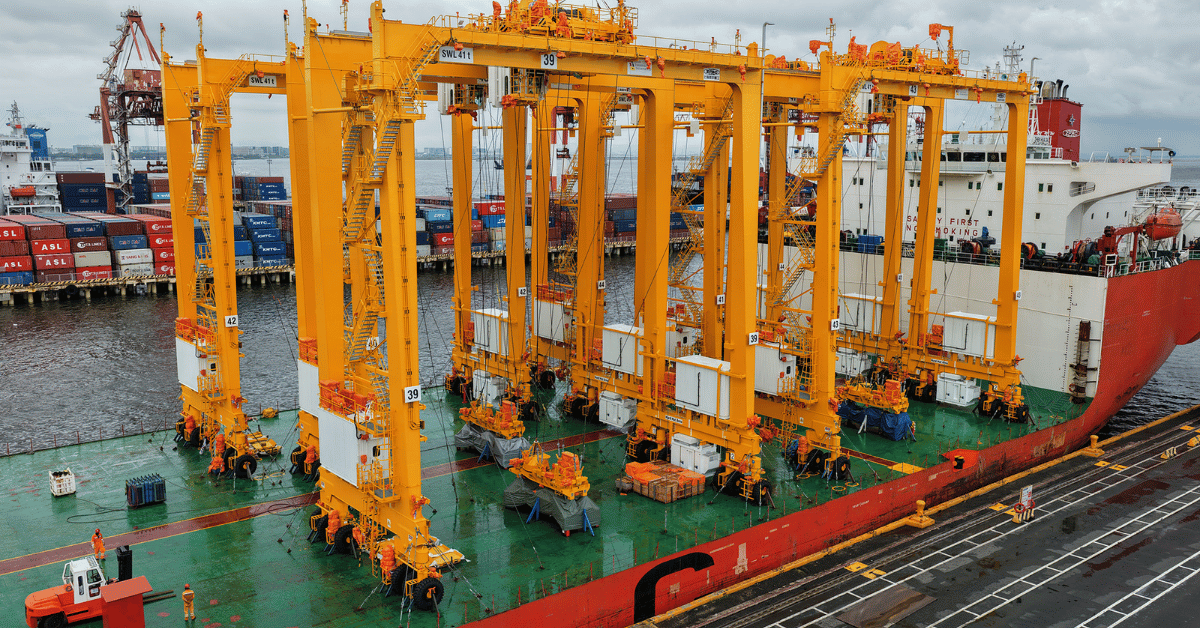
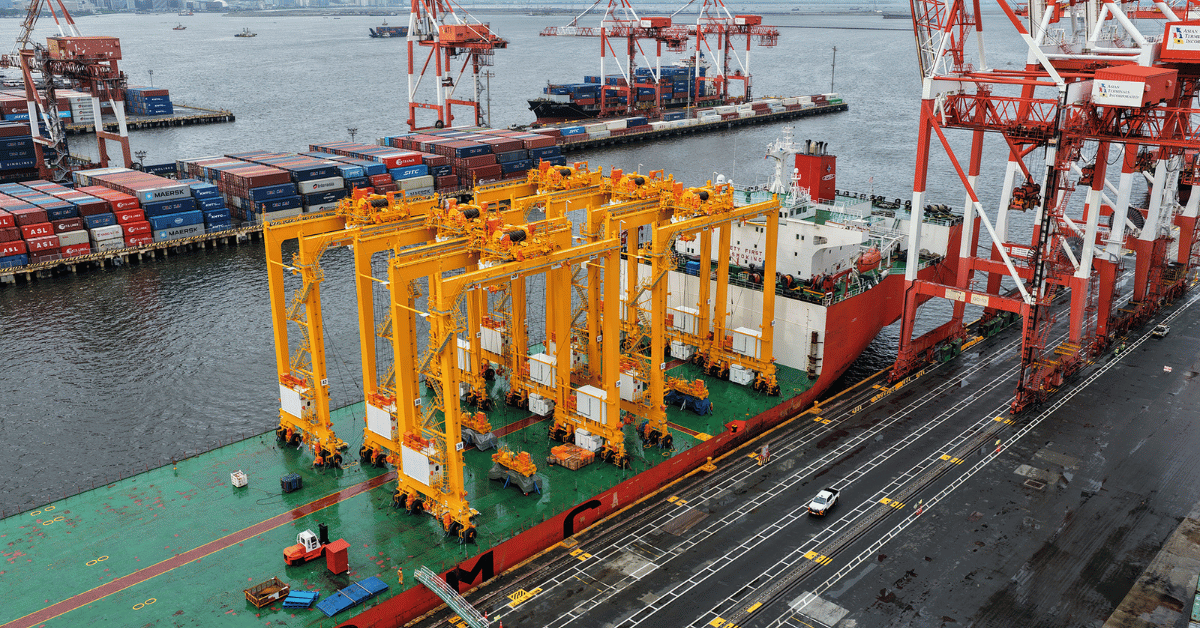
Strategic partners DP World and Asian Terminals Inc. (ATI) have commissioned six state-of-the-art hybrid Rubber-Tyred Gantry (RTG) cranes at Manila South Harbour (MSH), strengthening the terminal’s capacity and supporting safer, more efficient, and lower-emission operations.
Manufactured by Shanghai Zhenhua Heavy Industries Co. (ZPMC), the new-generation RTGs use hybrid technology to reduce fuel consumption and emissions. They are equipped with advanced safety and operating features, including automatic gantry steering, emergency stop systems, anti-sway technology, truck detection, and chassis positioning. The cranes are also designed for future conversion to fully electric operations.
Capable of stacking six containers high, the new hybrid equipment brings MSH’s RTG fleet to 29 units, further enhancing the terminal’s ability to handle more cargo and supporting faster, safer truck turnaround.
ATI and DP World’s latest investment builds on the continued modernisation of MSH through major seaside and landside infrastructure projects, new-generation cargo-handling equipment, digital technologies and systems upgrades. In early 2025, the partners inaugurated an extended Pier 3, equipped with two new quay cranes, among the largest in the Philippines. Together, these investments increased MSH’s annual container-handling capacity by nearly 40% from 1.45 million TEUs in 2021 to 2.0 million TEUs in 2025, reinforcing its role as one of the country’s major international trade gateways.
The hybrid RTGs also support the partners’ broader drive towards more efficient, lower-emission port operations. In 2025, they introduced 15 fully electric Internal Transfer Vehicles (eITVs) at MSH, supported by quick-charging stations – a first for the Philippines. By the end of 2026, MSH is expected to deploy three electric empty container handlers, two electric reach stackers and an additional 15 eITVs.
William Khoury, DP World APAC Vice President for Ports & Terminals Southeast Asia and ATI Director, commented:
“For 40 years, ATI has continuously invested in the infrastructure, technology and people that keep Philippine trade moving. Together with DP World, we are building on this strong foundation by investing in cleaner equipment, smarter technologies and more resilient infrastructure that will make our gateways safer, more efficient and sustainable into the future.”
“Our goal is to help shape the next generation of Philippine trade infrastructure. By working closely with government and industry partners and investing across our ports and logistics network, we can strengthen the connections that Philippine businesses rely on to reach domestic and international markets.”
The transformation of MSH is part of ATI and DP World’s wider investment programme across Manila, Batangas, Cavite and Laguna, focused on developing more competitive, resilient and future-ready trade infrastructure to support the long-term growth of the Philippine economy.
Press Release
Read on the original site
Open the publisher's page for the full experience