No, SpudCells aren’t alive. But they’re a step toward the first synthetic life
Our take
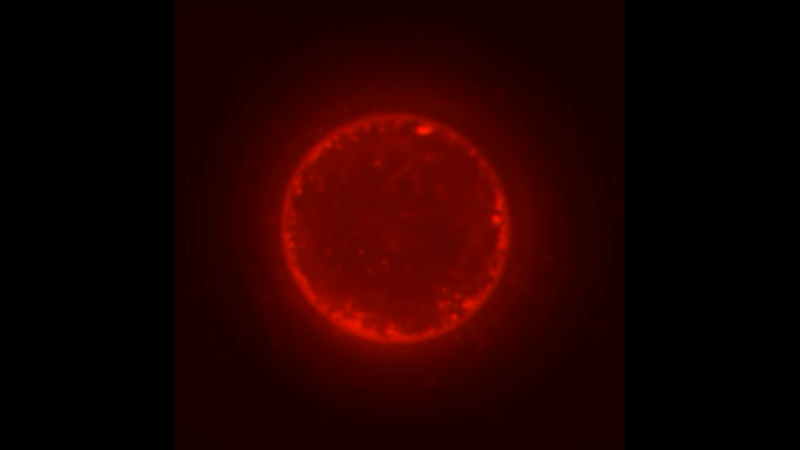
## Our Take: SpudCells and the Evolving Landscape of Synthetic Life
The recent announcement regarding “SpudCells,” engineered from potato bacteria, marks a fascinating, albeit carefully nuanced, step forward in the pursuit of synthetic life. While the researchers are quick to clarify these aren't *alive* in the conventional sense—they lack the ability to reproduce—their creation represents a significant advance in our understanding of cellular architecture and the potential to build biological systems from the ground up. The ability to construct a cell using a minimal set of genes, derived from a non-living source and then implant it into a bacterial host, bypasses many of the traditional limitations of genetic modification. This approach, relying on a relatively small and well-defined genome, allows for a more deliberate and controlled investigation into the fundamental components necessary for cellular function. We’ve been tracking developments in synthetic biology for some time, and the advancements represented here build upon previous milestones like the creation of *Mycoplasma mycoides* JCVI-syn3.0, a synthetic bacterium with a significantly reduced genome, detailed in Scientists Create First Synthetic Cell. Understanding how these minimal systems behave is crucial for both basic scientific inquiry and future biotechnological applications. The development also serves as a powerful counterpoint to the often sensationalized narratives surrounding synthetic life, emphasizing a methodical, data-driven approach.
The significance of SpudCells transcends the immediate novelty of using potato bacteria as a building block. It underscores the power of a modular design approach in synthetic biology. By decoupling the genome from the organism it originally resided in, researchers can circumvent evolutionary constraints and explore alternative biological architectures. This opens up exciting avenues for engineering cells with entirely novel functions—cells that might, for example, efficiently capture carbon dioxide, produce valuable biofuels, or even act as biosensors for environmental monitoring. Consider, for instance, the ongoing research into creating synthetic chloroplasts, artificial organelles capable of photosynthesis. Artificial Photosynthesis Advances00250-1) highlights the challenges and potential of this field, and SpudCells offer a complementary approach to tackling those difficulties. The ability to transplant a minimal genome into a host bacterium, as demonstrated here, provides a powerful platform for testing and refining these synthetic systems, moving beyond theoretical models towards functional prototypes. Moreover, the relative ease of working with bacterial systems—their rapid growth rates and well-characterized genetics—makes them ideal candidates for iterative design and optimization.
Beyond the immediate technical advancements, the SpudCells project raises important philosophical and ethical considerations. While the cells are not capable of independent reproduction, the increasing sophistication of synthetic life forms inevitably prompts discussion about the boundaries of life and our responsibility in creating artificial biological systems. The potential for unintended consequences, even with carefully controlled systems, necessitates a robust framework for ethical oversight and responsible innovation. The rigorous, peer-reviewed approach of the researchers involved—and the transparent communication of their findings—is commendable and sets a positive precedent for the field. The focus on understanding fundamental cellular processes, rather than pursuing immediate commercial applications, adds to the credibility and long-term value of the project. It’s a reminder that progress in synthetic biology, like any scientific endeavor, requires a commitment to both intellectual curiosity and societal responsibility. The ability to create and manipulate biological systems demands a commensurate level of foresight and ethical reflection, particularly as we move closer to creating self-replicating synthetic organisms. Synthetic Life: Ethical and Societal Considerations explores some of these complex issues in greater detail.
Looking ahead, the real challenge lies in transitioning from minimal cellular systems to more complex, functional organisms. Can the modular design principles demonstrated with SpudCells be scaled up to create synthetic cells capable of performing increasingly sophisticated tasks? What new tools and techniques will be required to engineer entire metabolic pathways or even artificial nervous systems within these synthetic frameworks? The development of SpudCells provides a valuable proof of concept, but the journey towards truly functional synthetic life is still in its early stages. A crucial question to watch is whether this approach can be applied to more complex cell types, such as mammalian cells, opening up even more possibilities for biomedical applications and our understanding of life itself.
Read on the original site
Open the publisher's page for the full experience