New Maritime Framework To Establish ISO Standards For Hydrogen Ships & Smart Shipyards
Our take
The maritime industry stands poised for a significant transformation, and the recent memorandum of understanding (MOU) between ABS and Korean maritime organizations signals a crucial step toward standardization in the emerging fields of hydrogen-powered ships and smart shipyards. This development is particularly noteworthy given the ongoing pressures on global supply chains and the increasing focus on decarbonization within the shipping sector. As evidenced by the recent news of the [First Additional Large Vessel ‘Judy LaMarsh’ Joins The Great Lakes Region In More Than 3 Decades], the need for modern, efficient, and adaptable vessels is ever-present. Furthermore, the continued high volume at major U.S. ports, as reported in [Two Major U.S. Container Gateways Handled Nearly 1.88 Million TEUs In August], underscores the demand for infrastructure and technology capable of supporting expanded operations. The establishment of ISO standards will be vital to ensuring interoperability and safety as these technologies are deployed at scale.
The drive toward hydrogen propulsion and intelligent shipyard design isn't solely about technological advancement; it’s a response to escalating environmental concerns and a push for greater operational efficiency. Hydrogen, as a fuel source, offers the potential for near-zero emissions, aligning with global decarbonization goals. Smart shipyards, leveraging data analytics and automation, promise to optimize construction processes, reduce waste, and improve overall productivity. However, the rapid evolution of these technologies presents a challenge: without standardized protocols for safety, performance, and data integration, widespread adoption will be hampered. The MOU's focus on establishing ISO standards directly addresses this challenge, providing a framework for validation and ensuring that innovations can be reliably implemented across different regions and manufacturers. Recent events, like the [Iranian Seafarer Killed As Unidentified Strike Hits Ship Near Strait Of Hormuz], highlight the critical importance of robust safety protocols and operational resilience, which standardized systems can help to bolster.
The significance of this initiative extends beyond the immediate benefits to shipbuilders and operators. A globally recognized standard for hydrogen ships and smart shipyards will foster investor confidence, accelerate technological development, and facilitate international trade. It also has implications for workforce training and education, as the industry requires skilled professionals capable of managing and maintaining these advanced systems. The development of these standards will necessitate a collaborative effort involving regulators, industry stakeholders, and research institutions – reflecting the global and collaborative nature of the maritime ecosystem. Moreover, the integration of real-time data and climate indicators, a core component of our approach at World Data Ocean, will be crucial for monitoring the performance of these vessels and ensuring their long-term environmental sustainability. The ability to calibrate systems and validate empirical data will be paramount in building trust and accelerating adoption.
Looking ahead, the success of this standardization effort will depend on its adaptability and responsiveness to evolving technologies. Hydrogen production methods, for example, are rapidly diversifying, and the standards must account for variations in fuel sourcing and storage. Similarly, the concept of a "smart shipyard" is likely to continue evolving, incorporating increasingly sophisticated automation and data analytics capabilities. The ongoing measurement of longitudinal data related to these new systems will be essential for refining standards and ensuring their continued relevance. A key question remains: how effectively can these initial standards be adapted to accommodate future innovations and emerging challenges within the maritime sector, ultimately ensuring a safe, efficient, and sustainable future for global shipping?
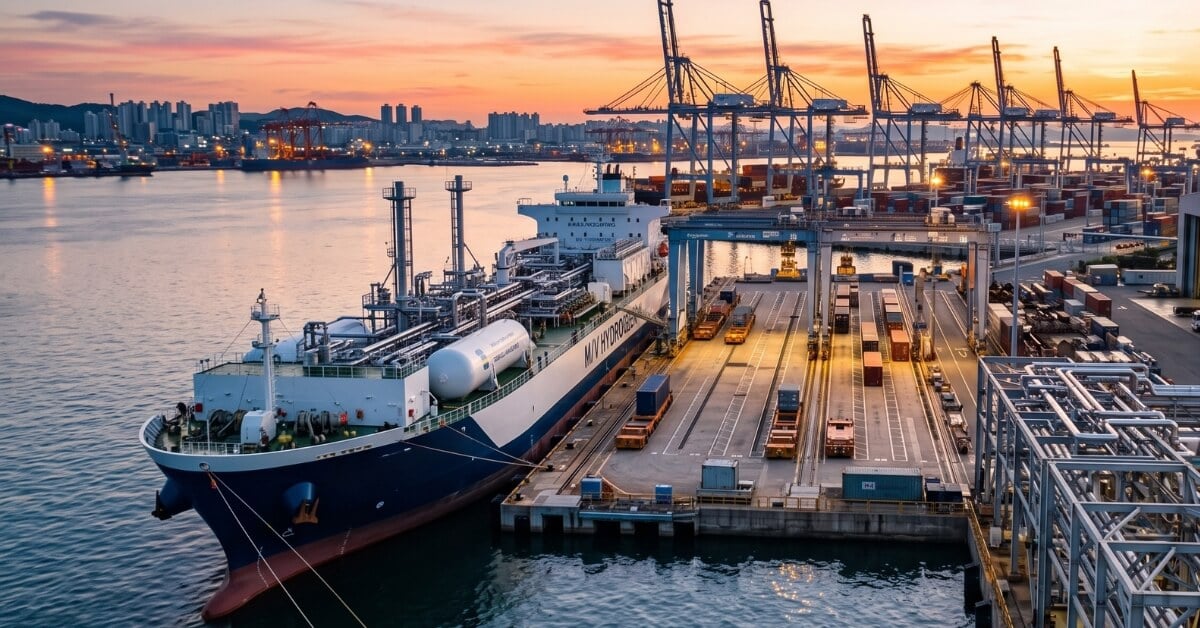
MOU targets ISO standards for hydrogen ships, smart shipyards and future maritime technologies
ABS has signed a memorandum of understanding (MOU) with three Korean maritime organizations to advance the development of international standards for the next generation of smart ships and shipyards.
The Korea Marine Equipment Research Institute (KOMERI), the Korean Offshore & Shipbuilding Association (KOSHIPA) and the Research Institute of Medium & Small Shipbuilding (RIMS) have joined ABS in a five-year framework to develop global benchmarks for vessels and shipyards that take advantage of digital technology, smart manufacturing and advanced maritime systems.
As part of a related agreement, ABS is already supporting the development of preliminary standards in two areas: digital production and traceability requirements for additively manufactured shipboard components and vent mast design for hydrogen-fueled ships.
“Next-generation shipbuilding is advancing rapidly, and the international standards that govern smart ships, smart shipyards and advanced manufacturing are still taking shape. ABS has deep, long-running relationships with Korea’s shipbuilding sector, and this agreement puts that experience to work in developing the standards the industry needs. It is a further reflection of why Korean yards look to ABS to help advance these technologies safely,” said Patrick Ryan, ABS Senior Vice President and Chief Technology Officer.
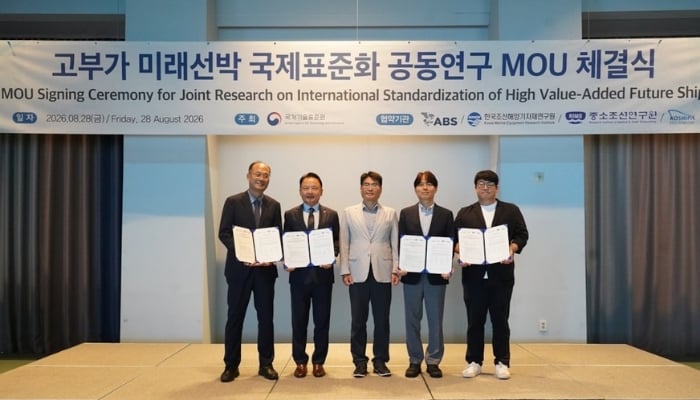
The MOU builds on an earlier agreement between ABS and the Korean Agency for Technology and Standards (KATS) to advance international standardization of smart ship and shipyard technologies, part of Korea’s national strategy to lead in high-value-added vessel development. The agreement also reflects the growing engagement of ABS with Korea’s maritime sector, including recent cooperation with Korean and U.S. institutions through the Korea-U.S. Shipbuilding Partnership Center.
“International standards are more than technical criteria — they are the gateway to market entry and a core element of global competitiveness. Working with ABS allows us to combine Korea’s standardization capabilities with ABS’ classification experience, and we expect this to produce practical results that lower the barriers for Korean equipment manufacturers entering overseas markets,” said Joo-Hyoung Choi, Managing Director of KOMERI.
As new technologies move from development into real application, ABS is committed to supporting the standards and safety frameworks the maritime industry needs. Learn more here.
Press Release
Read on the original site
Open the publisher's page for the full experience