Maersk Selects Anemoi Rotor Sail For World-First Container Ship Installation
Our take
The maritime industry’s ongoing quest for decarbonization continues to yield tangible innovations, and the recent announcement of Maersk’s selection of Anemoi Rotor Sail technology for a container ship represents a significant step forward. While Anemoi has successfully deployed its Rotor Sail system across various vessel types, including bulk carriers, this marks the first application within the container ship segment, a sector historically resistant to such retrofits. This decision, coupled with recent developments like the [Port of Churchill Ships 30,000 Tonnes Of Canadian Grain To Europe For The First Time In 6 Years], highlights a broader shift towards embracing alternative propulsion methods to reduce reliance on traditional fossil fuels and address the escalating pressures surrounding emissions reduction. The increased scrutiny of maritime traffic routes, as evidenced by [Iran Says It Prevented 30 Ships From Crossing Strait Of Hormuz Outside Approved Route Since Aug. 22], also underscores the operational complexities and environmental considerations driving these technological advancements.
The underlying principle of Rotor Sails – leveraging the Magnus effect to generate thrust using wind power – is compelling. Unlike traditional sails, Rotor Sails are computer-controlled cylinders that spin, interacting with the wind to propel the vessel forward. The validated efficiency gains, particularly in favorable wind conditions, offer a measurable reduction in fuel consumption and associated emissions. Maersk’s adoption signals a growing confidence in the technology's scalability and integration potential within a complex operational environment. The container ship market presents unique challenges, including space constraints and the need for minimal disruption to cargo operations. Anemoi’s demonstrated ability to adapt its system across diverse vessel segments provides a degree of empirical assurance that this installation will be successful and contribute meaningfully to Maersk’s decarbonization targets. Furthermore, considering the geopolitical climate and the impact on global trade routes as noted in [Iran’s Supreme Leader Mojtaba Khamenei Urges Muslim Nations To Recognise ‘Real Enemy’ As Hormuz Traffic Falls To New Lows], fuel efficiency improvements become even more critical for operational resilience and cost management.
The broader significance of this development extends beyond Maersk's immediate impact. It validates the role of wind-assisted propulsion as a viable, and increasingly attractive, decarbonization strategy for the shipping industry. This is particularly pertinent given the stringent regulatory landscape, including the International Maritime Organization’s (IMO) targets for reducing greenhouse gas emissions. The move also incentivizes further investment and innovation in wind-powered technologies and integrated data ecosystems that optimize performance and predict weather patterns for maximum efficiency. A calibrated approach to incorporating wind assistance, alongside other measures like alternative fuels and operational improvements, is crucial for achieving long-term sustainability within the sector. The longitudinal data collected from this initial Maersk installation will be invaluable for refining Rotor Sail technology and demonstrating its potential to other container ship operators.
Looking ahead, the key question will be the long-term performance and reliability of Rotor Sails in real-world operating conditions, particularly across various weather patterns and sea states. The seamless integration of these systems into existing vessel management systems and the development of sophisticated algorithms to optimize wind utilization will be critical for maximizing their impact. The success of this pilot program will undoubtedly influence the adoption rate of wind-assisted propulsion across the global container ship fleet and shape the future of ocean intelligence within the maritime industry.
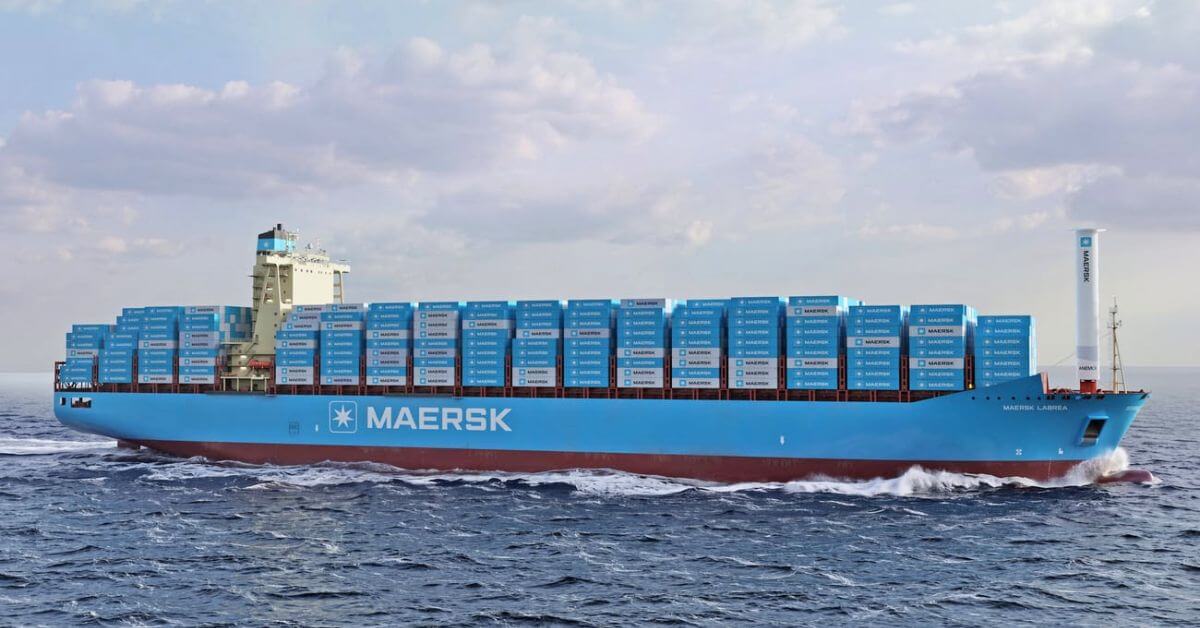
A.P. Moller – Maersk (Maersk), a global leader in shipping, has selected Anemoi Marine Technologies (Anemoi), a British innovator in wind-propulsion technology, to supply its Rotor Sail system for installation on a container vessel in its 8,700 TEU Maersk Lima class, supporting the company’s ongoing efforts to improve vessel efficiency and reduce emissions.
This is the first time that Rotor Sails will be installed in a container vessel which transports a wide range of cargo essential to global trade, from consumer goods and retail products to industrial equipment and components.
Anemoi has already installed its cutting-edge Rotor Sail technology across numerous vessel segments, including bulk carriers, transporting raw materials and commodities.
Under this landmark agreement, Anemoi will design, manufacture and deliver a 5m diameter, 35m high fixed Rotor Sail for installation on the vessel. The system will be integrated alongside existing onboard systems, with Anemoi providing support throughout engineering and installation. The Rotor Sail is due to be fitted in mid-2027 and will be piloted during the vessel’s regular operation, which is expected to be North and South Atlantic voyages.
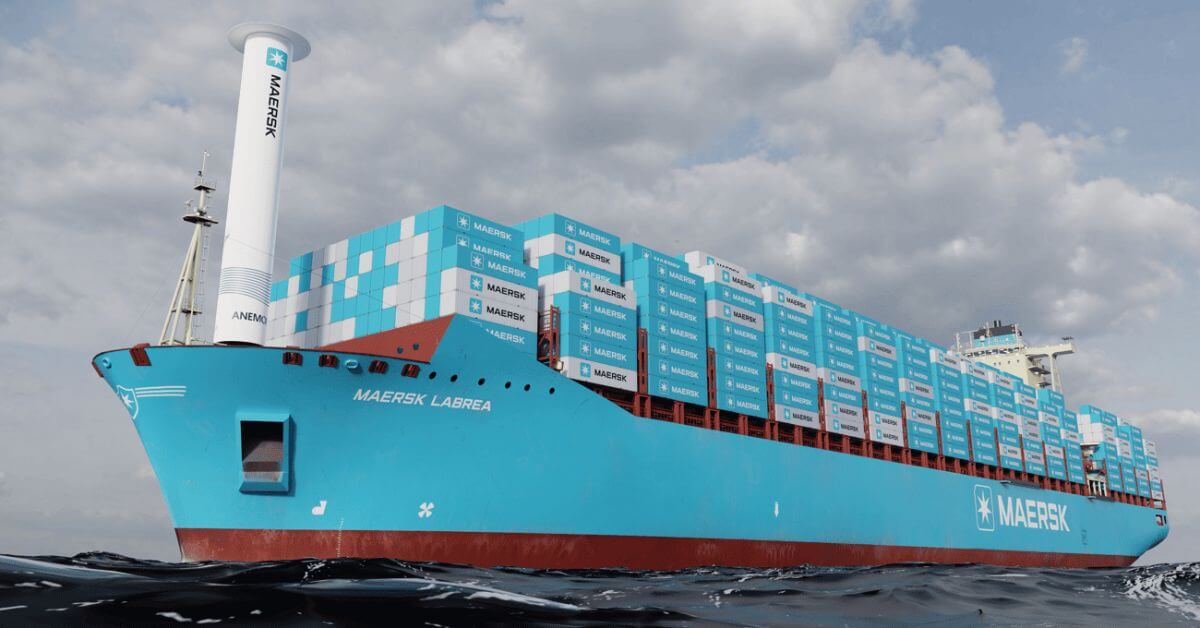
Rotor Sails are a proven wind-assisted propulsion technology that harnesses aerodynamic lift to generate additional thrust, helping to reduce fuel consumption and associated emissions under suitable operating conditions.
Clare Urmston, CEO of Anemoi, shared “We’re delighted to be working with Maersk on this pioneering project. It’s a strong example of how collaboration can support the adoption of wind-assisted propulsion, and we look forward to carrying out the installation and working together as the project progresses.”
Ole Graa Jakobsen, Head of Fleet Technology, Maersk, shared “Wind-assisted propulsion is one of several promising maritime solutions with the potential to improve vessel efficiency and reduce emissions. It has already been tested in other parts of the shipping sector, and we see this pilot with Anemoi as a valuable opportunity to build practical experience and assess its relevance for our fleet and for container shipping more broadly.”
Anemoi, which was incorporated in 2015, has installed its Rotor Sails on vessels serving a diverse network of international trade routes. Anemoi’s expansion onto new types of transport vessels comes at a critical time when the International Maritime Organization’s Strategy on Reduction of GHG Emissions from Ships has set zero emissions by or around 2050.
Read on the original site
Open the publisher's page for the full experience