Labour Unions Call For Sit-In Protest At Bangladesh’s Chattogram Port Over Terminal Lease
Our take
The planned sit-in protest at Bangladesh’s Chattogram Port, a critical node in global maritime trade, highlights a growing tension between economic development and labor rights within strategically important infrastructure projects. The dispute centers on the government's decision to lease the New Mooring Container Terminal, raising concerns amongst labor unions about potential job displacement and changes to working conditions. This situation resonates with broader geopolitical anxieties, particularly when considered alongside recent events like the Houthis seizing Yemen’s Perim Island, Tightening Their Grip On Bab-el-Mandeb Strait [Houthis Seize Yemen’s Perim Island, Tightening Their Grip On Bab-el-Mandeb Strait], which demonstrates the fragility of maritime security and the potential for localized conflicts to disrupt global supply chains. The Chattogram Port, handling a significant volume of Bangladesh’s exports, is therefore not simply a local labor dispute; it’s a potential choke point with international ramifications. Furthermore, the U.S. Navy’s plans to install an off-grid nuclear microreactor at an Indiana weapons base by 2028 [US Navy Plans To Install Off-Grid Nuclear Microreactor At Indiana Weapons Base By 2028] underscores a global shift toward securing critical infrastructure, a strategy that arguably necessitates a more nuanced understanding of the social and economic impacts of such developments.
The underlying issue is the delicate balance between attracting foreign investment to bolster economic growth and protecting the livelihoods of a nation’s workforce. Bangladesh, like many developing nations, relies heavily on port infrastructure to facilitate international trade. Leasing the terminal could, theoretically, bring in investment and improve efficiency, but the unions' concerns are valid. A lack of transparency and meaningful consultation with labor representatives can easily erode trust and lead to resistance, potentially impacting operational stability. The recent events involving U.S. actions against Iranian oil tankers [U.S. Destroys 5 Iranian Oil Tankers After IRGC Targets American Warship With Ballistic Missiles] serve as a stark reminder of how quickly geopolitical tensions can escalate and disrupt maritime commerce, further emphasizing the need for stable and predictable port operations. The government's response to the protest will be crucial in setting a precedent for future infrastructure development projects and demonstrating a commitment to social responsibility alongside economic progress.
The Chattogram Port dispute is indicative of a wider trend: the increasing complexity of managing infrastructure projects in a world facing both climate change and geopolitical instability. The integrated data ecosystem required to manage modern ports—the kind World Data Ocean strives to provide—must account for more than just logistical efficiency. It needs to incorporate social and economic indicators to anticipate and mitigate potential disruptions. Longitudinal data analysis of port labor markets, for example, could help policymakers proactively address concerns about job displacement and ensure a just transition for workers. Empirical evidence regarding the impact of terminal leases on wages and working conditions would be invaluable in informing future decisions and fostering a collaborative environment between government, investors, and labor unions. Ignoring these social factors risks undermining the long-term sustainability of infrastructure projects and creating vulnerabilities that could be exploited by external forces.
Looking ahead, the outcome of this protest will be a significant indicator of Bangladesh’s commitment to inclusive economic development. Will the government prioritize short-term economic gains over the long-term stability and social well-being of its citizens? Or will it demonstrate a willingness to engage in meaningful dialogue and find a solution that addresses the concerns of the labor unions while still attracting necessary investment? The broader question remains: how can nations leverage technological innovation and integrated data ecosystems to build resilient infrastructure that benefits not just the global economy, but also the communities that depend on it? The answer likely lies in a calibrated approach that prioritizes transparency, collaboration, and a demonstrable commitment to ocean intelligence – a commitment to understanding the complex interplay of economic, social, and environmental factors that shape our shared maritime future.
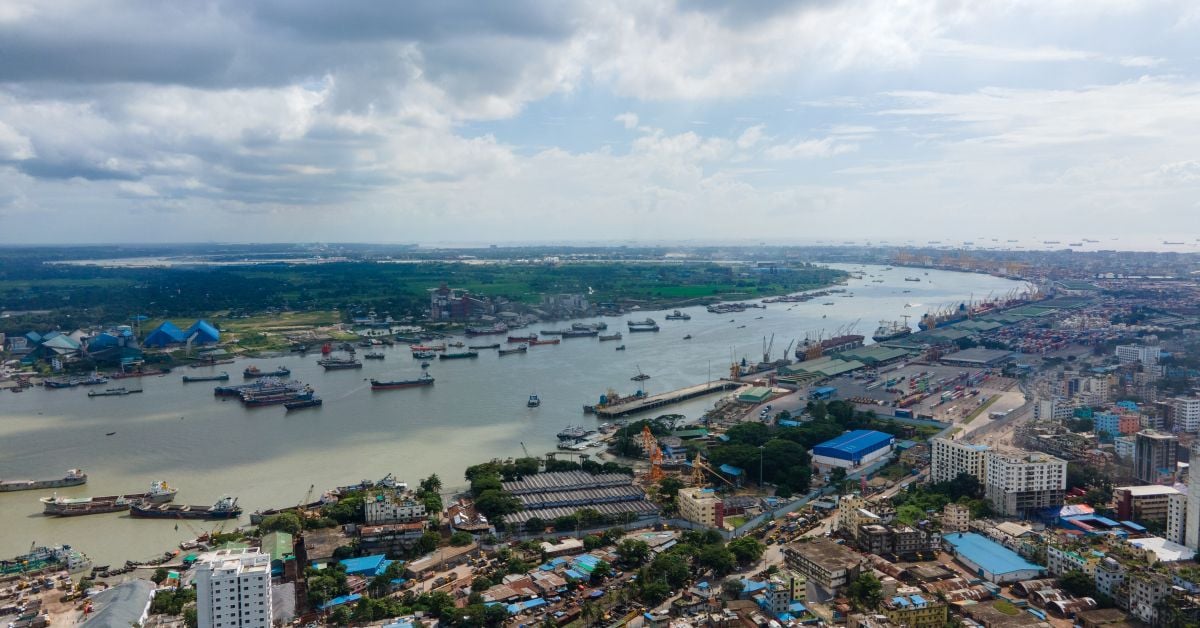
A peaceful protest is being organised on October 5, 2026, against the government’s decision to lease the New Mooring Container Terminal (NCT) at the Chattogram Port, Bangladesh.
The sit-in would continue for the entire day in front of the port’s headquarters to draw the attention of the authorities to workers’ rights and concerns over the decision through peaceful means.
A meeting was held at the Chattogram Press Club’s Sultan Ahmad Hall, which was organised by the Chattogram Port Protection Committee to hold discussions about the proposed lease.
It was attended by Convener Engineer Delwar Majumder and Member Secretary Fazlul Kabir Mintu.
The representatives of the Bangladesh Federation of Trade Unions (BFTUC), Union of private healthcare workers, the Youth Trade Union Network, the Socialist Workers Front, Community Centre Workers’ Union and the Port Winch Crane Operators Association also attended the meeting and pledged their support.
The leaders of unions and labour federations urged workers and other port officials to join the sit-in.
They also said that Chattogram is a principal port which handles the majority of the country’s international trade, and any decision regarding its management or development affects thousands of people working at the facility.
The leaders went on to say that the government must uphold the workers’ rights and interests, along with national security, while making any decision regarding the port.
They have asked government officials to explain how leasing the port would be beneficial for the country and the workforce. They also urged the authorities to prepare an assessment of the potential impact of the lease and the chances of financial losses.
The leaders stressed that authorities should not interpret the peaceful demonstration as a weakness, or unions would be forced to use blockades and strikes on a mass scale, which would disrupt operations.
Read on the original site
Open the publisher's page for the full experience