Klaipėda Port Begins Largest-Ever Expansion With €600 Million Investment
Our take
The Port of Klaipėda's €600 million expansion represents a significant development in European maritime infrastructure, underscoring the continued importance of Baltic Sea trade routes. This investment, particularly the construction of new breakwaters, speaks to a broader trend of port modernization across the globe, exemplified by recent activity elsewhere. China’s Ningbo-Zhoushan Port recently overtook Singapore to become the world’s second-largest container port China’s Ningbo-Zhoushan Port Overtakes Singapore To Become World’s Second-Largest Container Port, demonstrating the intense competition and escalating scale of global port operations. Similarly, Latin America’s first shore power system launched by DP World at Peru’s Port of Callao Latin America’s First Shore Power System Launched By DP World At Peru’s Port Of Callao highlights a growing focus on sustainability within port infrastructure, a factor that Klaipėda’s expansion also addresses, albeit in a different manner. The scale of this project – €600 million – signals a long-term strategic commitment to maintaining Klaipėda’s position as a key Baltic gateway and demonstrates the substantial capital required to adapt to evolving trade patterns and environmental considerations.
The inclusion of environmental protection measures, specifically limiting saltwater intrusion into the Curonian Lagoon, is a crucial and increasingly common element in modern port development. Traditional port expansions have often been criticized for their ecological impact, but this initiative demonstrates a recognition of the need for integrated planning. The Curonian Lagoon is a UNESCO World Heritage site, and protecting its delicate ecosystem is paramount. This dual-purpose design – facilitating increased trade volume while mitigating environmental harm – reflects a shift towards more responsible and sustainable maritime infrastructure. The success of this aspect of the project will be a valuable case study for other ports operating in sensitive coastal environments, providing empirical data on the effectiveness of such integrated engineering solutions. It highlights a move beyond simply addressing regulatory compliance and towards proactive ecological stewardship.
Analyzing the broader context, this expansion aligns with a period of fluctuating global trade dynamics. While container volumes have seen recent shifts, the underlying demand for efficient and reliable port infrastructure remains robust. The recent deal between France and Saudi Arabia for a new terminal at Jeddah Islamic Port $434 Million Deal Signed Between France & Saudi Arabia For New Terminal At Jeddah Islamic Port further illustrates the global investment in port capacity, reflecting the strategic importance of maritime trade routes for national economies. Klaipėda’s expansion, therefore, is not an isolated event but part of a larger, interconnected network of port investments aimed at optimizing global supply chains and adapting to evolving geopolitical landscapes. The longitudinal data gathered from this expansion, particularly regarding its environmental impact and operational efficiency, will be valuable for future port planning initiatives.
Looking ahead, the real-time performance data generated by the expanded Port of Klaipėda will be critical for understanding the long-term viability of this investment and its impact on the Baltic Sea ecosystem. The effectiveness of the breakwaters in controlling saltwater intrusion and the overall operational efficiency of the expanded port facilities warrant careful and calibrated monitoring. Furthermore, it will be essential to assess how the expansion influences regional trade flows and impacts smaller ports in the area. A key question to watch is whether Klaipėda can maintain its competitive edge amidst the rapidly evolving global port landscape, particularly in light of increasing automation and digitalization within the maritime sector.
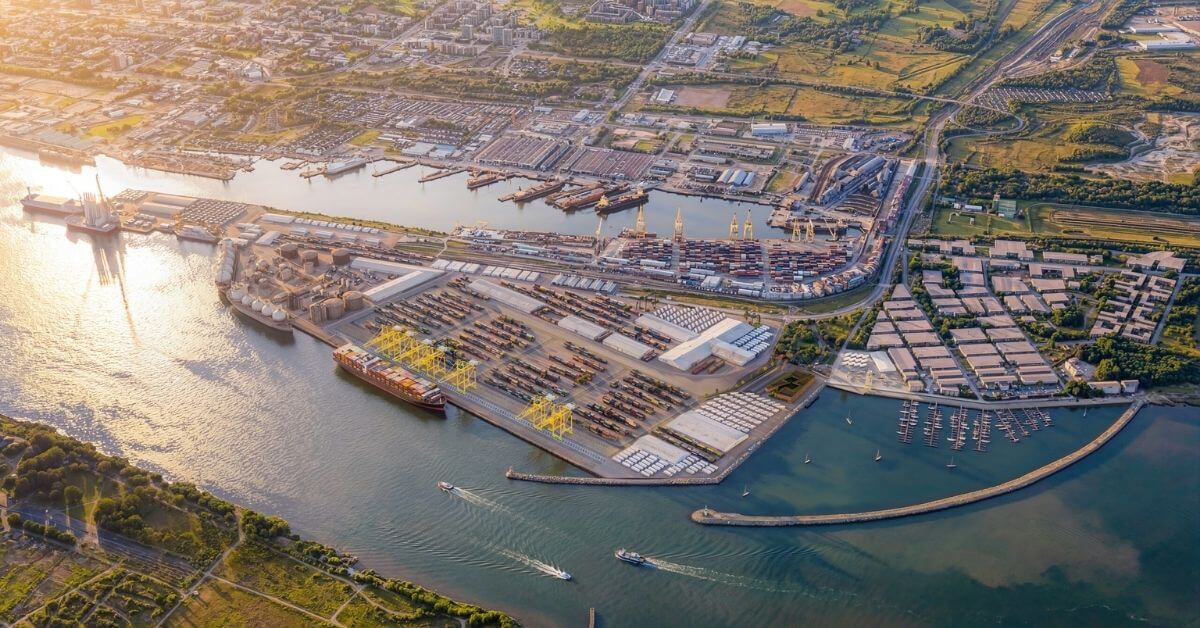
The Port of Klaipėda is moving into a new phase of the largest expansion project in its history, with the first works now getting underway. Site preparation has started in the southern part of the port, where a major new port area will be developed in the coming years.
“We are now very close to the start of the southern port expansion. After a long period of planning and preparation, work on site is beginning. Once the site is ready, construction of the southern breakwaters will start this autumn, marking the first stage of the largest expansion project in the history of the Port of Klaipėda. This project shows that we are steadily moving forward with our plans to build a stronger port for Lithuania. It will make the country more attractive to investors, strengthen our competitiveness in international markets and support military mobility needs that are important not only for Lithuania, but for the wider region,” says Algis Latakas, CEO of the Klaipėda Port Authority.
The southern breakwaters will be built by Tilsta, which won the tender launched earlier this year. The contract signed with the Klaipėda Port Authority is worth EUR 24.5 million excluding VAT. Construction is expected to begin this autumn.
The new breakwaters will also serve an important environmental purpose by helping to limit the flow of salt water into the Curonian Lagoon.
The southern port expansion will create new space and significantly increase the Port of Klaipėda’s capacity for port operations and cargo handling. Nearly EUR 600 million – the largest share of the Port’s investment programme for 2026–2029 – is planned for the project.
Together with investment expected from future investors, the total value of the development will exceed EUR 1 billion, making it one of the largest investment projects currently being developed in Lithuania.
Read on the original site
Open the publisher's page for the full experience