Heat therapy for sick frogs lowers sperm levels
Our take
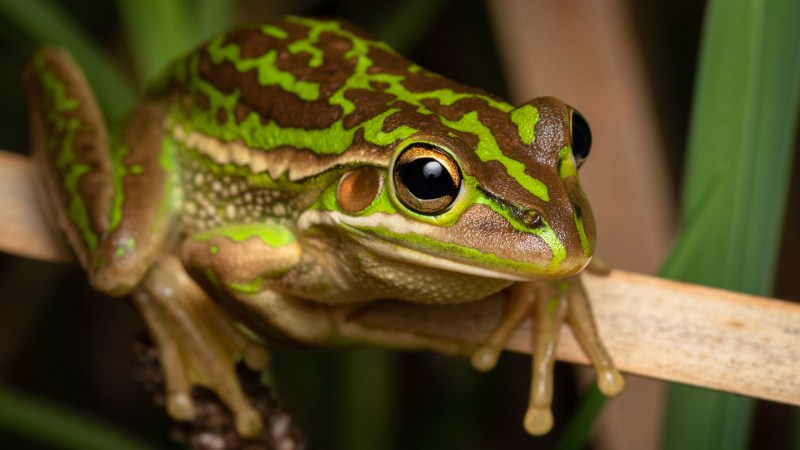
## Our Take: The Unintended Consequences of Thermal Frog Treatment
The recent findings regarding heat therapy's impact on frog sperm levels present a crucial, and frankly sobering, development for amphibian conservation efforts. While thermal treatment has emerged as a vital tool in combating the devastating effects of *Batrachochytrium dendrobatidis* (Bd), the chytrid fungus responsible for widespread amphibian declines globally, this research highlights the potential for unintended ecological consequences. The efficacy of heat treatment in reducing Bd load is well-documented – it offers a critical lifeline for populations facing extinction. However, as this study demonstrates, interventions designed to save amphibians from one threat can simultaneously introduce new challenges to their reproductive success. This underscores a fundamental principle within conservation biology: solutions are rarely simple, and even seemingly beneficial actions require rigorous, longitudinal evaluation. Amphibian Declines: A Global Crisis details the scale of the problem, illustrating just how desperate the need for effective solutions has become. The complexity is further amplified when considering the varied responses of different frog species to thermal stress – what works for one may not work for another, and could even prove detrimental. The research adds to the growing body of evidence that highlights the need for a more nuanced and integrated approach to amphibian conservation.
The significance of this finding extends beyond the immediate impact on individual frog populations. Reduced sperm viability directly translates to decreased reproductive potential and, consequently, a diminished capacity for long-term population recovery. The interconnectedness of ecosystems means that declines in amphibian populations can trigger cascading effects throughout the food web, impacting insect populations, predator species, and overall biodiversity. Amphibians occupy a unique ecological niche, serving as both predators and prey, and their decline can disrupt delicate ecological balances. Considering the critical role of amphibians as bioindicators – their sensitivity to environmental changes makes them early warning systems for broader ecosystem health – the consequences of compromised reproductive success are particularly concerning. It’s imperative that we acknowledge that our interventions, however well-intentioned, are not neutral forces; they represent alterations to complex ecological systems that require careful monitoring and adaptive management strategies. Thermal Treatment Strategies for Amphibians provides a deeper dive into the methodologies currently employed, and the potential for refinement based on new research findings. The empirical data emerging from studies like this are essential for calibrating our conservation efforts and ensuring they contribute to long-term ecological resilience.
The challenge now lies in reconciling the urgent need to combat chytridiomycosis with the potential for heat treatment to compromise reproductive health. This necessitates a move toward more targeted and precise interventions. Rather than broad-scale thermal treatments, future research should focus on identifying species-specific vulnerabilities and developing tailored protocols that minimize reproductive impacts. This could involve exploring alternative treatment modalities, such as probiotic approaches or targeted antifungal agents, alongside refining existing thermal treatment parameters (temperature, duration, frequency) to optimize efficacy while minimizing harm. Integrated data ecosystems, combining genomic data, physiological responses, and environmental factors, will be crucial in this endeavor. The creation of real-time monitoring systems, capable of tracking both Bd infection rates and reproductive success, will allow for adaptive management strategies that respond to evolving conditions. Peer-reviewed research demonstrating the long-term effects of various treatment protocols, validated through longitudinal studies, is absolutely essential to inform decision-making.
Ultimately, this research serves as a powerful reminder of the inherent complexity of ecological interventions. While thermal treatment remains a vital tool in the fight against chytridiomycosis, its application must be approached with caution and a commitment to ongoing monitoring and adaptation. The potential for unintended consequences underscores the need for a holistic, science-driven approach to conservation, one that prioritizes integrated data analysis and a deep understanding of ecosystem dynamics. The Role of Ocean Intelligence in Conservation provides a broader perspective on how advanced data analysis can be applied to address environmental challenges – a principle readily transferable to terrestrial ecosystems facing similar crises. What long-term strategies will best balance the immediate need to combat fungal infection with the imperative to safeguard amphibian reproductive health, and how can we best integrate this knowledge into conservation action plans globally?
Read on the original site
Open the publisher's page for the full experience