Ghost Ship Damaged By Ukrainian Drones Drifts Across Black Sea & Runs Aground In Turkiye
Our take

The grounding of a Russian-flagged cargo ship near Istanbul, following reports of damage from Ukrainian drones, represents a concerning escalation in the ongoing conflict and highlights the expanding maritime risk profile within the Black Sea. This incident, occurring shortly after a similar drone attack resulted in the sinking of a cargo ship off Romania [Cargo Ship With 12 Crew Sinks In Black Sea Off Romania Following Suspected Drone Attack], underscores the increasing vulnerability of commercial shipping to military action. The use of unmanned aerial vehicles (UAVs) to target vessels demonstrates a shift in naval warfare tactics, impacting not only military assets but also civilian maritime traffic, which is vital for global trade and supply chains. The situation further complicates the already precarious navigation environment in the region, compounded by the ongoing challenges faced by seafarers trapped in the Strait of Hormuz [6,000 Seafarers And 400 Ships Remain Trapped Amid Six Months Of Strait Of Hormuz Uncertainty], illustrating the cascading effects of geopolitical instability on maritime operations worldwide.
The incident’s impact extends beyond the immediate logistical disruption caused by the grounded vessel. The Alacali Beach location near Istanbul, a key transit point for maritime traffic between the Black Sea and the Mediterranean, necessitates careful salvage operations to prevent environmental damage and ensure the safe passage of other vessels. Furthermore, the potential for further drone attacks introduces a significant safety risk for crews and vessels operating in the Black Sea, potentially leading to increased insurance premiums and rerouting of shipping lanes. Considering Sweden’s recent donation of Coast Guard boats to Ukraine for mine clearance and maritime operations [Sweden Donates 10 Coast Guard Boats To Ukraine For Mine Clearance And Maritime Operations], the focus on maritime security in the region is clearly intensifying, though the efficacy of these measures against increasingly sophisticated UAV attacks remains to be seen. The calibrated response by authorities in Turkiye will be crucial in de-escalating tensions and preventing further incidents.
From an ocean intelligence perspective, this situation highlights the need for enhanced real-time monitoring and predictive analysis of maritime risk factors. Traditional maritime safety protocols are proving insufficient in the face of asymmetric warfare tactics. Integrated data ecosystems, combining satellite imagery, vessel tracking data, and open-source intelligence, are increasingly vital for providing actionable insights to ship operators and maritime authorities. The ability to identify and assess potential threats, such as UAV activity, in a timely manner is paramount to mitigating risks and ensuring the safety of seafarers and the integrity of maritime trade routes. Longitudinal data collection and analysis are also essential to understanding the evolving patterns of conflict and their impact on the marine environment. Empirical evidence from incidents like these provides invaluable data points for refining risk assessments and developing more effective mitigation strategies.
Looking ahead, the continued weaponization of the Black Sea and other strategic waterways poses a significant threat to global maritime stability. The increasing prevalence of drone warfare necessitates a reassessment of maritime security protocols and a greater emphasis on proactive risk mitigation. A crucial question is whether international law and established maritime norms can adequately address this new form of naval conflict and protect the freedom of navigation. The long-term implications for trade, insurance, and the safety of seafarers will depend on the ability of stakeholders to adapt to this evolving threat landscape and foster collaborative solutions grounded in validated data and empirical observations.
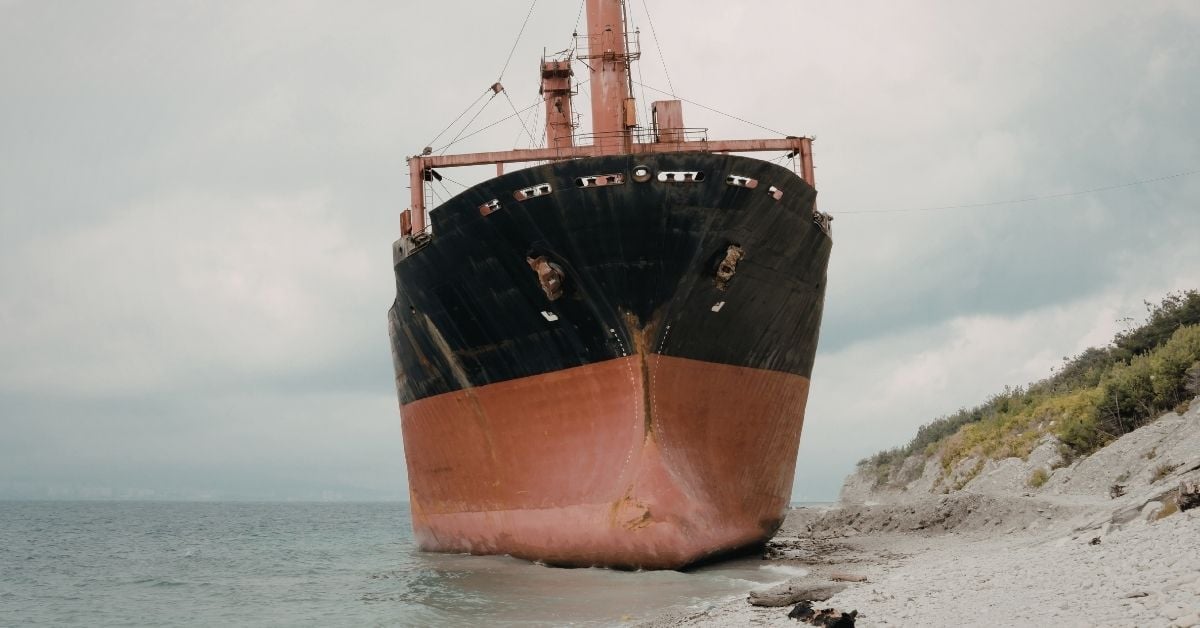
A cargo ship sailing under the Russian flag ran aground on the Alacali Beach close to Istanbul in Turkiye after currents carried her hundreds of miles across the Black Sea before washing her ashore.
The Omskiy-107 had sustained severe damage from a Ukrainian drone attack close to the Russian Port of Novorossiysk, which has been declared an emergency area, given the incessant Ukrainian attacks on tankers and ships coming to load cargo at the facility.
Sources suggest that the ghost ship was hit during an attack, which caused a fire damaging the captain’s bridge, after which the crew abandoned the vessel, and it drifted in the open waters of the Black Sea.
Powerful currents finally beached her in Turkiye. Residents informed the authorities when they saw the vessel at a close distance from the beach. Many even took videos of the 108 m long unmanned bulk carrier.
Teams from the Turkish Coast Guard and the local police arrived at the scene and cordoned it off to avoid any incident.
An investigation has been launched into the incident, and aerial inspections were performed, which confirmed the extensive damage to the vessel.
The Omskiy-107 is a general dry cargo ship which was built in 1981 in Romania. Sailing under the Russian flag, it is 108 m long and 15 m wide with a deadweight tonnage of 3248 metric tonnes.
Read on the original site
Open the publisher's page for the full experience