EU Forces Board Russia-Linked Oil Tanker Suspected Of Sailing Under False Flag In Mediterranean
Our take
The recent actions by EU forces to board and, in some cases, seize oil tankers suspected of operating within a “shadow fleet” transporting Russian oil represent a significant escalation in the enforcement of sanctions and a deepening complexity in global maritime trade. France, Sweden, Belgium, and Britain’s actions, targeting vessels believed to be disguising their origin and destination, highlight the ingenuity with which actors are attempting to circumvent international regulations. This isn't merely about compliance; it's about the integrity of the global trading system and the demonstrable impact of sanctions on Russia's ability to fund its operations. The increasing scrutiny of maritime activity underscores a growing awareness that the ocean, once considered a relatively opaque space, is now subject to intensified observation and enforcement. The investment in naval capabilities, as evidenced by [Sweden Signs $5 Billion Deal To Acquire Four Modern French Frigates], illustrates a proactive response to these evolving geopolitical realities, recognizing the need for enhanced maritime security and surveillance. These efforts are further complicated by incidents like the recent crane fire at Mumbai Port [Video: Crane Catches Fire During Cargo Unloading At India’s Mumbai Port; 2 Injured], which, while unrelated to the tanker seizures, underscores the inherent risks and vulnerabilities present in global shipping operations.
The practice of utilizing “shadow fleets” – vessels often older, lacking modern safety features, and registered under flags of convenience – to obscure the origin of Russian oil is a direct challenge to the established regulatory framework. These vessels are frequently recalibrated and modified to evade detection, making their identification and interception a complex undertaking requiring sophisticated data analysis and maritime intelligence. The scale of this shadow fleet is difficult to definitively quantify, but estimates suggest it’s substantial, representing a significant portion of Russia’s oil exports. The fact that multiple European nations are independently taking action suggests a coordinated, albeit perhaps informal, effort to disrupt this trade. These seizures are not without legal and diplomatic complexities; establishing definitive proof of sanctions violations and navigating the legal frameworks of various jurisdictions will be crucial to the long-term success of these enforcement actions. The tragedy of the FILO Jet ferry sinking [Captain & 7 Crew Arrested After Cyprus-Turkey Passenger Ferry Sinking Which Killed 8] serves as a stark reminder of the potential human cost associated with compromised maritime safety standards, a risk potentially exacerbated by the use of older, less well-maintained vessels within the shadow fleet.
The broader significance of this development lies in its implications for maritime transparency and the future of sanctions enforcement. The increased use of satellite imagery, automated identification systems (AIS), and other tracking technologies is providing unprecedented visibility into ocean activity. However, the shadow fleet demonstrates the ability of actors to exploit vulnerabilities and manipulate data. This requires a continuous cycle of innovation in monitoring and verification technologies, alongside robust international collaboration to share data and coordinate enforcement efforts. The ocean intelligence derived from these efforts is becoming increasingly crucial for policymakers and businesses alike, enabling more informed decision-making and risk mitigation strategies. The long-term impact will likely be a shift towards more rigorous vetting of vessels and increased pressure on flag states to enforce international regulations.
Looking ahead, the question becomes: how effectively can the international community adapt to the evolving tactics employed to circumvent sanctions? The cat-and-mouse game between enforcers and those seeking to evade regulations is likely to continue, demanding constant vigilance and innovation. The development of robust, verifiable data streams and integrated data ecosystems will be paramount in achieving true ocean transparency. Furthermore, the implications for insurance and financing of vessels operating within the shadow fleet remain to be fully explored – will insurers and financial institutions increasingly refuse to engage with these activities, effectively strangling the shadow fleet’s ability to operate? The coming months will be critical in determining whether these recent enforcement actions represent a turning point in the fight against sanctions evasion or merely a temporary setback for those seeking to profit from the shadows of the global ocean.
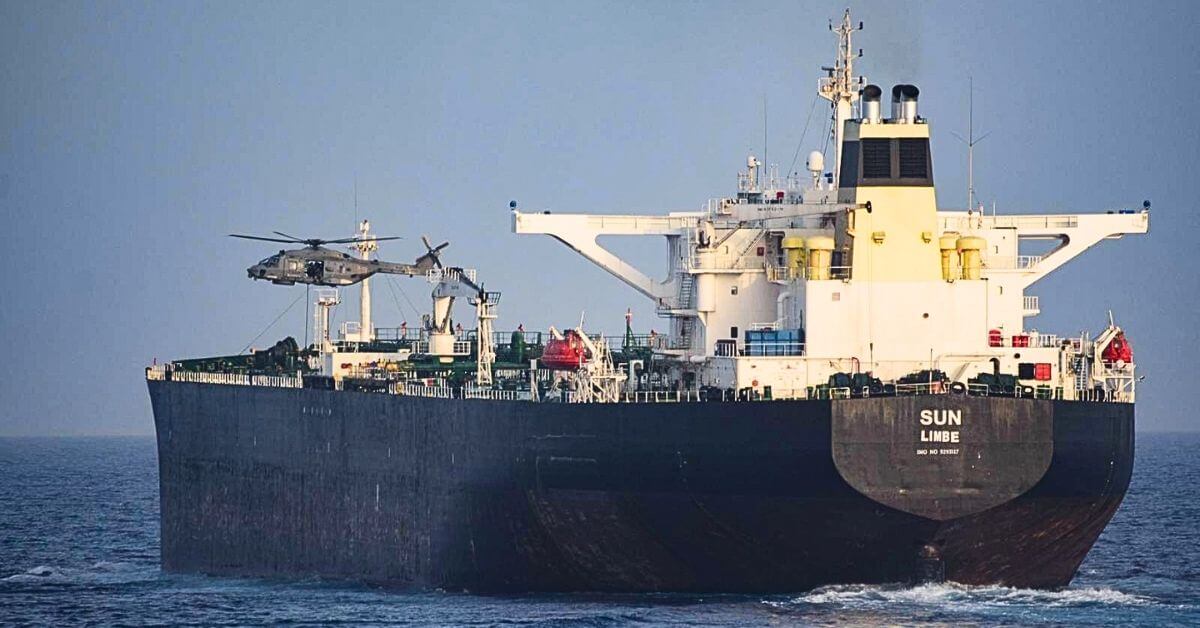
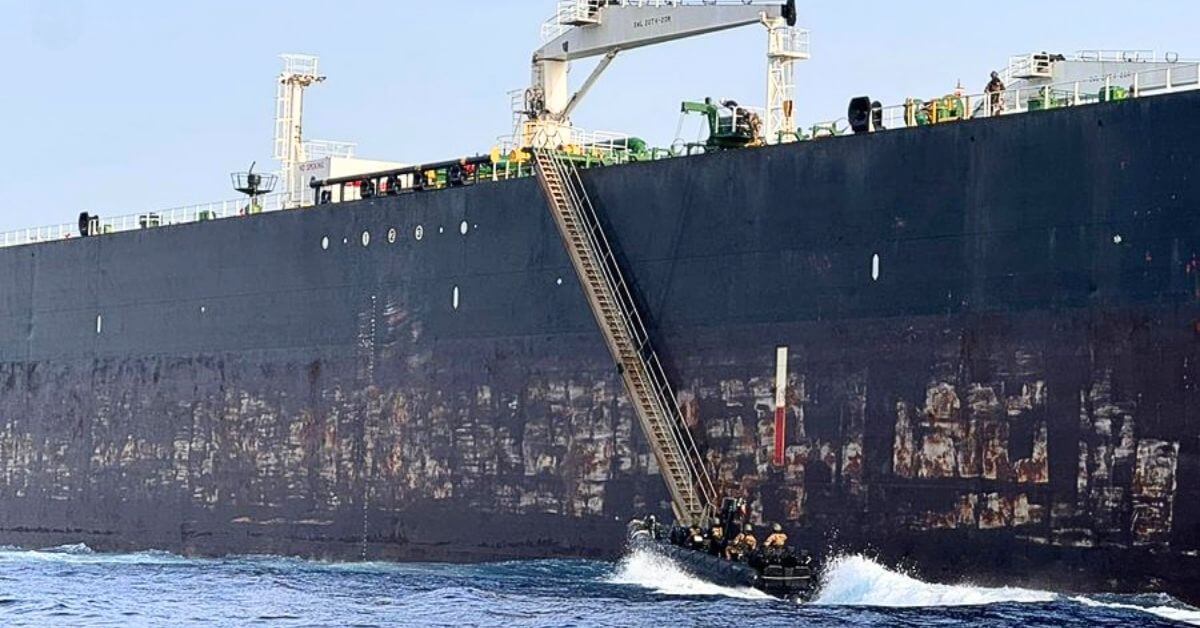
European naval forces boarded an oil tanker suspected of being part of Russia’s shadow fleet in the Mediterranean on Aug. 30.
The tanker, MV Sun, was boarded by personnel from the EU naval mission Operation EUNAVFOR MED IRINI for flag verification, EU foreign policy chief Kaja Kallas said on Monday.
Kallas said the vessel was suspected of sailing under a false flag in violation of international maritime law.
She said it was the sixth suspected shadow fleet vessel boarded by EU operations in recent months.
Kallas added that illegal oil sales from such vessels were an important source of funding for Russia’s war in Ukraine and said the EU would continue efforts to stop them.
European countries are taking stronger steps to enforce sanctions against Russia, including boarding and seizing vessels suspected of being part of its shadow fleet.
The EU also allowed suspected shadow fleet vessels to be intercepted beyond the Mediterranean, including in the Indian Ocean, over a month ago.
France, Sweden, Belgium and Britain have also boarded or seized suspected shadow fleet vessels that entered their territorial waters.
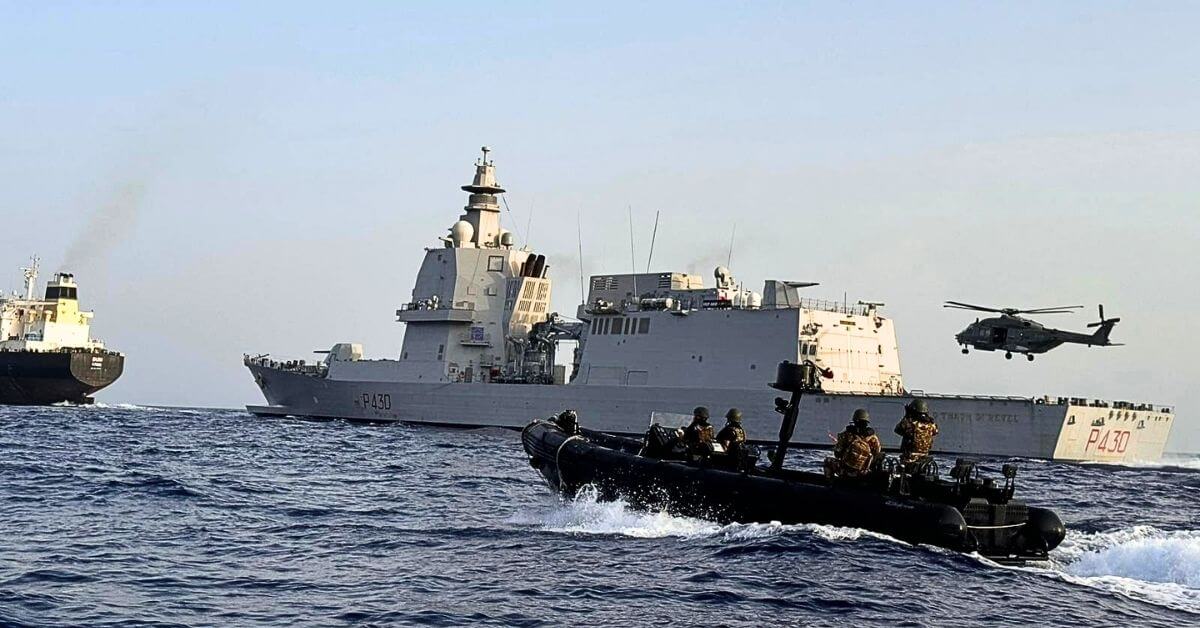
Kallas said EU defence ministers would discuss further action against the shadow fleet when they meet in Ireland on Tuesday.
Operation IRINI carried out a similar operation in early August, boarding the sanctioned MV Toa Payoh to verify its flag.
According to the Italian Defence Ministry, the Italian Navy’s Thaon di Revel intercepted the vessel west of the island of Pantelleria while it was sailing from Cotonou in Benin to Istanbul.
In June, French President Emmanuel Macron said French forces intercepted the Russian shadow fleet oil tanker Deliver off the coast of Sicily for sailing in violation of maritime law.
Earlier that month, British forces intercepted the Russia-linked vessel Smyrtos in the English Channel. Royal Marines and National Crime Agency officers boarded the ship in an operation that lasted six hours.
Russia uses its shadow fleet to get around Western sanctions on its oil industry. These sanctions limit Moscow’s ability to charter or insure tankers unless they meet certain conditions.
The fleet uses complex ownership structures, flags of convenience and other methods to hide the origin of cargoes and avoid sanctions.
The European Union has sanctioned hundreds of ships suspected of being part of Russia’s shadow fleet.
The number of sanctioned vessels is reported to be between about 600 and 673. More ships could be added under the EU’s proposed 22nd sanctions package, which could include up to 1,500 listings.
In July, the European Union approved a mechanism allowing member states to seize and sell Russian oil carried by shadow fleet vessels that try to avoid the bloc’s sanctions.
Russia has warned against such action.
President Vladimir Putin said earlier this month that Russia would retaliate if European countries seized Russian commercial vessels.
He had earlier said the Russian Defence Ministry had been told to prepare a response. Putin has also called previous interceptions of Russia-linked vessels “piracy.”
Operation EUNAVFOR MED IRINI was launched in March 2020 to enforce a UN arms embargo on Libya.
References: themoscowtimes, kyivindependent
Read on the original site
Open the publisher's page for the full experience