Earth’s hidden “gold kitchen” lies beneath the seafloor
Our take
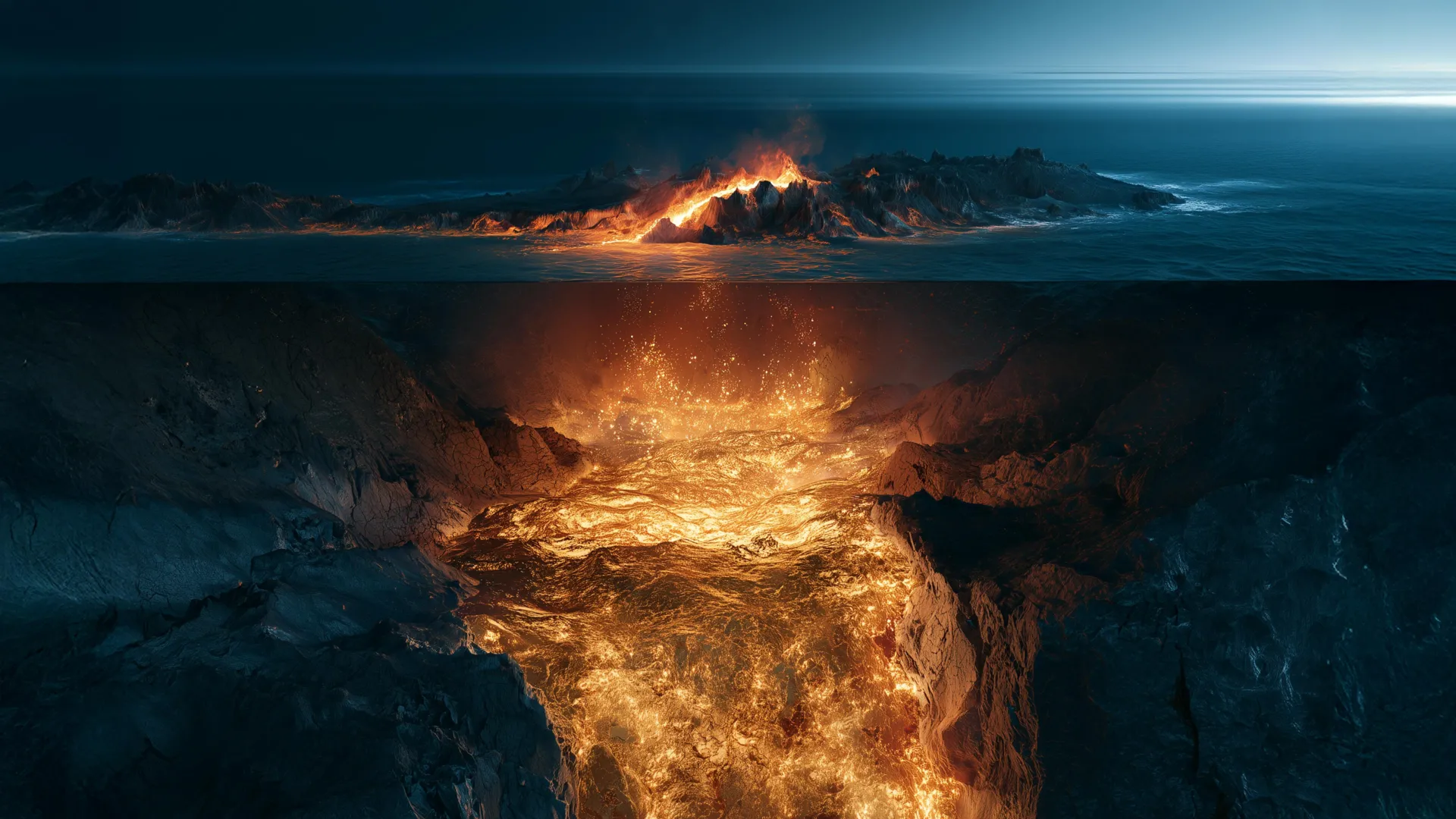
## Our Take: Earth's Submarine Gold Kitchen – A New Perspective on Ore Formation
The recent discovery of a naturally occurring “gold kitchen” operating deep beneath submarine volcanoes presents a fascinating and potentially paradigm-shifting perspective on the formation of gold deposits. Researchers, analyzing volcanic glass from the Kermadec arc, have demonstrated a process where repeated melting of water-rich mantle concentrates gold within rising magma. This isn’t simply about finding a new source of gold; it’s about understanding a previously underestimated mechanism for ore genesis, one that challenges conventional geological models. The implications extend far beyond the prospect of future mining endeavors and delve into a deeper understanding of Earth's internal processes. This finding builds upon previous research into the role of volatiles in magmatic systems, such as Volatile Transport in Magmas, highlighting the crucial, and often overlooked, influence of water and sulfur on metal mobility. Understanding how these elements interact within magmas is key to unlocking more secrets of Earth’s geochemical cycles. The study reinforces the importance of integrated data ecosystems – combining geochemical analysis, geological mapping, and geophysical modeling – to fully characterize these complex systems, much like the approach outlined in World Data Ocean’s Integrated Ocean Data Platform.
The brilliance of this research lies in its explanation for how gold, typically bound within sulfur-rich minerals, is liberated and concentrated. The intense melting associated with these submarine volcanic environments effectively breaks down these minerals, releasing the gold into the melt. This process, repeated over geological timescales, allows for a gradual accumulation of gold within the ascending magma, eventually leading to its deposition in suitable geological settings. Traditionally, the formation of gold deposits has been attributed largely to hydrothermal systems associated with intrusions and faulting. While these remain critically important, this discovery suggests that a significant portion of gold may originate from a fundamentally different source – the deep mantle itself, processed through repeated melting events. The prevalence of subduction zones globally, combined with the ubiquity of water in the Earth's mantle, implies that this “gold kitchen” process may be considerably more widespread than previously imagined. The empirical data supporting this hypothesis, derived from the analysis of volcanic glass, provides a robust foundation for further research and modeling.
The broader significance of this discovery extends to our understanding of Earth’s geochemical cycles and the distribution of valuable resources. It highlights the dynamic and interconnected nature of Earth’s systems, where processes occurring deep within the mantle can have a profound impact on surface environments. This understanding has ramifications not only for the mineral exploration industry but also for the development of more accurate models of Earth’s evolution and the formation of ore deposits throughout geological history. Further research will be necessary to quantify the overall contribution of this process to global gold resources and to identify other metals that may be similarly concentrated through similar mechanisms. The longitudinal nature of the data collected from the Kermadec arc, spanning different volcanic events, provides a valuable baseline for such investigations. We see echoes of this integrated approach to understanding complex systems in the ongoing work surrounding subglacial volcanism, as detailed in Subglacial Volcanism and Geochemical Cycling, which underscores the importance of cross-disciplinary collaboration to unravel these intricate geological processes.
Looking ahead, a critical question arises: how can we best leverage this new understanding to refine our exploration strategies and improve our predictive models for ore deposit formation? The development of advanced geophysical techniques, coupled with improved geochemical analysis, will be essential for identifying regions where this "gold kitchen" process is actively operating. Moreover, incorporating these findings into integrated geological models will allow us to better assess the potential for undiscovered gold resources in subduction zone settings worldwide. The application of validated, real-time data acquisition and analysis – a core tenet of World Data Ocean’s mission – will be crucial in this endeavor. Ultimately, this discovery underscores the enduring power of scientific inquiry to reveal the hidden complexities of our planet and unlock its secrets.
Read on the original site
Open the publisher's page for the full experience