China Uses Warship Sounds To Improve Submarine Target Tracking
Our take
The recent report detailing China’s utilization of warship sound signatures to enhance submarine target tracking represents a significant, albeit unsurprising, development in naval warfare technology. The People's Liberation Army Navy (PLAN)'s efforts to leverage acoustic data for improved surface ship tracking, particularly in challenging underwater environments, underscore a broader trend toward increasingly sophisticated sensor integration and data processing capabilities. This advancement builds upon existing sonar technologies but introduces a layer of complexity through the deliberate analysis of specific vessel sounds—a form of acoustic fingerprinting. Understanding the implications of this technology requires considering its interplay with ongoing geopolitical tensions and the accelerating arms race in the Indo-Pacific region, as evidenced by the [Indian Navy To Acquire New Type Of Loitering Munition With A 1000 Km Range] and the increasingly volatile situation in the Persian Gulf, highlighted by the [U.S. Destroys 5 Iranian Oil Tankers After IRGC Targets American Warship With Ballistic Missiles]. The PLAN's focus on acoustic profiling suggests a strategic emphasis on operational effectiveness in contested maritime domains.
The underlying principle involves analyzing the unique acoustic signatures generated by different warship classes – the hum of engines, the creak of hull structures, and even the specific sounds produced by onboard systems. This data, when processed through advanced algorithms, can create a detailed acoustic profile for each vessel, enabling more precise identification and tracking even when visual contact is limited or obscured by adverse weather conditions. This is particularly relevant in areas with complex underwater topography or high levels of ambient noise. While active sonar systems have long been used for detection, they are easily detectable and can be countered by countermeasures. Passive acoustic monitoring, as employed by the PLAN, offers a more stealthy approach, allowing for the continuous tracking of potential adversaries without revealing one’s own position. The refinement of this technology necessitates vast datasets of acoustic signatures, implying significant investment in data collection and analysis infrastructure – a reflection of China’s broader commitment to technological modernization across its military branches. The sensitivity of these systems also raises questions about potential vulnerabilities to acoustic jamming or spoofing techniques.
The broader significance of this development extends beyond the immediate tactical advantages it provides to the PLAN. It signals a shift toward a more data-centric approach to naval warfare, where the ability to collect, analyze, and interpret vast amounts of acoustic data becomes a critical determinant of operational success. This trend aligns with the increasing integration of artificial intelligence and machine learning into military systems, enabling real-time analysis of sensor data and automated decision-making. Furthermore, it highlights the growing importance of underwater acoustic environments as a key domain of strategic competition. The ongoing tensions in the Strait of Hormuz, as exemplified by [Iran Says New Anti-Ship Missile Was Tested Over US Navy Warship As Strait Of Hormuz Tensions Rise], serve as a stark reminder of the potential for rapid escalation in maritime environments, where advanced sensor technologies can play a decisive role. The ability to accurately track and identify adversary vessels in these contested waters is paramount to maintaining maritime security and projecting power.
Looking ahead, it will be crucial to monitor the evolution of both offensive and defensive acoustic countermeasures. The development of technologies capable of generating deceptive acoustic signatures or actively jamming enemy sensors is likely to intensify, leading to a continuous cycle of innovation and adaptation. The integration of these acoustic intelligence capabilities with other sensor modalities – radar, satellite imagery, and electronic warfare systems – will be essential for achieving a comprehensive understanding of the maritime environment. A key question to watch is how other naval powers, including the United States and its allies, will respond to this development and whether they will prioritize similar investments in acoustic intelligence and countermeasure technologies. The race to achieve acoustic dominance in the oceans is undoubtedly underway, and its implications for global maritime security will be profound.
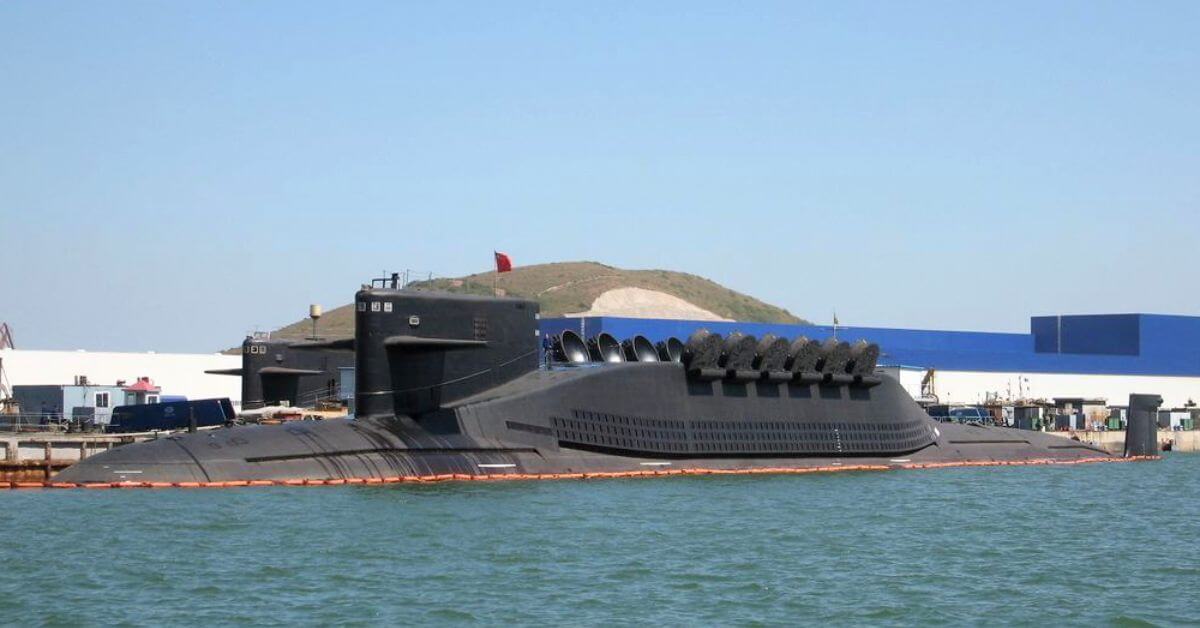
China has built a database of sound data from warships that can help Chinese submarine crews to re-acquire a surface vessel contact, the ministry of national defence said.
The system was recently tested during a hypothetical confrontation between a submarine and a surface warship in which the target alternated its course and speed to mask its movements.
Chinese sonar operators identified the target by comparing information from the database with the contact’s acoustic characteristics, including its frequency and speed.
The system will enable China’s People’s Liberation Army Navy (PLAN) to ensure a sonar contact on a surface vessel underwater.
China Builds Database From Naval Training
The sounds produced by a ship’s propulsion system and machinery can be picked up underwater. These will vary depending on the vessel’s speed, power, and other factors.
Chinese naval personnel have been gathering this information during training exercises, as well as during actual training and field operations.
Rather than being saved by individual sonar operators, this information was compiled into a centralised database by the PLAN.
This database was developed after Chinese sub mariners failed to maintain a contact with another ship during a training exercise.
The high waves masked some sounds from the target vessel, making it challenging to follow, resulting in the loss of the hypothetical battle.
After that, Chinese naval officials worked with various research institutions and equipment manufacturers to create the database, which contains information previously held by sonar operators.
Additionally to information on various targets, the database contains information from exercises, training, and field operations: information on the performance of sonar operators.
Database Tested Against Manoeuvring Warship
The database was later used to test a hypothetical blockade and counter-blockade scenario in which sonar operators used the database to identify contacts.
A Chinese submarine then secretly transited through a simulated air-sea network, launching an attack.
The most recent submarine vs. warship exercise was also used to test the database.
Once again, the target changed course and speed, but Chinese sonar operators were able to re-acquire the target by cross-referencing information from the database with the contact’s characteristics.
The value of the system is not in allowing a submarine to detect a ship from a distance, but in providing information about a fleeting target.
If sonar operators lose contact with a ship, they may be able to cross-reference that information with previous observations to identify the contact.
Possible Impact on U.S. Naval Forces
Submarines may try to follow up on U.S. And allied surface ships operating within the First Island Chain, penetrating their defenses and approaching critical locations.
The defense of such an approach would necessitate extra measures, as well as increased surveillance to detect and destroy intruding submarines.
The U.S. carrier battle groups already have extensive defense systems, including P-8A Poseidon surveillance planes, MH-60R Seahawk helicopters, surface ships, and attack submarines.
Additionally, unmanned systems are being integrated into submarine operations. If Chinese submariners could effectively re-acquire the contact, U.S. naval forces would have to devote additional resources to tracking and eliminating them.
Tankers, ammo ships, and other support vessels are required to refuel, resupply, and carry troops and equipment across the Pacific, where they are more vulnerable to attack than front-line warships.
A submarine’s ability to identify a support ship as a target may be critical to distinguishing between it and other traffic.
References: interestingengineering, armyrecognition
Read on the original site
Open the publisher's page for the full experience