China Deploys World’s First 100-kW Bamboo-Built Offshore Solar Platform
Our take
The recent deployment of a 100-kW bamboo-built offshore solar platform by China represents a noteworthy, albeit early-stage, development in the pursuit of sustainable marine energy solutions. Traditional offshore solar projects rely heavily on steel and plastic, materials with significant environmental footprints throughout their lifecycle – from extraction and manufacturing to eventual decommissioning and disposal. This innovative approach, leveraging the rapid renewability and inherent strength of bamboo, directly addresses those concerns. The potential to reduce reliance on resource-intensive materials in marine infrastructure aligns with the growing global imperative for ocean stewardship, a value we at World Data Ocean consistently emphasize. The challenges facing naval infrastructure, as highlighted in U.S. Navy Loses 15,000 Operational Days As Submarine Maintenance Delays Cost $3.4 Billion, underscore the need for efficient and sustainable construction and maintenance practices across all maritime sectors, and this bamboo platform offers a potential avenue for addressing those needs in renewable energy applications. Furthermore, China’s ongoing investment in novel marine technologies, exemplified by the World’s first wind-powered underwater datacentre starts operating in China - The Guardian, demonstrates a clear commitment to pushing the boundaries of ocean-based innovation.
The viability of bamboo as a structural material in a marine environment, particularly one subject to wave action and biofouling, remains to be thoroughly validated through longitudinal testing. While bamboo possesses impressive tensile strength and is naturally resistant to some pests, its long-term durability in saltwater conditions, and its susceptibility to degradation, will be critical factors determining its widespread adoption. The platform’s relatively modest 100-kW capacity suggests this is primarily a proof-of-concept project, designed to gather empirical data on bamboo’s performance and identify potential engineering refinements. It’s important to note that the ocean presents a uniquely challenging operating environment, and the successful deployment of this platform doesn’t automatically translate to a scalable solution. The recent incident involving the Empty Lifeboat, Distress Beacon Found As Indian Coast Guard Searches For 22 Missing Crew In Bay Of Bengal serves as a stark reminder of the inherent risks and unforgiving nature of maritime operations, underscoring the need for rigorous safety protocols and robust material integrity in any offshore infrastructure.
Beyond the material science considerations, the successful integration of this bamboo platform into a broader integrated data ecosystem will be crucial. Real-time monitoring of its structural integrity, power generation efficiency, and environmental impact will provide invaluable data for optimizing its design and operational parameters. This data, when calibrated against established climate indicators, can contribute to a more comprehensive understanding of the long-term effects of offshore renewable energy development on marine ecosystems. The concept of an integrated data ecosystem is central to our mission at World Data Ocean, and we believe that such a data-driven approach is essential for ensuring the responsible and sustainable deployment of any new marine technology. The ability to validate performance metrics and model potential impacts, using peer-reviewed methodologies, is paramount to building trust and fostering global collaboration in this space.
Ultimately, the Chinese bamboo solar platform represents an intriguing step toward a more sustainable future for offshore energy. While significant challenges remain in scaling this technology and ensuring its long-term viability, the project’s focus on renewable materials and innovative engineering is commendable. The key question moving forward is whether the initial performance data will validate the promise of bamboo as a viable alternative to traditional materials, and what further innovations are required to create truly resilient and environmentally benign offshore solar infrastructure.
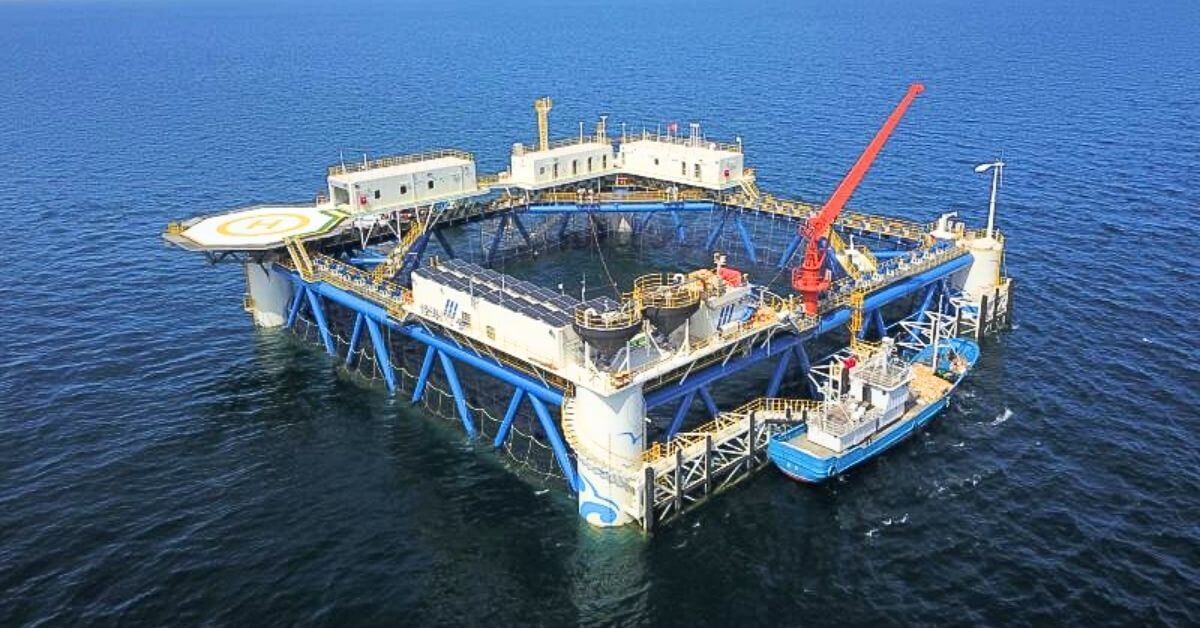
China has deployed a 100-kilowatt floating solar platform made from engineered bamboo off the coast of Yantai in Shandong province.
The platform, called Jilin-2, is designed to test whether bamboo can replace the steel and plastic normally used in offshore floating solar projects.
It uses composite bamboo tubes and pipes instead of the steel or high-density polyethylene (HDPE) used in most floating solar platforms.
Jilin-2 will supply electricity to a demonstration project that produces ammonia, hydrogen, and methanol.
Developers will also monitor the platform to see how the bamboo structure holds up at sea. They will check its performance in corrosion, high humidity, salt spray and ultraviolet radiation, as well as its resistance to long-term fatigue.
Jilin-2 was jointly developed by the CIMC Offshore Engineering Research Institute, China Forestry Group Corporation and Beijing Forestry University. It follows an earlier 10-kW bamboo floating solar prototype, Jilin-1, which was launched in 2023.
Yantai CIMC Raffles Ocean Technology Group announced the new platform in June. The company said using bamboo-based materials could lower the environmental impact of offshore structures compared with conventional steel and HDPE designs.
Bamboo platform
Jilin-2 uses bamboo-wound pipes for its main support structure. It also uses “Sea Bamboo Pipe”, a fibre-reinforced wood-bamboo composite developed by Beijing Forestry University.
The pipes are designed to provide both buoyancy and support for the platform. The bamboo and wood fibres were modified to help them withstand marine conditions, according to Beijing Forestry University professor Qi Chusheng,
Qi told China Green Times, an official forestry trade newspaper, that the materials were designed to withstand corrosion, high humidity, salt spray and ultraviolet radiation.
The platform will be monitored over time to check its durability, adaptability and resistance to fatigue.
The results will help understand if similar wood-bamboo materials can be used in offshore power plants, marine energy islands and marine ranches.
Marine ranches are areas of the sea where marine life is cultivated and ecosystems are restored. China has been developing them to support food security through sustainable seafood production.
10-kW prototype to megawatt scale
Jilin-2 has ten times the capacity of the Jilin-1 prototype, which had a capacity of 10 kW.
The developers plan to build a megawatt-level bamboo-based project. They also want to promote the use of bamboo-based materials in marine applications.
China has been expanding offshore solar projects along its coastline as it works toward its goals of reaching peak carbon emissions by 2030 and carbon neutrality by 2060.
In December, a 1-gigawatt offshore solar farm was brought online off Dongying in Shandong. State-owned developer CHN Energy described it as the world’s largest offshore solar farm.
Most floating solar systems use steel or plastic structures along with buoyant floats. Jilin-2 uses engineered bamboo and wood composites instead.
The 100-kW platform will show how well the bamboo structure performs during long-term use at sea.
China’s growing use of bamboo
The project is part of China’s effort to find more uses for bamboo and cut the use of some plastic products.
China introduced an action plan in 2023 to replace plastic with bamboo. The initiative was also included in the country’s latest forest and grassland conservation plan released in July.
Bamboo is a fast-growing woody grass found naturally across Asia, Africa, and Central and South America. It is used as a building material because it is lightweight, flexible, durable and strong.
Reference: interestingengineering, scmp
Read on the original site
Open the publisher's page for the full experience