CERN shutters the Large Hadron Collider for a major transformation
Our take
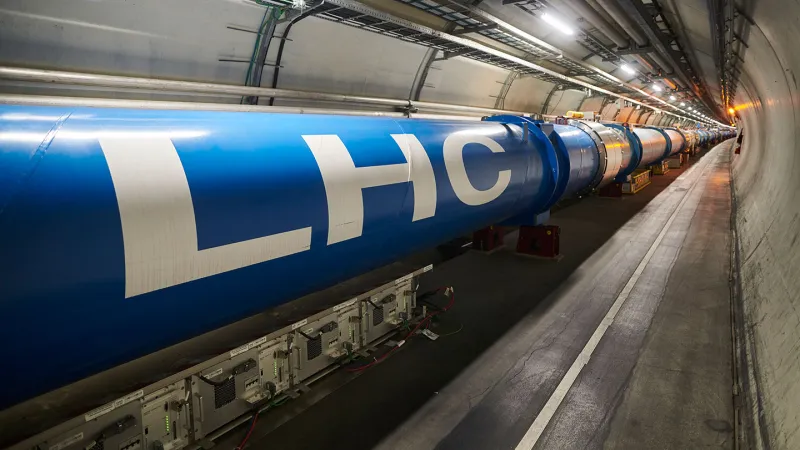
The recent announcement of CERN’s planned transformation of the Large Hadron Collider (LHC) into the High-Luminosity LHC (HL-LHC) represents a significant advancement in fundamental physics, and while seemingly distant from our core focus on oceanographic data, the underlying principles of rigorous data collection, analysis, and integrated systems resonate deeply with World Data Ocean’s mission. The HL-LHC, slated to begin operation in 2030, aims to dramatically increase the collider’s luminosity, allowing physicists to observe rare particle interactions with unprecedented frequency. This increased sensitivity could unlock crucial insights into the Higgs boson – confirming its properties and interactions – and potentially reveal the existence of dark matter and dark energy, which constitute the vast majority of the universe’s mass-energy density yet remain largely enigmatic. Such endeavors underscore the importance of scalable data infrastructure, a challenge we share as we strive to build an integrated data ecosystem capable of processing the ever-increasing volume of oceanic data. The need for sophisticated calibration and validation methods in high-energy physics mirrors our own efforts to guarantee the accuracy and reliability of ocean intelligence; both fields rely on meticulous empirical observation and rigorous peer-reviewed analysis. Consider the challenges of forecasting seafarer shortages, as highlighted in [BIMCO, ICS Forecast Global Merchant Fleet Will Need 113,735 More Officers By 2030], requiring sophisticated data modeling and predictive analytics – similar in concept, though applied to vastly different domains. The shift to the HL-LHC is not merely an upgrade; it’s a fundamental reimagining of the collider’s capabilities, demanding advancements in detector technology, data acquisition systems, and computational infrastructure. This echoes the innovation we champion at World Data Ocean, where real-time data processing and longitudinal analysis are essential for understanding complex ocean dynamics and climate indicators. The sheer volume of data generated by the HL-LHC – orders of magnitude greater than the current LHC – necessitates advanced data management strategies, including distributed computing and sophisticated algorithms for filtering and analyzing noise. Indeed, the planned improvements in data handling mirror the challenges of integrating data from disparate sources – satellites, buoys, research vessels, and autonomous underwater vehicles – into a cohesive and accessible platform. The commitment to collaborative research and data sharing that underpins the LHC’s operation also aligns with our own global collaborative approach, recognizing that addressing challenges like climate change and ocean health requires shared knowledge and resources. Bloomberg Philanthropies’ efforts, detailed in [Follow the Data Podcast: Protecting 30% of the World’s Land and Ocean by 2030], highlight the crucial role of data-driven decision making in conservation efforts, a parallel to the LHC's quest for fundamental understanding. The long-term nature of the project, spanning decades of development and operation, further emphasizes the importance of sustained investment in scientific infrastructure. The parallels extend beyond mere technological considerations. Both endeavors require a deep understanding of complex systems and the ability to extract meaningful insights from vast datasets. The Higgs boson, for example, represents a fundamental building block of the universe, and understanding its properties could fundamentally alter our comprehension of reality. Similarly, understanding the intricate interplay of ocean currents, temperatures, and biological activity is crucial for predicting climate change impacts and mitigating their consequences. The meticulous, iterative process of scientific discovery – formulating hypotheses, conducting experiments, analyzing data, and refining theories – is a universal principle, regardless of the field of study. The HL-LHC's ambition to explore the unknown stimulates a similar pursuit in oceanography: identifying previously unobserved phenomena and leveraging new technologies to expand our knowledge of the marine environment. The reliance on validated, measurable data – a cornerstone of both endeavors – ensures that findings are robust and reliable, capable of informing policy and driving action. Looking ahead, the success of the HL-LHC will depend not only on technological innovation but also on the ability to effectively communicate complex scientific findings to a wider audience. Just as we strive to make ocean intelligence accessible and actionable for policymakers, researchers, and the public, CERN will need to demonstrate the relevance and impact of its discoveries.
Read on the original site
Open the publisher's page for the full experience