Brains break and repair DNA to grow
Our take
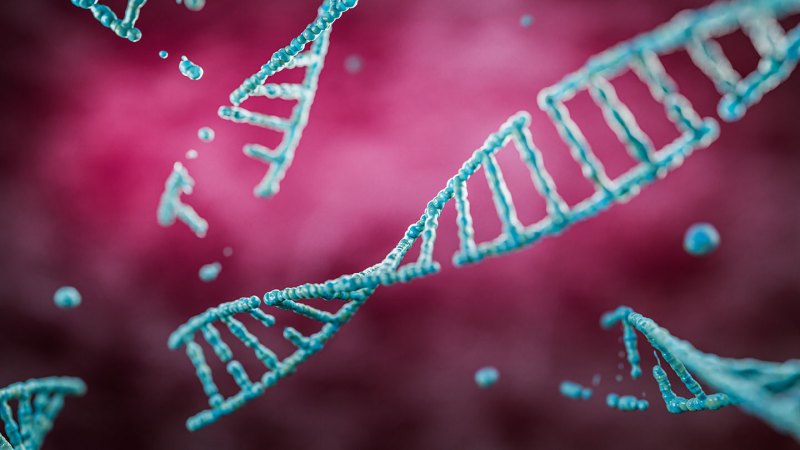
The recent discovery that newborn mouse neurons deliberately break and repair both strands of their DNA during migration presents a fascinating, and potentially paradigm-shifting, insight into brain development. This isn’t a consequence of cellular damage, but rather appears to be a controlled, purposeful process, suggesting a novel mechanism for navigating the complex landscape of the developing brain. The ability of these neurons to rapidly repair these double-strand breaks – within a single day – speaks to the remarkable efficiency and resilience of cellular repair mechanisms. This research highlights the intricate interplay between genomic stability and developmental processes, and offers a compelling avenue for future investigation into the fundamental biology of neural circuits. It's particularly relevant considering ongoing work exploring environmental influences on neurological development, such as the study of [Trends and hotspots in environmental epigenetics of aquatic invertebrates: a CiteSpace and VOSviewer-based bibliometric study] which underscores the sensitivity of marine organisms to environmental change and the associated epigenetic modifications. Further, the research underscores the importance of considering cellular stress responses during development, echoing findings like those presented in [Immersion-based application of Origanum vulgare extract improves growth and pigmentation in Kappaphycus alvarezii under field conditions], where environmental stressors impact tissue integrity.
The deliberate DNA breakage and repair strategy employed by these neurons raises several critical questions. Why would a cell intentionally damage its genome? The prevailing hypothesis suggests that these breaks facilitate migration—perhaps by allowing neurons to more readily navigate tight spaces or to physically “push” through barriers. The rapid and accurate repair is equally crucial; unchecked DNA damage can lead to mutations and cellular dysfunction. The fact that this process is observed in mice suggests a potential conserved mechanism across mammals, although validation in other species, including humans, is essential. Understanding the molecular machinery involved in this process—the specific enzymes and signaling pathways that orchestrate both the breakage and repair—could unlock new therapeutic targets for neurodevelopmental disorders. Moreover, the speed of repair is particularly striking, implying highly efficient DNA repair pathways operating at a scale previously unappreciated during early neural development. The ability to observe and analyze these phenomena in a model organism like the mouse provides a powerful platform for investigating the intricacies of genomic manipulation at the cellular level.
The implications of this discovery extend beyond neuroscience. The findings contribute to a broader understanding of DNA repair mechanisms and their role in maintaining genomic integrity across different cell types and organisms. It reinforces the growing appreciation for the dynamic nature of the genome, moving beyond the traditional view of DNA as a static blueprint. Research demonstrating climate-driven shifts in species distribution, such as the findings detailed in [Climate-driven phenological shifts and biogeographical constraints of the hydrozoan Velella velella in Mediterranean coastal waters], emphasizes the importance of genomic plasticity and adaptation in response to environmental pressures. While the context is vastly different—a mouse neuron navigating a developing brain versus a hydrozoan responding to changing ocean temperatures—both scenarios highlight the fundamental capacity of organisms to adjust their genetic landscape in response to specific challenges. The observed efficiency of repair in neurons suggests that similar mechanisms may be deployed in other cellular contexts to mitigate environmental damage or facilitate adaptation.
Looking ahead, a key area of investigation will be to determine the precise triggers that initiate DNA breakage in migrating neurons. Are these events stochastic, or are they regulated by specific guidance cues or developmental signals? Furthermore, understanding how the cell calibrates the repair process to ensure accuracy and prevent mutations will be crucial. It's also worth considering whether similar mechanisms are employed by other cell types during development or in response to stress. The ability to monitor and manipulate DNA repair pathways at a single-cell level, coupled with advanced imaging techniques, promises to revolutionize our understanding of both brain development and genomic stability. A fundamental question remains: could harnessing this knowledge lead to new strategies for promoting neuronal regeneration or mitigating the effects of neurodegenerative diseases, where genomic instability and impaired DNA repair contribute to cellular dysfunction?
Read on the original site
Open the publisher's page for the full experience