A new sort of Alzheimer’s drug shows glimmers of promise
Our take
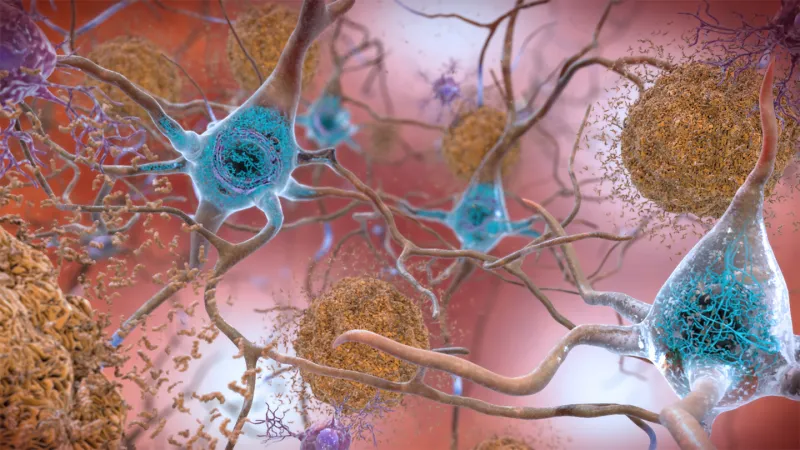
## Our Take: A Nuance of Hope in the Fight Against Alzheimer's The recent clinical trial results for an experimental Alzheimer’s drug, demonstrating a reduction in tau levels and a slowing of memory loss, represent a cautiously encouraging development in a field desperately seeking effective treatments. While the data isn't a definitive victory, it underscores the growing understanding of tau tangles as a critical driver of the disease, distinct from, though often concurrent with, amyloid plaque buildup. For years, research has largely focused on amyloid, with limited success in translating plaque reduction into meaningful clinical improvements. This trial’s focus on tau, and the observed positive impact, suggests a potential shift in therapeutic strategy, validating the importance of targeting this specific protein aggregate. Understanding the complex interplay of these pathologies is crucial, and recent research highlights the need to consider inflammation as a critical factor as well — see Alzheimer's and Inflammation for a deeper dive into this emerging area. Furthermore, the unexpected finding regarding benefits primarily observed in patients with earlier stages of the disease, as detailed in the report, reinforces the concept that intervention must occur before irreversible neuronal damage is extensive. This necessitates improved diagnostic tools for earlier detection, which is a challenge in itself, and a focus on preventative measures, a topic explored in our article Early Detection Strategies. The "surprise twist" of the trial’s results – the more pronounced benefits observed in those with milder cognitive impairment – highlights a critical nuance often overlooked in drug development. It challenges the conventional approach of targeting advanced stages of the disease, where neuronal loss is already substantial and potentially irreversible. It suggests that earlier intervention, even with drugs that are not perfectly effective, can still yield significant clinical benefits by preventing or slowing the progression of the disease. This necessitates a recalibration of clinical trial design, perhaps incorporating a greater focus on individuals with preclinical or very early-stage Alzheimer’s. Moreover, it underscores the need for more sophisticated biomarkers to identify individuals at risk *before* significant cognitive decline occurs. The validated measures of tau levels, as demonstrated by this trial, are a step in the right direction, but further refinement and integration with other clinical and genetic data are essential to build truly predictive models. The integrated data ecosystem required for such precision medicine represents a significant technological challenge, but one that is increasingly becoming a necessity for effective disease management. The broader significance of this development extends beyond this single drug. It demonstrates that targeting tau, a protein implicated in neuronal dysfunction and death, is a viable therapeutic strategy. While this particular drug may not ultimately become a blockbuster treatment, it serves as proof-of-concept and paves the way for the development of more effective tau-targeting therapies. The longitudinal data collected during the trial, and the rigorous empirical analysis of the results, provide valuable insights into the complex pathophysiology of Alzheimer's disease. This contributes to a more nuanced understanding of the disease’s progression, allowing researchers to refine their hypotheses and design more targeted interventions. The peer-reviewed nature of the trial’s publication ensures the scientific integrity of the findings, reinforcing the importance of transparent and reproducible research in this critical area. Recent advancements in computational modeling and machine learning are also beginning to provide new avenues for drug discovery and personalized treatment approaches – see AI in Drug Discovery for more information. Looking ahead, the focus will likely shift towards developing more selective and potent tau-targeting drugs, as well as exploring combination therapies that address both amyloid and tau pathologies. The integration of real-time monitoring technologies, such as wearable sensors and digital biomarkers, could provide valuable data on disease progression and treatment response, allowing for personalized adjustments to therapy. Crucially, further research is needed to understand *why* the drug exhibited greater efficacy in those with earlier stages of the disease. Is it related to the degree of neuronal damage, the inflammatory response, or some other factor? Answering this question will be vital for optimizing treatment strategies and ultimately, improving the lives of those affected by Alzheimer’s disease.
Read on the original site
Open the publisher's page for the full experience